Literal values, not normalised. 183,098 distinct spellings cover 1,706,259 claims; only letter case and spacing are merged, so “maize”, “corn” and “Zea mays L.” are three separate entries here. The By interacting organism view merges spellings of one organism through NCBI Taxonomy.
Association observed original result measured Claim · model-written summary
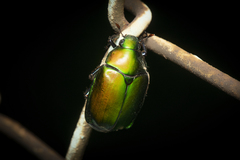
Beetles preferred to feed on 6–9-week-old soybean plants compared with younger plants.
6–9‐week‐old plants e1 Anomala cupripese0 pest Verbatim
e0 “preference of two scarabaeid beetles, Anomala cupripes Hope and A. expansa Bates, for soybean plants at various growth stages ”
✓ located verbatim in the source · abstract, characters 70–195 e1 “Insects preferred to feed on 6–9‐week‐old plants compared to younger ones ”
✓ located verbatim in the source · abstract, characters 261–334 Other claims from this paper (2) Intervention effect observed original result positive measured Claim · model-written summary
A trap cultivar with more foliage between rows attracted the beetles.
Anomala cupripese0 pest agronomic cultivar e2 Verbatim
e0 “preference of two scarabaeid beetles, Anomala cupripes Hope and A. expansa Bates, for soybean plants at various growth stages ”
✓ located verbatim in the source · abstract, characters 70–195 e2 “Planting a cultivar with more foliage as a trap cultivar between rows of the agronomic cultivar attracted the beetles ”
✓ located verbatim in the source · abstract, characters 466–583 Other claims from this paper (2) Intervention effect observed original result positive measured Claim · model-written summary
A trap cultivar between rows reduced the infestation of the agronomic cultivar.
Anomala cupripese0 pest agronomic cultivar e3 Verbatim
e0 “preference of two scarabaeid beetles, Anomala cupripes Hope and A. expansa Bates, for soybean plants at various growth stages ”
✓ located verbatim in the source · abstract, characters 70–195 e2 “Planting a cultivar with more foliage as a trap cultivar between rows of the agronomic cultivar attracted the beetles ”
✓ located verbatim in the source · abstract, characters 466–583 e3 “reduced the infestation of the agronomic cultivar ”
✓ located verbatim in the source · abstract, characters 588–637 Other claims from this paper (2) Observation observed original result measured Claim · model-written summary
A. expansa occur from mid-April through October.
from mid-April through October e0 Verbatim
e0 “The southern green stink bug, Nezara viridula (L.), infests soybean and mungbean between May and October; Anomala cupripes Hope and A. expansa Bates, occur from mid-April through October; and limabean podborer, Etiella zinckenella (Treitschke), remains active between September and May, Aphis glycines Matsumura infests soybeans mainly during October through March, the cooler time of the year. ”
✓ located verbatim in the source · abstract, characters 355–749 t0 “Soybean and Mungbean ”
✓ located verbatim in the source · title, characters 31–51 Other claims from this paper (7)  Glycine maxe0
 Anomala expansae0pest
 Vigna radiata