Abstract
The cranberry (V. macrocarpon) fruit rot complex can cause severe crop loss and requires multiple fungicide applications each year. To identify sources of fruit rot resistance, fungicides were withheld from our germplasm collection in 2003 and 2004 and the collection was rated for fruit rot. In September 2003, approximately 70% of the 562 plots had severe rot, while 6% showed some level of resistance. Visual ratings correlated with quantitative assessments. In 2004, several accessions continued to show resistance, and there was significant correlation between the 2003 and 2004 ratings (r=0.80) and counts (r=0.75). Three of the resistant accessions had previously been used in crosses and their progeny had been planted in a large progeny evaluation trial. Fungicides were withheld in 2005-07 and the trial was rated each year for fruit rot. In 2007, disease pressure was so severe that of the 1644 progeny evaluated from 30 crosses (four of these crosses had a resistant parent), 1085 progeny exhibited approximately 100% rot, while only 13 plots had a rating of '2' (<40% fruit rot). Families from resistant parents had a higher frequency of resistant progeny, indicating additive genetic effects, and the potential for improving resistance through breeding. However, a few resistant progeny originated from susceptible parents suggesting non-additive variance for field fruit rot resistance also exists. Fruit cultured from susceptible and resistant plots had the same species of fruit rot fungi present (primarily Phyllosticta vaccinii, Physalospora vaccinii and Colletotrichum gloeosporioides [Glomerella cingulata]), suggesting broad-based resistance. DNA fingerprinting of resistant accessions identified several distinct types, offering potentially different sources of genetic resistance. These fruit rot-resistant plants have now been used in 60 crosses. Molecular markers for resistance are being developed, which will allow for more efficient progeny screening.
Abstract from the paper’s OpenAlex record, shown for indexing and research. Copyright remains with the authors or the publisher. Read at the source ↗
The text the model read, with the source record’s inline markup (italics, sub- and superscripts) rendered and its character entities decoded; quote offsets refer to the raw text.
Claims 13
Claim · model-written summary
Approximately 70% of 562 plots had severe rot in September 2003.
Verbatim
e0“In September 2003, approximately 70% of the 562 plots had severe rot”
e1“The cranberry (V. macrocarpon) fruit rot complex”
Claim · model-written summary
Six percent of plots showed some resistance in September 2003.
Verbatim
e0“while 6% showed some level of resistance”
e1“In September 2003, approximately 70% of the 562 plots had severe rot”
e2“The cranberry (V. macrocarpon) fruit rot complex”
Claim · model-written summary
Visual fruit rot ratings correlated with quantitative assessments.
Not reportedDirection
Verbatim
e0“Visual ratings correlated with quantitative assessments.”
e1“The cranberry (V. macrocarpon) fruit rot complex”
Claim · model-written summary
Several accessions continued to show resistance in 2004.
Verbatim
e0“In 2004, several accessions continued to show resistance”
e1“The cranberry (V. macrocarpon) fruit rot complex”
Claim · model-written summary
The 2003 and 2004 fruit rot ratings were significantly correlated, r=0.80.
Not reportedDirection
Verbatim
e0“there was significant correlation between the 2003 and 2004 ratings (r=0.80) and counts (r=0.75)”
e1“The cranberry (V. macrocarpon) fruit rot complex”
Claim · model-written summary
The 2003 and 2004 fruit rot counts were significantly correlated, r=0.75.
Not reportedDirection
Verbatim
e0“there was significant correlation between the 2003 and 2004 ratings (r=0.80) and counts (r=0.75)”
e1“The cranberry (V. macrocarpon) fruit rot complex”
Claim · model-written summary
In 2007, 1085 of 1644 progeny exhibited approximately 100% rot.
Verbatim
e0“In 2007, disease pressure was so severe that of the 1644 progeny evaluated from 30 crosses (four of these crosses had a resistant parent), 1085 progeny exhibited approximately 100% rot”
e1“The cranberry (V. macrocarpon) fruit rot complex”
Claim · model-written summary
Only 13 plots had a resistance rating of 2, indicating less than 40% fruit rot.
Verbatim
e0“only 13 plots had a rating of '2' (<40% fruit rot)”
e1“The cranberry (V. macrocarpon) fruit rot complex”
Claim · model-written summary
Families from resistant parents had a higher frequency of resistant progeny.
Verbatim
e0“Families from resistant parents had a higher frequency of resistant progeny”
e1“The cranberry (V. macrocarpon) fruit rot complex”
Claim · model-written summary
Some resistant progeny originated from susceptible parents.
Verbatim
e0“a few resistant progeny originated from susceptible parents”
e1“The cranberry (V. macrocarpon) fruit rot complex”
Claim · model-written summary
Fruit from susceptible and resistant plots contained the same fruit rot fungal species.
- Taxon
- cranberrye1
- Organ / stage
- Fruite0
- Interactor
- Phyllosticta vaccinii
 Phyllosticta vacciniie0pathogen
- Second interactor
- Physalospora vacciniiPhysalospora vacciniie0pathogen
- Outcome
- same species of fruit rot fungi presente0
- Qualifier
- Colletotrichum gloeosporioides [Glomerella cingulata]e0
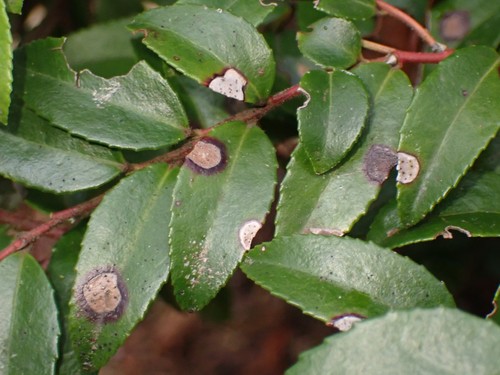
Organisms pictured · Representative pictures of the matched species, not figures from the paper.
Verbatim
e0“Fruit cultured from susceptible and resistant plots had the same species of fruit rot fungi present (primarily Phyllosticta vaccinii, Physalospora vaccinii and Colletotrichum gloeosporioides [Glomerella cingulata])”
e1“The cranberry (V. macrocarpon) fruit rot complex”
Claim · model-written summary
DNA fingerprinting identified several distinct types among resistant accessions.
Verbatim
e0“DNA fingerprinting of resistant accessions identified several distinct types”
e1“The cranberry (V. macrocarpon) fruit rot complex”
Claim · model-written summary
Fruit rot-resistant plants have been used in 60 crosses.
Verbatim
e0“These fruit rot-resistant plants have now been used in 60 crosses”
e1“The cranberry (V. macrocarpon) fruit rot complex”