Abstract
Seed microflora was assessed in fourteen popularly grown paddy varieties viz., Ambemohar, Basmati-370, Jaya, Karjat-2, Karjat-3, Masuri, Phule Maval, Pawana, Palghar, Ratna, Bhogawati, Garvi kolpi-248, HMT-Sona, Indrayani, Phule Radha, R-24 and RP-4-14 by using standard blotter method as per ISTA rules. Seven different organisms detected and five were pathogenic to paddy. They were Fusarium moniliformae, Fusarium oxysporum, Curvularia lunata, Drechslera oryzae and Alternaria padwickii. Variations were found in seed microflora and their occurrence in various varieties. The lowest microflora was recorded in Palghar (4%) with 97% seed germination. The highest microflora was recorded in Indrayani (20%) with 80% seed germination.
Abstract from the paper’s OpenAlex record, shown for indexing and research. Copyright remains with the authors or the publisher. Read at the source ↗
The text the model read, with the source record’s inline markup (italics, sub- and superscripts) rendered and its character entities decoded; quote offsets refer to the raw text.
Claims 11
Claim · model-written summary
Seven organisms were found in paddy seed microflora and five were pathogenic.
Verbatim
e0“Seven different organisms detected and five were pathogenic to paddy”
Claim · model-written summary
Fusarium moniliformae was identified as pathogenic to paddy.
Not reportedTaxon
Verbatim
e0“They were Fusarium moniliformae, Fusarium oxysporum, Curvularia lunata, Drechslera oryzae and Alternaria padwickii”
Claim · model-written summary
Fusarium oxysporum was identified as pathogenic to paddy.
- Interactor
- Fusarium oxysporum
 Fusarium oxysporume0pathogen
- Outcome
- Fusarium oxysporume0
Not reportedTaxon
Organisms pictured · Representative pictures of the matched species, not figures from the paper.

Verbatim
e0“They were Fusarium moniliformae, Fusarium oxysporum, Curvularia lunata, Drechslera oryzae and Alternaria padwickii”
Claim · model-written summary
Curvularia lunata was identified as pathogenic to paddy.
- Interactor
- Curvularia lunata
 Curvularia lunatae0pathogen
- Outcome
- Curvularia lunatae0
Not reportedTaxon
Organisms pictured · Representative pictures of the matched species, not figures from the paper.

Verbatim
e0“They were Fusarium moniliformae, Fusarium oxysporum, Curvularia lunata, Drechslera oryzae and Alternaria padwickii”
Claim · model-written summary
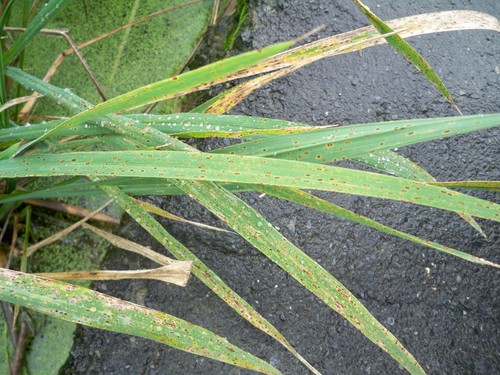
Drechslera oryzae was identified as pathogenic to paddy.
- Interactor
- Drechslera oryzae
 Bipolaris oryzaee0pathogen
- Outcome
- Drechslera oryzaee0
Not reportedTaxon
Organisms pictured · Representative pictures of the matched species, not figures from the paper.
Verbatim
e0“They were Fusarium moniliformae, Fusarium oxysporum, Curvularia lunata, Drechslera oryzae and Alternaria padwickii”
Claim · model-written summary
Alternaria padwickii was identified as pathogenic to paddy.
- Interactor
- Alternaria padwickii
 Alternaria padwickiie0pathogen
- Outcome
- Alternaria padwickiie0
Not reportedTaxon
Organisms pictured · Representative pictures of the matched species, not figures from the paper.

Verbatim
e0“They were Fusarium moniliformae, Fusarium oxysporum, Curvularia lunata, Drechslera oryzae and Alternaria padwickii”
Claim · model-written summary
Seed microflora varied across varieties.
Not reportedTaxonDirection
Verbatim
e0“Variations were found in seed microflora and their occurrence in various varieties”
Claim · model-written summary
Palghar had the lowest microflora at 4%.
Not reportedTaxon
Verbatim
e0“The lowest microflora was recorded in Palghar (4%) with 97% seed germination”
Claim · model-written summary
Palghar seed germination was 97%.
Not reportedTaxon
Verbatim
e0“The lowest microflora was recorded in Palghar (4%) with 97% seed germination”
Claim · model-written summary
Indrayani had the highest microflora at 20%.
Not reportedTaxon
Verbatim
e0“The highest microflora was recorded in Indrayani (20%) with 80% seed germination”
Claim · model-written summary
Indrayani seed germination was 80%.
Not reportedTaxon
Verbatim
e0“The highest microflora was recorded in Indrayani (20%) with 80% seed germination”