Abstract
The family Nymphaeaceae is represented by aquatic rhizomatic herbs, rooted in the substrate, with floating long petiolate leaves. Its flowers are solitary, and anthesis can be nocturnal and diurnal, pollinated by beetles. The family has six genus, of which Nymphaea and Victoria occurs in the neotropical region. Victoria predominates in the Brazilian Amazon and Pantanal and the Nymphaea is represented by 18 species distributed throughout the country. The floristic study included the analysis of specimens collected on expeditions and materials deposited in Herbariums, in a total of 69 specimens. The identification was made by consulting specific bibliography. The information obtained enabled the preparation of an identification key, illustrations of important morphological characters, significant as evidence Taxonomy, commentaries on the geographical distribution and discussion of relevant issues to taxons identification. For the state of Ceará were found six species: N. amazonum, N. pulchella, N. Jamesoniana, N. lasiophylla, N. lingulata, N. rudgeana and N. tenerinervia. The last two populations presented only in coastal environments. N. lingulata, N. pulchella and N. Jamesoniana presented records in the arid region, in interior of the State. N. amazonum and N. lasiophylla have a wide distribution, being present in the coastal zone to the interior. N. lasiophylla was the most frequent species. Knowledge about the Flora of the State of Ceará contribute to future projects for the conservation and management of temporary and permanent aquatic environments that occur in the Brazilian semiarid.
Abstract from the paper’s OpenAlex record; open copy licensed cc-by-sa. Read at the source ↗
The text the model read, with the source record’s inline markup (italics, sub- and superscripts) rendered and its character entities decoded; quote offsets refer to the raw text.
Claims 6
Claim · model-written summary
The floristic study identified six Nymphaea species in Ceará.
 Nymphaea
Organisms pictured · Representative pictures of the matched species, not figures from the paper.

Verbatim
e0“For the state of Ceará were found six species: N. amazonum, N. pulchella, N. Jamesoniana, N. lasiophylla, N. lingulata, N. rudgeana and N. tenerinervia”
t0“Nymphaea L.”
Claim · model-written summary
N. rudgeana and N. tenerinervia populations occurred only in coastal environments.
- Taxon
- N. rudgeana and N. tenerinervia
 Nymphaea rudgeanaNymphaea tenerinerviae0
- Outcome
- presented only in coastal environmentse0
- Setting
- coastal environmentse0
Organisms pictured · Representative pictures of the matched species, not figures from the paper.

Verbatim
e0“N. rudgeana and N. tenerinervia. The last two populations presented only in coastal environments”
Claim · model-written summary
N. lingulata, N. pulchella and N. Jamesoniana were recorded in the interior arid region.
Verbatim
e0“N. lingulata, N. pulchella and N. Jamesoniana presented records in the arid region, in interior of the State”
Claim · model-written summary
N. amazonum and N. lasiophylla were widely distributed from coast to interior.
- Taxon
- N. amazonum and N. lasiophylla
 Nymphaea amazonumNymphaea lasiophyllae0
- Outcome
- wide distributione0
- Setting
- coastal zone to the interiore0
Organisms pictured · Representative pictures of the matched species, not figures from the paper.
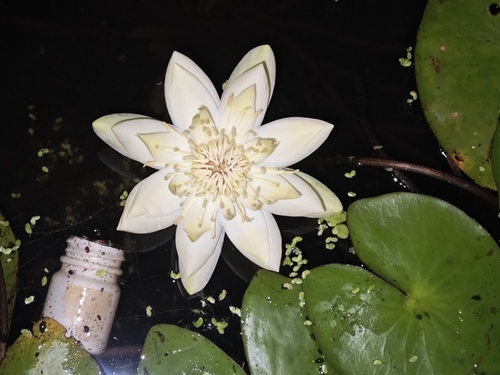
Verbatim
e0“N. amazonum and N. lasiophylla have a wide distribution, being present in the coastal zone to the interior”
Claim · model-written summary
N. lasiophylla was the most frequent species.
- Taxon
- N. lasiophyllaNymphaea lasiophyllae0
- Outcome
- most frequent speciese0
Verbatim
e0“N. lasiophylla was the most frequent species”
Claim · model-written summary
The floristic information enabled an identification key and morphological illustrations.
- Outcome
- identification key, illustrations of important morphological characterse0
Not reportedComparatorValue
Organisms pictured · Representative pictures of the matched species, not figures from the paper.
Verbatim
e0“The information obtained enabled the preparation of an identification key, illustrations of important morphological characters”
t0“Nymphaea L.”