Abstract
Many species extinctions have probably gone unnoticed on limestone that was destroyed before they could be sampled. Unless biodiversity surveys are intensified, the true magnitude of extinctions will never be ascertained. The objectives of this study were to determine tree species composition of limestone hills in Nyungcung and Ciampea; to determine quantitatively the dominant and less dominant species and to quantify floristic structure of the two limestone hills. Value of richness (Menhinick) and evenness in Nyungcung were 3.28 and 0.826 whilst in Ciampea were 3.29 and 0.823, respectively. In term of diversity (Shannon Wiener), Nyungcung seems to be more diverse than Ciampea as indicated by the higher value of diversity index. Nyungcung has 3.225 of diversity (Shannon Wiener) index while Ciampea has 2.859. The floristic composition of two sites was significantly different and mostly comprised Moraceae, Rubiaceae, and Euphorbiaceae. However, the highest presence of species were Antidesma montanum (Euphorbiaceae) and Chrysophyllum lanceolatum (Sapotaceae), and Pandanus sp. (Pandanaceae) in Nyungcung, whereas in Ciampea, Harpullia arborea (Sapindaceae), Ophiorhhiza canescens (Rubiaceae), and Allophyllus cobbe (Sapindaceae). Macaranga rhizinoides, O. canescens, A. montanum, and Turpinia montana , respectively , gained the highest importance values. Key words: limestone, flora, composition, quarries
Abstract from the paper’s OpenAlex record; open copy licensed cc-by-nc-nd. Read at the source ↗
The text the model read, with the source record’s inline markup (italics, sub- and superscripts) rendered and its character entities decoded; quote offsets refer to the raw text.
Claims 18
Claim · model-written summary
Nyungcung richness (Menhinick) was 3.28.
Verbatim
e0“Value of richness (Menhinick) and evenness in Nyungcung were 3.28 and 0.826 whilst in Ciampea were 3.29 and 0.823, respectively.”
e1“tree species composition”
Claim · model-written summary
Nyungcung evenness was 0.826.
Verbatim
e0“Value of richness (Menhinick) and evenness in Nyungcung were 3.28 and 0.826 whilst in Ciampea were 3.29 and 0.823, respectively.”
e1“tree species composition”
Claim · model-written summary
Ciampea richness (Menhinick) was 3.29.
Verbatim
e0“Value of richness (Menhinick) and evenness in Nyungcung were 3.28 and 0.826 whilst in Ciampea were 3.29 and 0.823, respectively.”
e1“tree species composition”
Claim · model-written summary
Ciampea evenness was 0.823.
Verbatim
e0“Value of richness (Menhinick) and evenness in Nyungcung were 3.28 and 0.826 whilst in Ciampea were 3.29 and 0.823, respectively.”
e1“tree species composition”
Claim · model-written summary
Nyungcung Shannon Wiener diversity was 3.225.
Verbatim
e0“Nyungcung has 3.225 of diversity (Shannon Wiener) index while Ciampea has 2.859.”
e1“tree species composition”
Claim · model-written summary
Ciampea Shannon Wiener diversity was 2.859.
Verbatim
e0“Nyungcung has 3.225 of diversity (Shannon Wiener) index while Ciampea has 2.859.”
e1“tree species composition”
Claim · model-written summary
Floristic composition differed significantly between sites.
Verbatim
e0“The floristic composition of two sites was significantly different”
e1“tree species composition”
Claim · model-written summary
The sites mainly comprised Moraceae, Rubiaceae and Euphorbiaceae.
Verbatim
e0“mostly comprised Moraceae, Rubiaceae, and Euphorbiaceae.”
e1“tree species composition”
Claim · model-written summary
Antidesma montanum had one of the highest presences in Nyungcung.
- Taxon
- Antidesma montanum
 Antidesma montanume0
- Outcome
- highest presencee0
- Setting
- Nyungcunge0
Organisms pictured · Representative pictures of the matched species, not figures from the paper.

Verbatim
e0“the highest presence of species were Antidesma montanum (Euphorbiaceae) and Chrysophyllum lanceolatum (Sapotaceae), and Pandanus sp. (Pandanaceae) in Nyungcung, whereas in Ciampea, Harpullia arborea (Sapindaceae), Ophiorhhiza canescens (Rubiaceae), and Allophyllus cobbe (Sapindaceae).”
Claim · model-written summary
Chrysophyllum lanceolatum had one of the highest presences in Nyungcung.
- Taxon
- Chrysophyllum lanceolatumChrysophyllum flexuosume0
- Outcome
- highest presencee0
- Setting
- Nyungcunge0
Verbatim
e0“the highest presence of species were Antidesma montanum (Euphorbiaceae) and Chrysophyllum lanceolatum (Sapotaceae), and Pandanus sp. (Pandanaceae) in Nyungcung, whereas in Ciampea, Harpullia arborea (Sapindaceae), Ophiorhhiza canescens (Rubiaceae), and Allophyllus cobbe (Sapindaceae).”
Claim · model-written summary
Pandanus sp. had one of the highest presences in Nyungcung.
 Pandanus
Organisms pictured · Representative pictures of the matched species, not figures from the paper.

Verbatim
e0“the highest presence of species were Antidesma montanum (Euphorbiaceae) and Chrysophyllum lanceolatum (Sapotaceae), and Pandanus sp. (Pandanaceae) in Nyungcung, whereas in Ciampea, Harpullia arborea (Sapindaceae), Ophiorhhiza canescens (Rubiaceae), and Allophyllus cobbe (Sapindaceae).”
Claim · model-written summary
Harpullia arborea had one of the highest presences in Ciampea.
- Taxon
- Harpullia arborea
 Harpullia arboreae0
- Outcome
- highest presencee0
- Setting
- Ciampeae0
Organisms pictured · Representative pictures of the matched species, not figures from the paper.

Verbatim
e0“the highest presence of species were Antidesma montanum (Euphorbiaceae) and Chrysophyllum lanceolatum (Sapotaceae), and Pandanus sp. (Pandanaceae) in Nyungcung, whereas in Ciampea, Harpullia arborea (Sapindaceae), Ophiorhhiza canescens (Rubiaceae), and Allophyllus cobbe (Sapindaceae).”
Claim · model-written summary
Ophiorhhiza canescens had one of the highest presences in Ciampea.
Verbatim
e0“the highest presence of species were Antidesma montanum (Euphorbiaceae) and Chrysophyllum lanceolatum (Sapotaceae), and Pandanus sp. (Pandanaceae) in Nyungcung, whereas in Ciampea, Harpullia arborea (Sapindaceae), Ophiorhhiza canescens (Rubiaceae), and Allophyllus cobbe (Sapindaceae).”
Claim · model-written summary
Allophyllus cobbe had one of the highest presences in Ciampea.
Verbatim
e0“the highest presence of species were Antidesma montanum (Euphorbiaceae) and Chrysophyllum lanceolatum (Sapotaceae), and Pandanus sp. (Pandanaceae) in Nyungcung, whereas in Ciampea, Harpullia arborea (Sapindaceae), Ophiorhhiza canescens (Rubiaceae), and Allophyllus cobbe (Sapindaceae).”
Claim · model-written summary
Macaranga rhizinoides had one of the highest importance values.
- Taxon
- Macaranga rhizinoides
 Macaranga rhizinoidese0
- Outcome
- highest importance valuese0
Organisms pictured · Representative pictures of the matched species, not figures from the paper.

Verbatim
e0“Macaranga rhizinoides, O. canescens, A. montanum, and Turpinia montana , respectively , gained the highest importance values.”
Claim · model-written summary
O. canescens had one of the highest importance values.
Verbatim
e0“Macaranga rhizinoides, O. canescens, A. montanum, and Turpinia montana , respectively , gained the highest importance values.”
Claim · model-written summary
A. montanum had one of the highest importance values.
- Taxon
- A. montanumAntidesma montanume0
- Outcome
- highest importance valuese0
Organisms pictured · Representative pictures of the matched species, not figures from the paper.
Verbatim
e0“Macaranga rhizinoides, O. canescens, A. montanum, and Turpinia montana , respectively , gained the highest importance values.”
Claim · model-written summary
Turpinia montana had one of the highest importance values.
- Taxon
- Turpinia montana
 Turpinia montanae0
- Outcome
- highest importance valuese0
Organisms pictured · Representative pictures of the matched species, not figures from the paper.
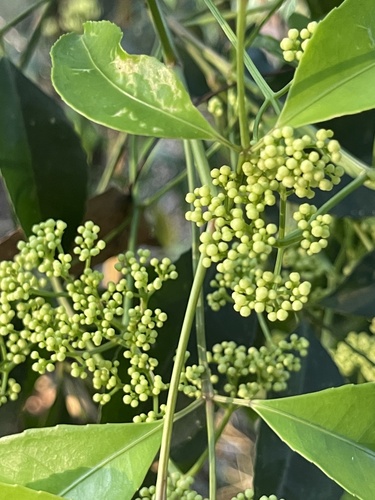
Verbatim
e0“Macaranga rhizinoides, O. canescens, A. montanum, and Turpinia montana , respectively , gained the highest importance values.”