Abstract
Survey of aphids on dicotyledonous herbaceous plants along the Hungarian highways on 33 sampling points revealed the presence of four holocyclic Brachycaudus species. The monoecious B. lychnidis L. 1758 was the most frequently collected species. It colonised the perennial Silene alba (Mill.) E. H. L. Krause 1893 on the youngest highway section around Budapest (5 locations). The frequency of this species is due to frequent occurrence of its host plant on this section compared to other host species. New record for the Hungarian fauna is the occurrence of monoecious B. setosus Hille Ris Lambers 1948 on the biennial or perennial Tragopogon orientalis L. 1753 on two locations on the southern part of the country. The heteroecious B. cardui L. 1758 was found on biennial or perennial Senecio jacobaea L. 1753 in one location on north-western part of Hungary. On the north-eastern part of the country the perennial Symphytum officinale subsp. bohemicum (F. W. Schmidt) Čelak 1891 occurred on a damp area. The monoecious B. mordvilkoi Hille Ris Lambers 1931 colonised this Boraginaceae species.
Abstract from the paper’s OpenAlex record, shown for indexing and research. Copyright remains with the authors or the publisher. Read at the source ↗
The text the model read, with the source record’s inline markup (italics, sub- and superscripts) rendered and its character entities decoded; quote offsets refer to the raw text.
Claims 5
Claim · model-written summary
Four holocyclic Brachycaudus species occurred on herbaceous plants.
- Taxon
- dicotyledonous herbaceous plantse0
- Interactor
- Brachycaudus species
 Brachycauduse0pest
- Outcome
- presence of four holocyclic Brachycaudus speciese0
- Setting
- Hungarian highwayse0
Organisms pictured · Representative pictures of the matched species, not figures from the paper.

Verbatim
e0“Survey of aphids on dicotyledonous herbaceous plants along the Hungarian highways on 33 sampling points revealed the presence of four holocyclic Brachycaudus species.”
Claim · model-written summary
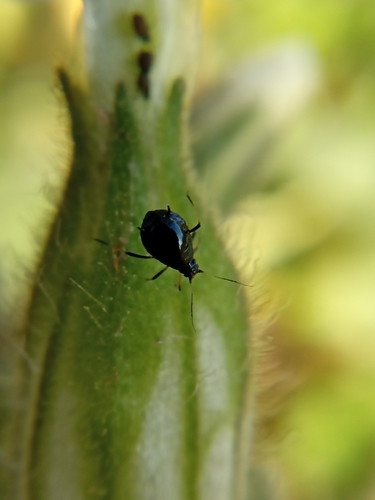
B. lychnidis was most frequent and colonized Silene alba near Budapest.
- Taxon
- Silene alba
 Silene latifolia subsp. albae0
- Interactor
- B. lychnidis
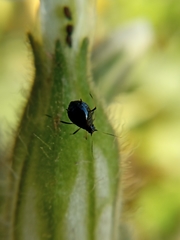 Brachycaudus lychnidise0pest
- Outcome
- colonised the perennial Silene albae0
- Setting
- around Budapeste0
Organisms pictured · Representative pictures of the matched species, not figures from the paper.

Verbatim
e0“The monoecious B. lychnidis L. 1758 was the most frequently collected species. It colonised the perennial Silene alba (Mill.) E. H. L. Krause 1893 on the youngest highway section around Budapest (5 locations).”
Claim · model-written summary
B. setosus was newly recorded on Tragopogon orientalis at two southern locations.
- Taxon
- Tragopogon orientalis
 Tragopogon orientalise0
- Interactor
- B. setosuse0pest
- Outcome
- occurrence of monoecious B. setosuse0
- Setting
- southern part of the countrye0
Organisms pictured · Representative pictures of the matched species, not figures from the paper.

Verbatim
e0“New record for the Hungarian fauna is the occurrence of monoecious B. setosus Hille Ris Lambers 1948 on the biennial or perennial Tragopogon orientalis L. 1753 on two locations on the southern part of the country.”
Claim · model-written summary
B. cardui occurred on Senecio jacobaea in northwestern Hungary.
- Taxon
- Senecio jacobaea
 Jacobaea vulgarise0
- Interactor
- B. cardui
 Brachycaudus carduie0pest
- Outcome
- B. cardui L. 1758 was founde0
- Setting
- north-western part of Hungarye0
Organisms pictured · Representative pictures of the matched species, not figures from the paper.


Verbatim
e0“The heteroecious B. cardui L. 1758 was found on biennial or perennial Senecio jacobaea L. 1753 in one location on north-western part of Hungary.”
Claim · model-written summary
B. mordvilkoi colonized Symphytum officinale subsp. bohemicum.
- Taxon
- Symphytum officinale subsp. bohemicum
 Symphytum officinalee0
- Interactor
- B. mordvilkoiBrachycaudus mordvilkoie0pest
- Outcome
- colonised this Boraginaceae speciese0
Organisms pictured · Representative pictures of the matched species, not figures from the paper.

Verbatim
e0“the perennial Symphytum officinale subsp. bohemicum (F. W. Schmidt) Čelak 1891 occurred on a damp area. The monoecious B. mordvilkoi Hille Ris Lambers 1931 colonised this Boraginaceae species.”