Abstract
The canopies of old-growth Douglas-fir forests support a diversity of epiphytic lichens and bryophytes. We quantified the vertical distributions of six dominant epiphytes throughout the crowns of large Tsuga heterophylla (46-57 m tall) and Pseudotsuga menziesii (60-78 m tall) trees in five forest stands of the central Oregon Cascades. There were no major differences in epiphyte distribution between the two tree species, but epiphytes on T. heterophylla generally peaked in abundance at heights 10-20 m below those on P. menziesii. Alectorioid lichens were most abundant in the upper crowns but scarce in the lower crowns. The fruticose green algal lichen Sphaerophorus globosus was evenly distributed throughout the crowns. The cyanolichen Lobaria oregana and the moss Antitrichia curtipendula were most abundant in middle crowns. Lobaria pulmonaria was most abundant in the lower-middle crowns. It was scarce or absent in the upper crowns. The moss Isothecium myosuroides was also scarce or absent in the upper crowns. It was most abundant in the lower crowns. The vertical patterns described in this study are not representative of all old-growth Douglas-fir forests. In wetter forests, bryophytes are dominant throughout the canopy. In drier forests, alectorioid and other green algal lichens extend farther down in the canopy, and bryophytes and cyanolichens are restricted to the lower canopy
Abstract from the paper’s OpenAlex record, shown for indexing and research. Copyright remains with the authors or the publisher. Read at the source ↗
The text the model read, with the source record’s inline markup (italics, sub- and superscripts) rendered and its character entities decoded; quote offsets refer to the raw text.
Claims 10
Claim · model-written summary
Epiphyte distribution differed little between tree species.
- Taxon
- Douglas-fir
 Pseudotsuga menziesiit0
- Outcome
- epiphyte distributione0
- Direction
- no major differencese0
Organisms pictured · Representative pictures of the matched species, not figures from the paper.

Verbatim
e0“There were no major differences in epiphyte distribution between the two tree species”
t0“Douglas-fir”
Claim · model-written summary
Epiphytes on T. heterophylla peaked 10-20 m below those on P. menziesii.
- Taxon
- T. heterophylla
 Tsuga heterophyllae0
- Outcome
- epiphytes on T. heterophyllae0
- Direction
- belowe0
- Value
- 10-20 me0
- Comparator
- P. menziesiie0
Organisms pictured · Representative pictures of the matched species, not figures from the paper.

Verbatim
e0“epiphytes on T. heterophylla generally peaked in abundance at heights 10-20 m below those on P. menziesii”
Claim · model-written summary
Alectorioid lichens were most abundant in upper crowns.
Verbatim
e0“Alectorioid lichens were most abundant in the upper crowns but scarce in the lower crowns”
Claim · model-written summary
Sphaerophorus globosus was evenly distributed in crowns.
- Taxon
- Sphaerophorus globosus
 Sphaerophorus globosuse0
- Outcome
- evenly distributed throughout the crownse0
Organisms pictured · Representative pictures of the matched species, not figures from the paper.

Verbatim
e0“Sphaerophorus globosus was evenly distributed throughout the crowns”
Claim · model-written summary
Lobaria oregana was most abundant in middle crowns.
- Taxon
- Lobaria oregana
 Lobaria oreganae0
- Outcome
- most abundant in middle crownse0
Organisms pictured · Representative pictures of the matched species, not figures from the paper.

Verbatim
e0“The cyanolichen Lobaria oregana and the moss Antitrichia curtipendula were most abundant in middle crowns”
Claim · model-written summary
Antitrichia curtipendula was most abundant in middle crowns.
- Taxon
- Antitrichia curtipendula
 Antitrichia curtipendulae0
- Outcome
- most abundant in middle crownse0
Organisms pictured · Representative pictures of the matched species, not figures from the paper.

Verbatim
e0“The cyanolichen Lobaria oregana and the moss Antitrichia curtipendula were most abundant in middle crowns”
Claim · model-written summary
Lobaria pulmonaria was most abundant in lower-middle crowns.
- Taxon
- Lobaria pulmonaria
 Lobaria pulmonariae0
- Outcome
- most abundant in the lower-middle crownse0
Organisms pictured · Representative pictures of the matched species, not figures from the paper.

Verbatim
e0“Lobaria pulmonaria was most abundant in the lower-middle crowns. It was scarce or absent in the upper crowns”
Claim · model-written summary
Isothecium myosuroides was most abundant in lower crowns.
- Taxon
- Isothecium myosuroides
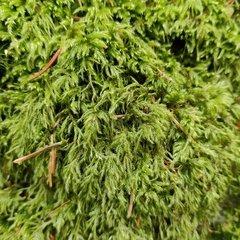 Pseudisothecium myosuroidese0
- Outcome
- most abundant in the lower crownse0
Organisms pictured · Representative pictures of the matched species, not figures from the paper.
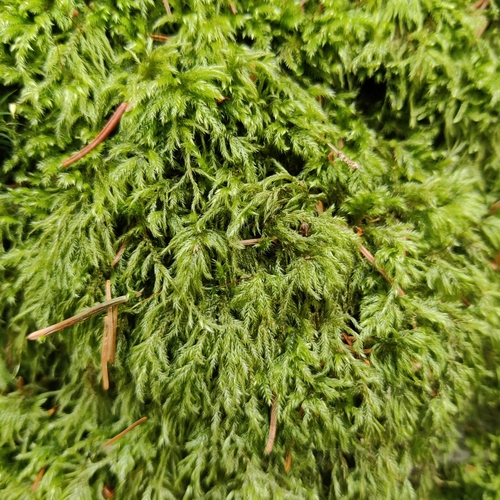
Verbatim
e0“The moss Isothecium myosuroides was also scarce or absent in the upper crowns. It was most abundant in the lower crowns”
Claim · model-written summary
Bryophytes dominate throughout wetter forest canopies.
Verbatim
e0“In wetter forests, bryophytes are dominant throughout the canopy”
Claim · model-written summary
In drier forests green algal lichens extend lower and bryophytes and cyanolichens are lower restricted.
Verbatim
e0“In drier forests, alectorioid and other green algal lichens extend farther down in the canopy, and bryophytes and cyanolichens are restricted to the lower canopy”