Abstract
Five sorghum (Sorghum bicolor) cultivars were evaluated in field trials in Ethiopia to determine the grain development stage(s) most susceptible to mould pathogens. Four growth stages (anthesis, milk, dough and physiological maturity) were compared. Damage to grains and the incidence of fungi were significantly affected by cultivar x growth stage interactions. These effects were due to the change in susceptibility between milk and dough stages in some cultivars or an absence of growth stage effect in others. In general, a higher incidence of fungi and damage to grains occurred when moisture was applied to panicles during dough or milk stages. This was particu larly the case with the major mould fungi (Fusarium pro/ifemtum, F thapsinum, F. graminearum and Bipolaris sorghicola). Frequencies of Alternaria spp. and Epicoccum spp. increased significantly from dough stage onwards. The incidence of Fusarium spp. and B. sorghico/a was negatively correlated with percentage seed germination and positively with grain discoloration. A negative correlation was found between the incidence of B. sorghicola and 1000-grain mass. In the greenhouse, artificial inoculation of plants at soft dough stage with CUfVularia lunata, F. thapsinum and Phoma sorghina reduced seed germination by 52, 46 and 46 %, respectively, compared with inoculation at anthesis. Results suggested that susceptible sorghum cultivars could respond better to control practices during late milk to soft dough growth stages than at other stages of development.
Abstract from the paper’s OpenAlex record, shown for indexing and research. Copyright remains with the authors or the publisher. Read at the source ↗
The text the model read, with the source record’s inline markup (italics, sub- and superscripts) rendered and its character entities decoded; quote offsets refer to the raw text.
Claims 14
Claim · model-written summary
Grain damage depended significantly on cultivar by growth-stage interaction.
Not reportedDirection
Verbatim
e0“Damage to grains and the incidence of fungi were significantly affected by cultivar x growth stage interactions”
Claim · model-written summary
Fungal incidence depended significantly on cultivar by growth-stage interaction.
 Sorghum
Not reportedDirection
Organisms pictured · Representative pictures of the matched species, not figures from the paper.

Verbatim
e0“Damage to grains and the incidence of fungi were significantly affected by cultivar x growth stage interactions”
t0“sorghum”
Claim · model-written summary
Moisture at dough or milk stage generally increased fungal incidence and grain damage.
- Organ / stage
- dough or milk stagese0
- Treatment
- moisture was applied to paniclese0
- Outcome
- incidence of fungi and damage to grainse0
- Direction
- highere0
Not reportedComparator
Organisms pictured · Representative pictures of the matched species, not figures from the paper.
Verbatim
e0“a higher incidence of fungi and damage to grains occurred when moisture was applied to panicles during dough or milk stages”
t0“sorghum”
Claim · model-written summary
Alternaria frequency increased from dough stage onward.
- Organ / stage
- dough stagee0
- Interactor
- Alternaria spp.
 Alternariae0pathogen
- Outcome
- Frequencies of Alternaria spp.e0
- Direction
- increasede0
Organisms pictured · Representative pictures of the matched species, not figures from the paper.

Verbatim
e0“Frequencies of Alternaria spp. and Epicoccum spp. increased significantly from dough stage onwards”
t0“sorghum”
Claim · model-written summary
Epicoccum frequency increased from dough stage onward.
 Epicoccum
Organisms pictured · Representative pictures of the matched species, not figures from the paper.

Verbatim
e0“Frequencies of Alternaria spp. and Epicoccum spp. increased significantly from dough stage onwards”
t0“sorghum”
Claim · model-written summary
Fusarium incidence correlated negatively with seed germination and positively with discoloration.
 Fusarium
Organisms pictured · Representative pictures of the matched species, not figures from the paper.

Verbatim
e0“The incidence of Fusarium spp. and B. sorghico/a was negatively correlated with percentage seed germination and positively with grain discoloration”
t0“sorghum”
Claim · model-written summary
B. sorghico/a incidence correlated negatively with seed germination.
Organisms pictured · Representative pictures of the matched species, not figures from the paper.
Verbatim
e0“The incidence of Fusarium spp. and B. sorghico/a was negatively correlated with percentage seed germination”
t0“sorghum”
Claim · model-written summary
Fusarium incidence correlated positively with grain discoloration.
Organisms pictured · Representative pictures of the matched species, not figures from the paper.
Verbatim
e0“The incidence of Fusarium spp. and B. sorghico/a was negatively correlated with percentage seed germination and positively with grain discoloration”
t0“sorghum”
Claim · model-written summary
B. sorghico/a incidence correlated positively with grain discoloration.
Organisms pictured · Representative pictures of the matched species, not figures from the paper.
Verbatim
e0“The incidence of Fusarium spp. and B. sorghico/a was negatively correlated with percentage seed germination and positively with grain discoloration”
t0“sorghum”
Claim · model-written summary
B. sorghicola incidence correlated negatively with thousand-grain mass.
- Interactor
- B. sorghicolaBipolaris sorghicolae0
- Outcome
- 1000-grain masse0
- Direction
- negativee0
Organisms pictured · Representative pictures of the matched species, not figures from the paper.
Verbatim
e0“A negative correlation was found between the incidence of B. sorghicola and 1000-grain mass”
t0“sorghum”
Claim · model-written summary
Curvularia lunata inoculation at soft dough reduced germination by 52% compared with anthesis inoculation.
- Treatment
- inoculation of plants at soft dough stage with CUfVularia lunatae0
- Interactor
- CUfVularia lunatae0pathogen
- Outcome
- seed germinatione0
- Direction
- reducede0
- Value
- 52e0
- Comparator
- inoculation at anthesise0
Organisms pictured · Representative pictures of the matched species, not figures from the paper.
Verbatim
e0“artificial inoculation of plants at soft dough stage with CUfVularia lunata, F. thapsinum and Phoma sorghina reduced seed germination by 52, 46 and 46 %, respectively, compared with inoculation at anthesis”
t0“sorghum”
Claim · model-written summary
F. thapsinum inoculation at soft dough reduced germination by 46% compared with anthesis.
- Treatment
- F. thapsinume0
- Interactor
- F. thapsinumFusarium thapsinume0pathogen
- Outcome
- seed germinatione0
- Direction
- reducede0
- Value
- 46e0
- Comparator
- inoculation at anthesise0
Organisms pictured · Representative pictures of the matched species, not figures from the paper.
Verbatim
e0“inoculation of plants at soft dough stage with CUfVularia lunata, F. thapsinum and Phoma sorghina reduced seed germination by 52, 46 and 46 %, respectively, compared with inoculation at anthesis”
t0“sorghum”
Claim · model-written summary
Phoma sorghina inoculation at soft dough reduced germination by 46% compared with anthesis.
- Treatment
- Phoma sorghinae0
- Interactor
- Phoma sorghina
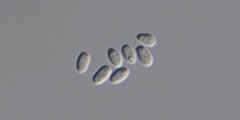 Epicoccum sorghinume0pathogen
- Outcome
- seed germinatione0
- Direction
- reducede0
- Value
- 46e0
- Comparator
- inoculation at anthesise0
Organisms pictured · Representative pictures of the matched species, not figures from the paper.
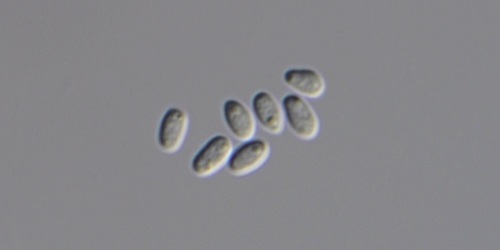
Verbatim
e0“inoculation of plants at soft dough stage with CUfVularia lunata, F. thapsinum and Phoma sorghina reduced seed germination by 52, 46 and 46 %, respectively, compared with inoculation at anthesis”
t0“sorghum”
Claim · model-written summary
The authors suggested disease control during late milk to soft dough for susceptible cultivars.
- Outcome
- control practices during late milk to soft dough growth stagese0
Organisms pictured · Representative pictures of the matched species, not figures from the paper.
Verbatim
e0“susceptible sorghum cultivars could respond better to control practices during late milk to soft dough growth stages than at other stages of development”
The same questions in other papers
Fusarium thapsinum · growth · SorghumResults agree
1 paper in the same direction as this paper
- negative
inoculation · growth · SorghumPositive and negative results
10 papers in the same direction as this paper · 65 in the opposite direction
- positive
- positive
- positive
72 papers more in this group
See all 76 papers →Claims are grouped by organism, treatment and what was measured or targeted. A paper counts as positive when any of its claims in the group is positive.