Abstract
Abstract Rice hoja blanca (RHB; white leaf) devastated rice ( Oryza sativa ) plantings in tropical America for half a century, before scientists could either identify its causal agent or understand the nature of its cyclical epidemics. The association of the planthopper Tagosodes orizicolus with RHB outbreaks, 20 years after its emergence in South America, suggested the existence of a viral pathogen. However, T. orizicolus could also cause severe direct feeding damage (hopperburn) to rice in the absence of hoja blanca, and breeders promptly realized that the genetic basis of resistance to these problems was different. Furthermore, it was observed that the causal agent of RHB could only be transmitted by a relatively low proportion of the individuals in any given population of T. orizicolus and that the pathogen was transovarially transmitted to the progeny of the planthopper vectors, affecting their normal biology. An international rice germplasm screening effort was initiated in the late 1950s to identify sources of resistance against RHB and the direct feeding damage caused by T. orizicolus , making better progress in the development of hopperburn-resistant than for hoja-blanca-resistant rice lines. In the 1980s, the identification of a novel virus as the causal agent of RHB, and genetic studies on the interaction of this virus with its planthopper vector, confirmed previous studies on the pathogenic nature of the virus to T. orizicolus and helped explain the cyclical nature of RHB epidemics. This disease is best controlled by hybridization of susceptible indica and resistant japonica rice genotypes and the adoption of integrated disease control practices.
Abstract from the paper’s OpenAlex record; open copy licensed other-oa. Read at the source ↗
The text the model read, with the source record’s inline markup (italics, sub- and superscripts) rendered and its character entities decoded; quote offsets refer to the raw text.
Claims 9
Claim · model-written summary
Rice hoja blanca devastated rice plantings in tropical America.
- Taxon
- rice
 Oryza sativae0
- Outcome
- Rice hoja blancae0
- Setting
- tropical Americae0
Organisms pictured · Representative pictures of the matched species, not figures from the paper.

Verbatim
e0“Rice hoja blanca (RHB; white leaf) devastated rice ( Oryza sativa ) plantings in tropical America”
Claim · model-written summary
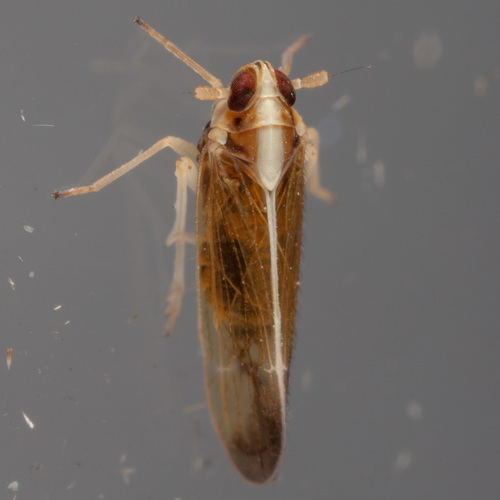
Tagosodes orizicolus was associated with RHB outbreaks.
- Taxon
- RiceOryza sativat0
- Interactor
- Tagosodes orizicolus
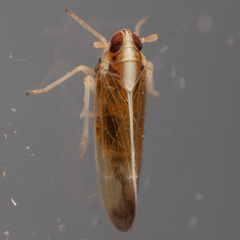 Tagosodes orizicoluse0pest
- Outcome
- RHB outbreakse0
Not reportedDirection
Organisms pictured · Representative pictures of the matched species, not figures from the paper.
Verbatim
e0“association of the planthopper Tagosodes orizicolus with RHB outbreaks”
t0“Rice”
Claim · model-written summary
T. orizicolus caused direct feeding damage to rice without hoja blanca.
- Taxon
- riceOryza sativae0
- Interactor
- T. orizicolusTagosodes orizicoluse0pest
- Outcome
- direct feeding damage (hopperburn)e0
Organisms pictured · Representative pictures of the matched species, not figures from the paper.
Verbatim
e0“T. orizicolus could also cause severe direct feeding damage (hopperburn) to rice in the absence of hoja blanca”
Claim · model-written summary
Resistance to hoja blanca and hopperburn had different genetic bases.
- Taxon
- RiceOryza sativat0
- Outcome
- genetic basis of resistancee0
Organisms pictured · Representative pictures of the matched species, not figures from the paper.
Verbatim
e0“genetic basis of resistance to these problems was different”
t0“Rice”
Claim · model-written summary
Only a low proportion of T. orizicolus transmitted the RHB agent.
- Taxon
- RiceOryza sativat0
- Interactor
- T. orizicolusTagosodes orizicoluse0pest
- Outcome
- causal agent of RHBe0
Organisms pictured · Representative pictures of the matched species, not figures from the paper.
Verbatim
e0“causal agent of RHB could only be transmitted by a relatively low proportion of the individuals in any given population of T. orizicolus”
t0“Rice”
Claim · model-written summary
The pathogen was transmitted transovarially in planthopper vectors.
- Taxon
- RiceOryza sativat0
- Interactor
- planthopper vectorse0pest
- Outcome
- pathogen was transovarially transmittede0
Organisms pictured · Representative pictures of the matched species, not figures from the paper.
Verbatim
e0“pathogen was transovarially transmitted to the progeny of the planthopper vectors”
t0“Rice”
Claim · model-written summary
Screening made more progress with hopperburn resistant than hoja blanca resistant rice lines.
- Taxon
- riceOryza sativae0
- Outcome
- development of hopperburn-resistante0
Organisms pictured · Representative pictures of the matched species, not figures from the paper.
Verbatim
e0“making better progress in the development of hopperburn-resistant than for hoja-blanca-resistant rice lines”
Claim · model-written summary
A novel virus was identified as the causal agent of RHB.
- Taxon
- RiceOryza sativat0
- Interactor
- a novel viruse0pathogen
- Outcome
- causal agent of RHBe0
Organisms pictured · Representative pictures of the matched species, not figures from the paper.
Verbatim
e0“identification of a novel virus as the causal agent of RHB”
t0“Rice”
Claim · model-written summary
Hybridization of susceptible indica and resistant japonica rice genotypes and integrated practices were recommended for control.
- Taxon
- riceOryza sativae0
- Outcome
- hybridization of susceptible indica and resistant japonica rice genotypes and the adoption of integrated disease control practicese0
Organisms pictured · Representative pictures of the matched species, not figures from the paper.
Verbatim
e0“This disease is best controlled by hybridization of susceptible indica and resistant japonica rice genotypes and the adoption of integrated disease control practices”