Abstract
Abstract Daylily rust, caused by P uccinia hemerocallidis , has been present in the U nited S tates since 2000. In 2003, inoculations with a single isolate of P . hemerocallidis identified daylily cultivars with high levels of resistance to the fungus. The present study was carried out to determine if pathotypes of P . hemerocallidis are present in the south eastern U nited S tates. Sixteen isolates of P . hemerocallidis were each inoculated onto leaf segments from 19 daylily cultivars and the resulting disease phenotype assessed. A significant effect of rust isolate on host reaction phenotype was observed for nine of the 19 daylily cultivars. Five of the nine cultivars displayed reaction phenotypes with different isolates of P . hemerocallidis that included at least one susceptible or moderately susceptible and also resistant phenotypes. These results indicate that different pathotypes of the fungus are present in the south east U nited S tates. Daylily hybridizers interested in screening for host resistance to P . hemerocallidis will need to include multiple isolates of the fungus to allow for this host specialization.
Abstract from the paper’s OpenAlex record, shown for indexing and research. Copyright remains with the authors or the publisher. Read at the source ↗
The text the model read, with the source record’s inline markup (italics, sub- and superscripts) rendered and its character entities decoded; quote offsets refer to the raw text.
Claims 4
Claim · model-written summary
Rust isolate significantly affected host reaction phenotype in nine of 19 daylily cultivars.
- Taxon
- daylily
 Hemerocallis hybrid cultivare0
- Interactor
- rust isolatee0pathogen
- Outcome
- host reaction phenotypee0
- Value
- nine of the 19e0
Organisms pictured · Representative pictures of the matched species, not figures from the paper.

Verbatim
e0“A significant effect of rust isolate on host reaction phenotype was observed for nine of the 19 daylily cultivars.”
Claim · model-written summary
Five cultivars showed both susceptible and resistant phenotypes across isolates.
- Taxon
- daylilyHemerocallis hybrid cultivart0
- Interactor
- P . hemerocallidis
 Puccinia hemerocallidise0pathogen
- Outcome
- reaction phenotypese0
- Value
- Five of the ninee0
Organisms pictured · Representative pictures of the matched species, not figures from the paper.
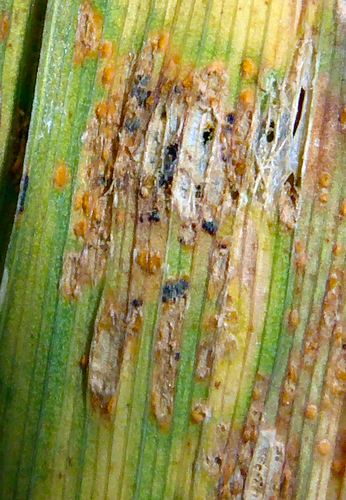
Verbatim
e0“Five of the nine cultivars displayed reaction phenotypes with different isolates of P . hemerocallidis that included at least one susceptible or moderately susceptible and also resistant phenotypes.”
t0“Daylily”
Claim · model-written summary
Different fungal pathotypes occur in the southeastern United States.
- Taxon
- DaylilyHemerocallis hybrid cultivart0
- Interactor
- Puccinia hemerocallidisPuccinia hemerocallidist0pathogen
- Outcome
- different pathotypes of the funguse0
- Setting
- south east U nited S tatese0
Organisms pictured · Representative pictures of the matched species, not figures from the paper.
Verbatim
e0“These results indicate that different pathotypes of the fungus are present in the south east U nited S tates.”
t0“Daylily Rust Pathogen Puccinia hemerocallidis”
Claim · model-written summary
Hybridizers should screen daylily resistance with multiple fungal isolates.
- Taxon
- DaylilyHemerocallis hybrid cultivare0
- Interactor
- P . hemerocallidisPuccinia hemerocallidise0pathogen
- Outcome
- include multiple isolates of the funguse0
Organisms pictured · Representative pictures of the matched species, not figures from the paper.
Verbatim
e0“Daylily hybridizers interested in screening for host resistance to P . hemerocallidis will need to include multiple isolates of the fungus to allow for this host specialization.”