Abstract
The present study aimed to analyze the vegetation dynamics and plant diversity from the dry deciduous forests of Doon Valley. Species richness, regeneration, and change in community composition of these forests were studied and change was noticed with Shorea robusta as the main dominant species, and Mallotus philippensis, Syzygium cumini, and Ehretia laevis as codominant tree species in all communities. The highest species richness and diversity rates were found to be increased with the decrease in tree density and basal area. The high Importance Value Index recorded in Thano (>150) indicates that the S. robusta forest is progressing toward the culmination stage, whereas the lower IVI values (100 and 150) in the other two sites (Selaqui – Jhajra and Asarori) signify the heavy disturbance of these sites and further establishment of alien invasive species such as Cassia tora, Cassia occidentalis, Lantana camara, Urena lobata, Ipomoea carnea, Sida acuta, and Solanum torvum.
Abstract from the paper’s OpenAlex record; open copy licensed cc-by-nc-nd. Read at the source ↗
The text the model read, with the source record’s inline markup (italics, sub- and superscripts) rendered and its character entities decoded; quote offsets refer to the raw text.
Claims 5
Claim · model-written summary
Shorea robusta was the main dominant tree in all studied communities.
- Taxon
- Shorea robusta
 Shorea robustae0
- Outcome
- main dominant speciese0
Organisms pictured · Representative pictures of the matched species, not figures from the paper.

Verbatim
e0“Shorea robusta as the main dominant species”
Claim · model-written summary
Mallotus philippensis, Syzygium cumini and Ehretia laevis were codominant trees in all communities.
- Taxon
- Mallotus philippensis, Syzygium cumini, and Ehretia laevis
 Ehretia laevis
 Syzygium cumini
 Mallotus philippensise0
- Outcome
- codominant tree speciese0
Organisms pictured · Representative pictures of the matched species, not figures from the paper.


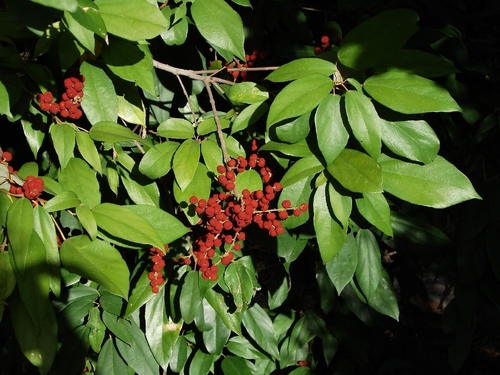
Verbatim
e0“Mallotus philippensis, Syzygium cumini, and Ehretia laevis as codominant tree species in all communities”
Claim · model-written summary
Species richness and diversity were highest where tree density and basal area were lower.
Verbatim
e0“The highest species richness and diversity rates were found to be increased with the decrease in tree density and basal area.”
Claim · model-written summary
The Thano forest had an Importance Value Index above 150, interpreted as progression of the S. robusta forest toward culmination.
- Taxon
- S. robustaShorea robustae0
- Outcome
- Importance Value Indexe0
- Value
- >150e0
- Qualifier
- progressing toward the culmination stagee0
- Setting
- Thanoe0
Organisms pictured · Representative pictures of the matched species, not figures from the paper.
Verbatim
e0“The high Importance Value Index recorded in Thano (>150) indicates that the S. robusta forest is progressing toward the culmination stage”
Claim · model-written summary
Lower IVI at Selaqui–Jhajra and Asarori was interpreted as heavy disturbance and establishment of alien invasive species.
- Outcome
- IVI valuese0
- Value
- 100 and 150e0
- Qualifier
- heavy disturbancee0
- Setting
- Selaqui – Jhajra and Asarorie0
Not reportedTaxon
Verbatim
e0“lower IVI values (100 and 150) in the other two sites (Selaqui – Jhajra and Asarori) signify the heavy disturbance of these sites and further establishment of alien invasive species such as Cassia tora, Cassia occidentalis, Lantana camara, Urena lobata, Ipomoea carnea, Sida acuta, and Solanum torvum.”