Abstract
Field experiments were carried out in Nicaragua to examine the influence of plant community diversity, plant density, and host plant quality on the spread of an insect-transmitted plant pathogen. Population levels of the corn leafhopper Dalbulus maidis, which transmits the corn stunt spiroplasma to maize, were monitored in four experimental communities; low-density maize monoculture, high-density maize monoculture, two-species (maize/bean) polyculture, and multispecies (maize/weeds) polyculture. Leafhopper abundance per plant and the incidence of corn stunt were lower in high-density maize monocultures than in low-density monocultures. Increasing plant diversity by intercropping with nonhost species such as beans or weeds also led to lower leafhooper abundance and decreased disease incidence, but the effect was not enhanced as additional nonhost species were added to the community. Manipulating host plant quality by increasing nitrogen fertilization resulted in higher leafhopper densities at higher nitrogen levels. To explore the role of vector movement in disease spread, leafhopper movement rates and emigration were estimated by observing changes in the spatial gradients of leafhopper densities over time. This method of movement analysis requires neither marking the insects nor releasing them at a single point, and thus reduces the extreme disturbance caused by traditional mark-release techniques. The analysis indicated that leafhopper movement rates were lowest in the polycultures. In particular, across-row movement was strikingly inhibited in the bean polyculture. This polyculture also had the highest rates of emigration. These results indicate that plant quality, density, and diversity significantly affect the spread of corn stunt through their effects on the abundance and movement behavior of the corn leafhopper. These factors could be manipulated in a program of cultural control for corn stunt in maize fields in tropical America.
Abstract from the paper’s OpenAlex record, shown for indexing and research. Copyright remains with the authors or the publisher. Read at the source ↗
The text the model read, with the source record’s inline markup (italics, sub- and superscripts) rendered and its character entities decoded; quote offsets refer to the raw text.
Claims 11
Claim · model-written summary
High-density maize had lower leafhopper abundance than low-density maize.
- Treatment
- high-density maize monoculturese0
- Interactor
- corn leafhopper
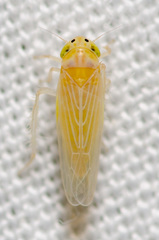 Dalbulus maidise1peste0
- Outcome
- Leafhopper abundance per plante0
- Direction
- lowere0
- Comparator
- low-density monoculturese0
 Zea mays
Organisms pictured · Representative pictures of the matched species, not figures from the paper.


Verbatim
e0“Leafhopper abundance per plant and the incidence of corn stunt were lower in high-density maize monocultures than in low-density monocultures.”
e1“the corn leafhopper Dalbulus maidis”
Claim · model-written summary
High-density maize had lower corn stunt incidence than low-density maize.
- Treatment
- high-density maize monoculturese0
- Interactor
- corn stunte0pathogen
- Outcome
- incidence of corn stunte0
- Direction
- lowere0
- Comparator
- low-density monoculturese0
Organisms pictured · Representative pictures of the matched species, not figures from the paper.
Verbatim
e0“Leafhopper abundance per plant and the incidence of corn stunt were lower in high-density maize monocultures than in low-density monocultures.”
Claim · model-written summary
Intercropping maize with beans or weeds lowered leafhopper abundance.
- Treatment
- intercropping with nonhost species such as beans or weedse0
- Outcome
- leafhooper abundancee0
- Direction
- lowere0
Not reportedInteractorComparator
Organisms pictured · Representative pictures of the matched species, not figures from the paper.
Verbatim
e0“Increasing plant diversity by intercropping with nonhost species such as beans or weeds also led to lower leafhooper abundance and decreased disease incidence”
t0“Maize”
Claim · model-written summary
Intercropping maize with beans or weeds decreased disease incidence.
- Treatment
- intercropping with nonhost species such as beans or weedse0
- Outcome
- disease incidencee0
- Direction
- decreasede0
Not reportedComparator
Organisms pictured · Representative pictures of the matched species, not figures from the paper.
Verbatim
e0“Increasing plant diversity by intercropping with nonhost species such as beans or weeds also led to lower leafhooper abundance and decreased disease incidence”
t0“Maize”
Claim · model-written summary
Adding further nonhost species did not enhance the diversity effect.
Not reportedComparator
Organisms pictured · Representative pictures of the matched species, not figures from the paper.
Verbatim
e0“the effect was not enhanced as additional nonhost species were added to the community”
t0“Maize”
Claim · model-written summary
Higher nitrogen levels increased leafhopper densities.
Not reportedComparator
Organisms pictured · Representative pictures of the matched species, not figures from the paper.
Verbatim
e0“Manipulating host plant quality by increasing nitrogen fertilization resulted in higher leafhopper densities at higher nitrogen levels.”
t0“Maize”
Claim · model-written summary
The movement analysis avoids marking and single-point release, reducing disturbance.
Organisms pictured · Representative pictures of the matched species, not figures from the paper.
Verbatim
e0“This method of movement analysis requires neither marking the insects nor releasing them at a single point, and thus reduces the extreme disturbance caused by traditional mark-release techniques.”
t0“Maize”
Claim · model-written summary
Leafhopper movement rates were lowest in polycultures.
Organisms pictured · Representative pictures of the matched species, not figures from the paper.
Verbatim
e0“leafhopper movement rates were lowest in the polycultures”
t0“Maize”
Claim · model-written summary
Across-row leafhopper movement was inhibited in bean polyculture.
Organisms pictured · Representative pictures of the matched species, not figures from the paper.
Verbatim
e0“across-row movement was strikingly inhibited in the bean polyculture”
t0“Maize”
Claim · model-written summary
Bean polyculture had the highest leafhopper emigration rates.
Organisms pictured · Representative pictures of the matched species, not figures from the paper.
Verbatim
e0“This polyculture also had the highest rates of emigration.”
t0“Maize”
Claim · model-written summary
The authors propose manipulating plant quality, density, and diversity for corn stunt cultural control.
Organisms pictured · Representative pictures of the matched species, not figures from the paper.
Verbatim
e0“These factors could be manipulated in a program of cultural control for corn stunt in maize fields in tropical America.”
The same questions in other papers
rotation · disease · Zea mays (maize)Positive and negative results
6 papers in the same direction as this paper · 4 in the opposite direction · 1 reporting no difference from an alternative
- negative
- negative
- no effect
8 papers more in this group
See all 12 papers →intercropping · disease · Zea mays (maize)Positive and negative results
19 papers in the same direction as this paper · 2 in the opposite direction
- negative
- no effect
- positive
18 papers more in this group
See all 22 papers →intercropping · pest · Zea mays (maize)Positive and negative results
30 papers in the same direction as this paper · 7 in the opposite direction
- negative
- no effect
- no effect
34 papers more in this group
See all 38 papers →Claims are grouped by organism, treatment and what was measured or targeted. A paper counts as positive when any of its claims in the group is positive.