Abstract
Meiosis and mitosis of six Chinese Actinidiaceae were studied: Saurauia tristyla DC., S. miniata C. F. Liang & Y. S. Wang, Actinidia chinensis Plach., A. deliciosa (Cheval.) C. F. Liang & A. R. Ferguson, A. indochinensis Merr. and Clematoclethra lasioclada Maxim. The chromosome numbers of Saurauia tristyla and S. miniata were 2n = 6x = 78, establishing a base chromosome number of x = 13 in the genus, differing from the previous report of x = 15. The chromosome number of Clematoclethra was first reported to be 2n = 4x = 48 (x = 12), while that of Actinidia was x = 29, consistent with previous reports. The base chromosome number of Clematoclethra (x = 12) was derived from an aneuploid decrease from Saurauia (x = 13). Actinidia (x = 29) was derived from the palaeotetraploid (x = 14), which was formed through the increase of the basic chromosome number x = 13 to x = 14 by aneuploidy and through the breakage of a centromere to add one more new chromosome. The chromosome data in Actinidia were consistent with the geographical and morphological evidence for the evolution of the three genera. The tropical American and Asian disjunct distribution pattern and the diversity of base chromosome numbers of Saurauia further support the probability that the genus was an early divergent from a common ancestor of Actinidia and Clematoclethra.
Abstract from the paper’s OpenAlex record, shown for indexing and research. Copyright remains with the authors or the publisher. Read at the source ↗
The text the model read, with the source record’s inline markup (italics, sub- and superscripts) rendered and its character entities decoded; quote offsets refer to the raw text.
Claims 10
Claim · model-written summary
Saurauia tristyla had 2n = 6x = 78 chromosomes.
- Taxon
- Saurauia tristyla
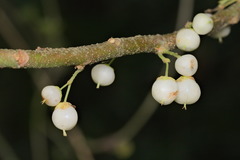 Saurauia tristylae0
- Outcome
- chromosome numberse0
- Value
- 2n = 6x = 78e0
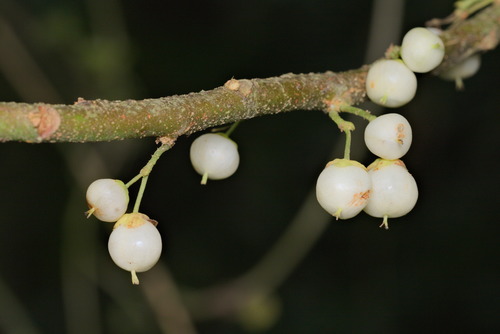
Organisms pictured · Representative pictures of the matched species, not figures from the paper.
Verbatim
e0“The chromosome numbers of Saurauia tristyla and S. miniata were 2n = 6x = 78”
Claim · model-written summary
S. miniata had 2n = 6x = 78 chromosomes.
- Taxon
- S. miniataSaurauia miniatae0
- Outcome
- chromosome numberse0
- Value
- 2n = 6x = 78e0
Verbatim
e0“The chromosome numbers of Saurauia tristyla and S. miniata were 2n = 6x = 78”
Claim · model-written summary
Saurauia had base chromosome number x = 13.
 Saurauia
Organisms pictured · Representative pictures of the matched species, not figures from the paper.

Verbatim
e0“The chromosome numbers of Saurauia tristyla and S. miniata were 2n = 6x = 78, establishing a base chromosome number of x = 13 in the genus, differing from the previous report of x = 15”
Claim · model-written summary
Clematoclethra chromosome number was reported as 2n = 4x = 48.
- Taxon
- Clematoclethra
 Clematoclethrae0
- Outcome
- chromosome numbere0
- Value
- 2n = 4x = 48e0
Organisms pictured · Representative pictures of the matched species, not figures from the paper.

Verbatim
e0“The chromosome number of Clematoclethra was first reported to be 2n = 4x = 48 (x = 12)”
Claim · model-written summary
Clematoclethra base chromosome number was x = 12.
- Taxon
- ClematoclethraClematoclethrae0
- Outcome
- chromosome numbere0
- Value
- x = 12e0
Organisms pictured · Representative pictures of the matched species, not figures from the paper.
Verbatim
e0“The chromosome number of Clematoclethra was first reported to be 2n = 4x = 48 (x = 12)”
Claim · model-written summary
Actinidia base number was x = 29.
 Actinidia
Organisms pictured · Representative pictures of the matched species, not figures from the paper.

Verbatim
e0“while that of Actinidia was x = 29, consistent with previous reports”
Claim · model-written summary
Clematoclethra x = 12 was inferred from an aneuploid decrease from Saurauia.
- Taxon
- ClematoclethraClematoclethrae0
- Outcome
- derived from an aneuploid decreasee0
- Value
- x = 12e0
Organisms pictured · Representative pictures of the matched species, not figures from the paper.
Verbatim
e0“The base chromosome number of Clematoclethra (x = 12) was derived from an aneuploid decrease from Saurauia (x = 13)”
Claim · model-written summary
Actinidia x = 29 was inferred to derive from palaeotetraploid x = 14.
Organisms pictured · Representative pictures of the matched species, not figures from the paper.
Verbatim
e0“Actinidia (x = 29) was derived from the palaeotetraploid (x = 14)”
Claim · model-written summary
Chromosome data agreed with geographical and morphological evidence for three-genera evolution.
- Outcome
- consistent with the geographical and morphological evidencee0
Organisms pictured · Representative pictures of the matched species, not figures from the paper.
Verbatim
e0“The chromosome data in Actinidia were consistent with the geographical and morphological evidence for the evolution of the three genera”
Claim · model-written summary
Saurauia distribution and base-number diversity supported early divergence from the shared ancestor.
- Outcome
- early divergent from a common ancestor of Actinidia and Clematoclethrae0
Organisms pictured · Representative pictures of the matched species, not figures from the paper.
Verbatim
e0“The tropical American and Asian disjunct distribution pattern and the diversity of base chromosome numbers of Saurauia further support the probability that the genus was an early divergent from a common ancestor of Actinidia and Clematoclethra”