Abstract
Investigations on the species composition and host range of aphids on ornamental greenhouse plants in Bulgaria was conducted over a period of five years, from 2008 to 2012. Twenty greenhouses, growing ornamentals for landscaping, plant collections and other purposes were observed. They were located in the regions of Sofia, Plovdiv, Smolyan, Pavlikeni, Varna and Burgas. The total number of collected aphid samples was 279. Their composition included 33 aphid species and one subspecies from 13 genera and 5 subfamilies. Twenty-eight species were found to belong to subfamily Aphidinae. Almost 70 % of all recorded species were polyphagous. The most widespread aphid species was Myzus persicae, detected in 13 greenhouses all year round, followed by Aulacorthum solani (10 greenhouses) and Aphis gossypii (9 greenhouses). The widest host range was shown by Myzus persicae (43 hosts), Aulacorthum solani (32 hosts) and Aulacorthum circumflexum (23 hosts). The list of host plants includes 114 species from 95 genera and 58 families. The greatest variety of aphid species was detected on Hibiscus (9 species). Out of all aphid samples 12.9 % were collected on Hibiscus and 6.8 %, on Dendranthema. The greatest variety of aphid species was detected on Hibiscus (9 species). Periphyllus californiensis and Aphis (Aphis) fabae mordvilkoi are reported for the first time for Bulgaria. Furthermore, Aphis spiraecola has been found in new localities and has widened its host range in this country.
Abstract from the paper’s OpenAlex record; open copy licensed cc-by. Read at the source ↗
The text the model read, with the source record’s inline markup (italics, sub- and superscripts) rendered and its character entities decoded; quote offsets refer to the raw text.
Claims 17
Claim · model-written summary
Collected aphids comprised 33 species and one subspecies in 13 genera and 5 subfamilies.
Not reportedDirection
Verbatim
e0“Their composition included 33 aphid species and one subspecies from 13 genera and 5 subfamilies.”
Claim · model-written summary
Twenty-eight aphid species belonged to Aphidinae.
Not reportedDirection
Verbatim
e0“Twenty-eight species were found to belong to subfamily Aphidinae.”
Claim · model-written summary
Almost 70% of recorded aphid species were polyphagous.
- Taxon
- AphidsAphidomorphat0
- Outcome
- polyphagouse0
- Value
- Almost 70 %e0
Not reportedDirection
Verbatim
e0“Almost 70 % of all recorded species were polyphagous.”
t0“Aphids”
Claim · model-written summary
Myzus persicae was the most widespread aphid, occurring in 13 greenhouses throughout the year.
- Taxon
- Myzus persicae
 Myzus persicaee0
- Outcome
- most widespread aphid speciese0
- Value
- 13 greenhousese0
- Qualifier
- all year rounde0
Organisms pictured · Representative pictures of the matched species, not figures from the paper.

Verbatim
e0“The most widespread aphid species was Myzus persicae, detected in 13 greenhouses all year round”
Claim · model-written summary
Aulacorthum solani occurred in 10 greenhouses.
- Taxon
- Aulacorthum solani
 Aulacorthum solanie0
- Outcome
- greenhousese0
- Value
- 10 greenhousese0
Not reportedDirection
Organisms pictured · Representative pictures of the matched species, not figures from the paper.

Verbatim
e0“followed by Aulacorthum solani (10 greenhouses) and Aphis gossypii (9 greenhouses).”
Claim · model-written summary
Aphis gossypii occurred in 9 greenhouses.
- Taxon
- Aphis gossypii
 Aphis gossypiie0
- Outcome
- greenhousese0
- Value
- 9 greenhousese0
Not reportedDirection
Organisms pictured · Representative pictures of the matched species, not figures from the paper.

Verbatim
e0“followed by Aulacorthum solani (10 greenhouses) and Aphis gossypii (9 greenhouses).”
Claim · model-written summary
Myzus persicae had the widest host range, with 43 hosts.
- Taxon
- Myzus persicaeMyzus persicaee0
- Outcome
- host rangee0
- Direction
- wideste0
- Value
- 43 hostse0
Organisms pictured · Representative pictures of the matched species, not figures from the paper.
Verbatim
e0“The widest host range was shown by Myzus persicae (43 hosts), Aulacorthum solani (32 hosts) and Aulacorthum circumflexum (23 hosts).”
Claim · model-written summary
Aulacorthum solani had 32 hosts.
- Taxon
- Aulacorthum solaniAulacorthum solanie0
- Outcome
- host rangee0
- Value
- 32 hostse0
Not reportedDirection
Organisms pictured · Representative pictures of the matched species, not figures from the paper.
Verbatim
e0“The widest host range was shown by Myzus persicae (43 hosts), Aulacorthum solani (32 hosts) and Aulacorthum circumflexum (23 hosts).”
Claim · model-written summary
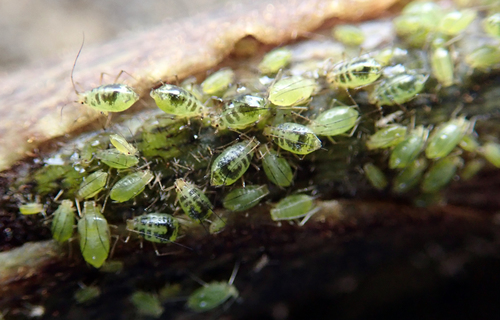
Aulacorthum circumflexum had 23 hosts.
- Taxon
- Aulacorthum circumflexum
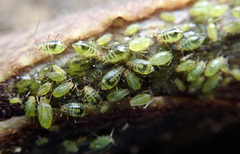 Neomyzus circumflexuse0
- Outcome
- host rangee0
- Value
- 23 hostse0
Not reportedDirection
Organisms pictured · Representative pictures of the matched species, not figures from the paper.
Verbatim
e0“The widest host range was shown by Myzus persicae (43 hosts), Aulacorthum solani (32 hosts) and Aulacorthum circumflexum (23 hosts).”
Claim · model-written summary
Host plants included 114 species in 95 genera and 58 families.
Not reportedDirection
Verbatim
e0“The list of host plants includes 114 species from 95 genera and 58 families.”
Claim · model-written summary
Hibiscus hosted the greatest aphid species variety, with 9 species.
 Hibiscus
Organisms pictured · Representative pictures of the matched species, not figures from the paper.

Verbatim
e0“The list of host plants includes 114 species from 95 genera and 58 families. The greatest variety of aphid species was detected on Hibiscus (9 species).”
Claim · model-written summary
Hibiscus accounted for 12.9% of aphid samples.
Not reportedDirection
Organisms pictured · Representative pictures of the matched species, not figures from the paper.
Verbatim
e0“Out of all aphid samples 12.9 % were collected on Hibiscus and 6.8 %, on Dendranthema.”
Claim · model-written summary
Dendranthema accounted for 6.8% of aphid samples.
- Taxon
- Dendranthema
 Chrysanthemume0
- Interactor
- aphide0pest
- Outcome
- aphid samplese0
- Value
- 6.8 %e0
Not reportedDirection
Organisms pictured · Representative pictures of the matched species, not figures from the paper.

Verbatim
e0“Out of all aphid samples 12.9 % were collected on Hibiscus and 6.8 %, on Dendranthema.”
Claim · model-written summary
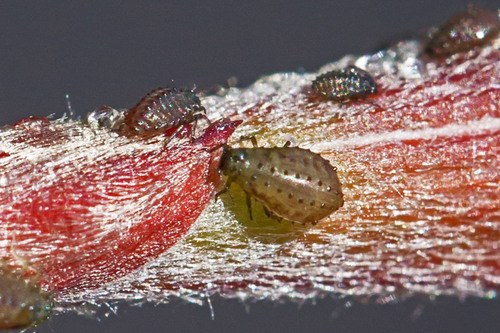
Periphyllus californiensis was reported for Bulgaria for the first time.
- Taxon
- Periphyllus californiensis
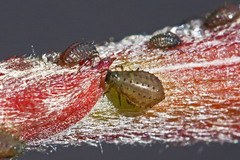 Periphyllus californiensise0
- Outcome
- reported for the first timee0
- Setting
- Bulgariae0
Not reportedDirection
Organisms pictured · Representative pictures of the matched species, not figures from the paper.
Verbatim
e0“Periphyllus californiensis and Aphis (Aphis) fabae mordvilkoi are reported for the first time for Bulgaria.”
Claim · model-written summary
Aphis (Aphis) fabae mordvilkoi was reported for Bulgaria for the first time.
 Aphis
Not reportedDirection
Organisms pictured · Representative pictures of the matched species, not figures from the paper.

Verbatim
e0“Periphyllus californiensis and Aphis (Aphis) fabae mordvilkoi are reported for the first time for Bulgaria.”
Claim · model-written summary
Aphis spiraecola was found in new Bulgarian localities.
- Taxon
- Aphis spiraecola
 Aphis spiraecolae0
- Outcome
- found in new localitiese0
- Setting
- Bulgariat0
Not reportedDirection
Organisms pictured · Representative pictures of the matched species, not figures from the paper.

Verbatim
e0“Furthermore, Aphis spiraecola has been found in new localities and has widened its host range in this country.”
t0“Bulgaria”
Claim · model-written summary
Aphis spiraecola widened its host range in Bulgaria.
- Taxon
- Aphis spiraecolaAphis spiraecolae0
- Outcome
- host rangee0
- Direction
- widenede0
- Setting
- Bulgariat0
Organisms pictured · Representative pictures of the matched species, not figures from the paper.
Verbatim
e0“Furthermore, Aphis spiraecola has been found in new localities and has widened its host range in this country.”
t0“Bulgaria”