Abstract
Scanning electron microscopic investigations of seed morphology of the five genera of Menyanthaceae illustrate a remarkable diversity of seed characteristics for a small family. Seeds of the monotypic northern hemisphere Menyanthes and Fauria are unomamented and similar, and those of the monotypic Liparophyllum of New Zealand and Tasmania are similar to some Australian species of Villarsia . Seed characteristics within the larger genera Villarsia and Nymphoides are variable and mostly species specific, but do not lend support to taxonomic separation of these genera. Interspecific affinities postulated on other grounds are, in many instances, supported by seed morphology. Various seed‐coat features are believed to aid in water or animal dispersal of the seeds of several species. Ant dispersal appears to be important for Villarsia and Nymphoides in Australia, but does not seem to occur in these genera or in other members of the family outside of Australia.
Abstract from the paper’s OpenAlex record, shown for indexing and research. Copyright remains with the authors or the publisher. Read at the source ↗
The text the model read, with the source record’s inline markup (italics, sub- and superscripts) rendered and its character entities decoded; quote offsets refer to the raw text.
Claims 9
Claim · model-written summary
The five genera had diverse seed characteristics.
- Taxon
- MenyanthaceaeMenyanthaceaee0
- Organ / stage
- seede0
- Outcome
- diversity of seed characteristicse0
Verbatim
e0“seed morphology of the five genera of Menyanthaceae illustrate a remarkable diversity of seed characteristics”
Claim · model-written summary
Menyanthes and Fauria seeds were unornamented and similar.
Verbatim
e0“Seeds of the monotypic northern hemisphere Menyanthes and Fauria are unomamented and similar”
Claim · model-written summary
Liparophyllum seeds resembled those of some Australian Villarsia.
- Taxon
- Liparophyllum
 Liparophyllume0
- Outcome
- similar to some Australian species of Villarsiae0
- Comparator
- Villarsiae0
Organisms pictured · Representative pictures of the matched species, not figures from the paper.
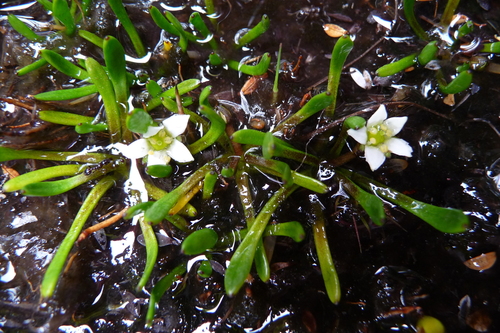
Verbatim
e0“those of the monotypic Liparophyllum of New Zealand and Tasmania are similar to some Australian species of Villarsia”
Claim · model-written summary
Villarsia and Nymphoides seed traits varied and were mostly species specific.
- Taxon
- Villarsia and Nymphoides
 Villarsia
 Nymphoidese0
- Outcome
- variable and mostly species specifice0
Organisms pictured · Representative pictures of the matched species, not figures from the paper.


Verbatim
e0“Seed characteristics within the larger genera Villarsia and Nymphoides are variable and mostly species specific”
Claim · model-written summary
Seed traits did not support taxonomic separation of Villarsia and Nymphoides.
- Taxon
- MENYANTHACEAEMenyanthaceaet0
- Outcome
- do not lend support to taxonomic separatione0
Verbatim
e0“do not lend support to taxonomic separation of these genera”
t0“MENYANTHACEAE”
Claim · model-written summary
Seed morphology supported several previously proposed interspecific affinities.
- Taxon
- MENYANTHACEAEMenyanthaceaet0
- Outcome
- supported by seed morphologye0
Verbatim
e0“Interspecific affinities postulated on other grounds are, in many instances, supported by seed morphology”
t0“MENYANTHACEAE”
Claim · model-written summary
Some seed-coat traits were interpreted as aiding water or animal dispersal.
- Taxon
- MENYANTHACEAEMenyanthaceaet0
- Organ / stage
- seed‐coat featurese0
- Outcome
- water or animal dispersale0
Verbatim
e0“Various seed‐coat features are believed to aid in water or animal dispersal of the seeds of several species”
t0“MENYANTHACEAE”
Claim · model-written summary
Ant dispersal appeared important for Australian Villarsia and Nymphoides.
- Taxon
- Villarsia and NymphoidesVillarsiaNymphoidese0
- Interactor
- Ante0other
- Outcome
- Ant dispersale0
- Setting
- Australiae0
Organisms pictured · Representative pictures of the matched species, not figures from the paper.
Verbatim
e0“Ant dispersal appears to be important for Villarsia and Nymphoides in Australia”
Claim · model-written summary
Ant dispersal apparently did not occur for those genera or other family members outside Australia.
- Taxon
- MENYANTHACEAEMenyanthaceaet0
- Outcome
- does not seem to occure0
- Setting
- outside of Australiae0
Verbatim
e0“does not seem to occur in these genera or in other members of the family outside of Australia”
t0“MENYANTHACEAE”