Abstract
During the dry years covered by the survey (1953-57) most of the beet leafhoppers (Circulifer tenellus (Baker)) and curly top in the Imperial Valley originated in the cultivated areas. The sugar beet and weeds were the most important host plants. A curly-top outbreak occurred in 1956, a year in which desert populations were low. The beet-leafhopper population and curly-top incidence were greatly reduced in the summer because of the reduction in numbers of host plants. The reduction was increased by establishment of a voluntary beet-free period and a weed host and beet-leafhopper control program. During the comparatively damp season of 1957-58, a moderate population developed in the uncultivated areas, while reproduction was delayed in cultivated areas.
Abstract from the paper’s OpenAlex record, shown for indexing and research. Copyright remains with the authors or the publisher. Read at the source ↗
The text the model read, with the source record’s inline markup (italics, sub- and superscripts) rendered and its character entities decoded; quote offsets refer to the raw text.
Claims 7
Claim · model-written summary
In dry years, most beet leafhoppers and curly top in the Imperial Valley originated in cultivated areas.
- Taxon
- Sugar Beets
 Beta vulgaris subsp. vulgarist0
- Interactor
- Circulifer tenellus
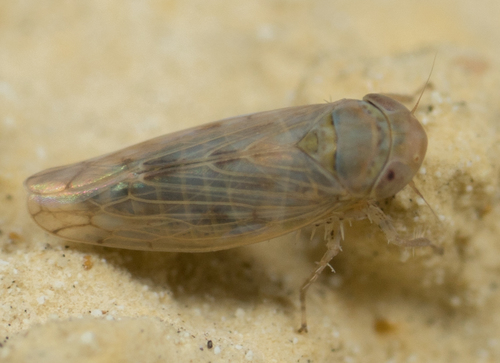
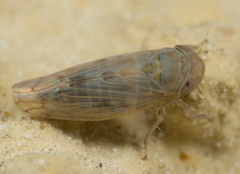 Neoaliturus tenelluse1pest
- Outcome
- originated in the cultivated arease1
- Qualifier
- dry yearse1
- Setting
- Imperial Valleyt0
Organisms pictured · Representative pictures of the matched species, not figures from the paper.

Verbatim
t0“on Sugar Beets in the Imperial Valley”
e1“During the dry years covered by the survey (1953-57) most of the beet leafhoppers (Circulifer tenellus (Baker)) and curly top in the Imperial Valley originated in the cultivated areas”
Claim · model-written summary
Sugar beet and weeds were the most important host plants of the beet leafhopper.
- Taxon
- sugar beetBeta vulgaris subsp. vulgarise2
- Interactor
- Circulifer tenellusNeoaliturus tenelluse1pest
- Outcome
- most important host plantse2
Organisms pictured · Representative pictures of the matched species, not figures from the paper.
Verbatim
t0“on Sugar Beets in the Imperial Valley”
e1“most of the beet leafhoppers (Circulifer tenellus (Baker)) and curly top in the Imperial Valley originated in the cultivated areas”
e2“The sugar beet and weeds were the most important host plants”
Claim · model-written summary
A curly-top outbreak occurred in 1956, a year in which desert populations were low.
- Taxon
- Sugar BeetsBeta vulgaris subsp. vulgarist0
- Outcome
- curly-top outbreake3
- Qualifier
- desert populations were lowe3
Organisms pictured · Representative pictures of the matched species, not figures from the paper.
Verbatim
t0“on Sugar Beets in the Imperial Valley”
e3“A curly-top outbreak occurred in 1956, a year in which desert populations were low”
Claim · model-written summary
Beet-leafhopper population and curly-top incidence were reduced in summer because of fewer host plants.
- Taxon
- Sugar BeetsBeta vulgaris subsp. vulgarist0
- Treatment
- reduction in numbers of host plantse4
- Outcome
- beet-leafhopper population and curly-top incidencee4
- Direction
- reducede4
- Setting
- summere4
Organisms pictured · Representative pictures of the matched species, not figures from the paper.
Verbatim
t0“on Sugar Beets in the Imperial Valley”
e4“The beet-leafhopper population and curly-top incidence were greatly reduced in the summer because of the reduction in numbers of host plants”
Claim · model-written summary
The reduction in leafhopper and curly-top levels was increased by a voluntary beet-free period and a weed host and beet-leafhopper control program.
- Taxon
- Sugar BeetsBeta vulgaris subsp. vulgarist0
- Treatment
- establishment of a voluntary beet-free period and a weed host and beet-leafhopper control programe5
- Outcome
- reductione5
- Direction
- increasede5
Organisms pictured · Representative pictures of the matched species, not figures from the paper.
Verbatim
t0“on Sugar Beets in the Imperial Valley”
e5“The reduction was increased by establishment of a voluntary beet-free period and a weed host and beet-leafhopper control program”
Claim · model-written summary
In the damp 1957-58 season, a moderate leafhopper population developed in uncultivated areas.
- Taxon
- Sugar BeetsBeta vulgaris subsp. vulgarist0
- Interactor
- Circulifer tenellusNeoaliturus tenelluse1pest
- Outcome
- a moderate population developede6
- Qualifier
- comparatively damp season of 1957-58e6
- Setting
- uncultivated arease6
Organisms pictured · Representative pictures of the matched species, not figures from the paper.
Verbatim
t0“on Sugar Beets in the Imperial Valley”
e1“most of the beet leafhoppers (Circulifer tenellus (Baker)) and curly top in the Imperial Valley originated in the cultivated areas”
e6“During the comparatively damp season of 1957-58, a moderate population developed in the uncultivated areas, while reproduction was delayed in cultivated areas”
Claim · model-written summary
Leafhopper reproduction was delayed in cultivated areas in the damp 1957-58 season.
- Taxon
- Sugar BeetsBeta vulgaris subsp. vulgarist0
- Interactor
- Circulifer tenellusNeoaliturus tenelluse1pest
- Outcome
- reproductione6
- Direction
- delayede6
- Setting
- cultivated arease6
Organisms pictured · Representative pictures of the matched species, not figures from the paper.
Verbatim
t0“on Sugar Beets in the Imperial Valley”
e1“most of the beet leafhoppers (Circulifer tenellus (Baker)) and curly top in the Imperial Valley originated in the cultivated areas”
e6“During the comparatively damp season of 1957-58, a moderate population developed in the uncultivated areas, while reproduction was delayed in cultivated areas”