Abstract
We evaluated the effects of crude extracts from the plantain Plantago lanceolata and the bitter gourd Momordica charantia on the oviposition preference and development of the coffee leaf miner Leucoptera coffeella Guérin-Mèneville & Perrottet under laboratory and/or greenhouse conditions. The ovicidal effects of these extracts were also studied in a greenhouse. Plantago lanceolata and M. charantia extracts also underwent fractionation directed by oviposition tests with the coffee leaf miner. The extracts of both plants reduced L. coffeella oviposition and egg hatching, apparently as a result of action of plant metabolites on the embryo. Adults originating from eggs treated with the extracts exhibited similar survival rates, but a higher female/male ratio. Fecundity was reduced for females obtained from eggs treated with the M. charantia extract. Partial chemical analysis indicated that both extracts produced polar fractions that reduced the oviposition of L. coffeella on coffee leaves under laboratory conditions. The extracts of P. lanceolata and M. charantia have potential for use in the development of new products to control the coffee leaf miner.
Abstract from the paper’s OpenAlex record; open copy licensed cc-by-nc. Read at the source ↗
The text the model read, with the source record’s inline markup (italics, sub- and superscripts) rendered and its character entities decoded; quote offsets refer to the raw text.
Claims 6
Claim · model-written summary
Plantago lanceolata extract reduced coffee leaf miner oviposition and egg hatching.
- Treatment
- extracts of both plantse0
- Interactor
- L. coffeella
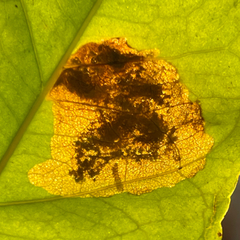 Leucoptera coffeellae0pest
- Outcome
- L. coffeella oviposition and egg hatchinge0
- Direction
- reducede0
 Coffea
Not reportedComparator
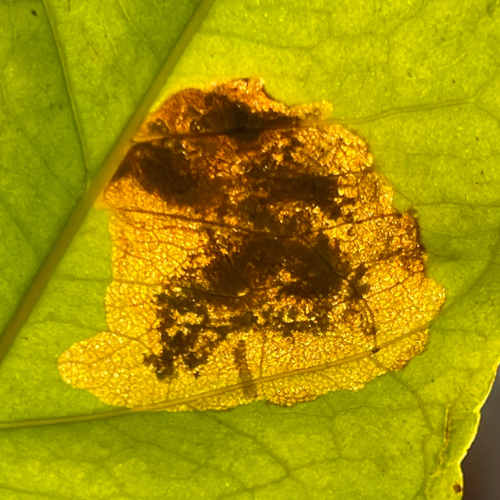
Organisms pictured · Representative pictures of the matched species, not figures from the paper.

Verbatim
e0“The extracts of both plants reduced L. coffeella oviposition and egg hatching, apparently as a result of action of plant metabolites on the embryo.”
t0“coffee leaf miner Leucoptera coffeella Guérin-Mèneville & Perrottet”
Claim · model-written summary
Momordica charantia extract reduced coffee leaf miner oviposition and egg hatching.
- Treatment
- extracts of both plantse0
- Interactor
- L. coffeellaLeucoptera coffeellae0pest
- Outcome
- L. coffeella oviposition and egg hatchinge0
- Direction
- reducede0
Not reportedComparator
Organisms pictured · Representative pictures of the matched species, not figures from the paper.
Verbatim
e0“The extracts of both plants reduced L. coffeella oviposition and egg hatching, apparently as a result of action of plant metabolites on the embryo.”
t0“coffee leaf miner Leucoptera coffeella Guérin-Mèneville & Perrottet”
Claim · model-written summary
Adults from extract-treated eggs had similar survival but a higher female to male ratio.
- Treatment
- extractse0
- Interactor
- Leucoptera coffeellaLeucoptera coffeellat0pest
- Outcome
- survival ratese0
- Direction
- similare0
Not reportedComparator
Organisms pictured · Representative pictures of the matched species, not figures from the paper.
Verbatim
e0“Adults originating from eggs treated with the extracts exhibited similar survival rates, but a higher female/male ratio.”
t0“coffee leaf miner Leucoptera coffeella Guérin-Mèneville & Perrottet”
Claim · model-written summary
Adults from extract-treated eggs had a higher female to male ratio.
- Treatment
- extractse0
- Interactor
- Leucoptera coffeellaLeucoptera coffeellat0pest
- Outcome
- female/male ratioe0
- Direction
- highere0
Not reportedComparator
Organisms pictured · Representative pictures of the matched species, not figures from the paper.
Verbatim
e0“Adults originating from eggs treated with the extracts exhibited similar survival rates, but a higher female/male ratio.”
t0“coffee leaf miner Leucoptera coffeella Guérin-Mèneville & Perrottet”
Claim · model-written summary
Females from eggs treated with Momordica charantia extract had reduced fecundity.
- Treatment
- M. charantia extracte0
- Interactor
- Leucoptera coffeellaLeucoptera coffeellat0pest
- Outcome
- Fecunditye0
- Direction
- reducede0
Not reportedComparator
Organisms pictured · Representative pictures of the matched species, not figures from the paper.
Verbatim
e0“Fecundity was reduced for females obtained from eggs treated with the M. charantia extract.”
t0“coffee leaf miner Leucoptera coffeella Guérin-Mèneville & Perrottet”
Claim · model-written summary
Polar fractions of both extracts reduced coffee leaf miner oviposition on coffee leaves.
- Treatment
- polar fractionse0
- Interactor
- L. coffeellaLeucoptera coffeellae0pest
- Outcome
- oviposition of L. coffeellae0
- Direction
- reducede0
- Setting
- laboratory conditionse0
Not reportedComparator
Organisms pictured · Representative pictures of the matched species, not figures from the paper.
Verbatim
e0“both extracts produced polar fractions that reduced the oviposition of L. coffeella on coffee leaves under laboratory conditions.”
The same questions in other papers
botanical · Leucoptera coffeella · Coffea (coffee)Results agree
5 papers in the same direction as this paper
- positive
- positive
- positive
2 papers more in this group
See all 6 papers →Claims are grouped by organism, treatment and what was measured or targeted. A paper counts as positive when any of its claims in the group is positive.