Abstract
The pathogenicity of Acremonium cucurbitacearum to 31 cucurbits, 18 crop plant species, and 15 weed species was evaluated under greenhouse conditions. This study demonstrates that many other cucurbits in addition to muskmelon and watermelon can potentially serve as hosts of A. cucurbitacearum . Using a disease severity index (DSI), all muskmelon and watermelon cultivars were ranked as susceptible or highly susceptible, with the exception of honeydew cultivar TAM Dew Improved, which ranked resistant in one study. Highly resistant cucurbits included Cucurbita maxima (autumn squash), Luffa acutangula , L. aegyptiaca (sponge gourd) and Benincasa hispida (ash gourd). Cyclanthera pedata and Cucumis miriocarpus were rated as resistant. The percentage recovery of A. cucurbitacearum ranged from 8% to 100% and tended to be higher in plants with a higher DSI. Other crops and weed species common to muskmelon production fields are not likely to be involved in the perpetuation or propagation of the fungus.
Abstract from the paper’s OpenAlex record, shown for indexing and research. Copyright remains with the authors or the publisher. Read at the source ↗
The text the model read, with the source record’s inline markup (italics, sub- and superscripts) rendered and its character entities decoded; quote offsets refer to the raw text.
Claims 12
Claim · model-written summary
Other cucurbits can potentially host the fungus.
- Taxon
- cucurbitse0
- Interactor
- A. cucurbitacearum[Acremonium] cucurbitacearume0pathogen
- Outcome
- can potentially serve as hostse0
Verbatim
e0“many other cucurbits in addition to muskmelon and watermelon can potentially serve as hosts of A. cucurbitacearum”
Claim · model-written summary
Muskmelon and watermelon cultivars were susceptible or highly susceptible except TAM Dew Improved.
- Taxon
- muskmelon and watermelon
 Citrullus lanatus
 Cucumis meloe0
- Material
- cultivarse0
- Interactor
- Acremonium cucurbitacearum[Acremonium] cucurbitacearumt0pathogen
- Outcome
- susceptible or highly susceptiblee0
Organisms pictured · Representative pictures of the matched species, not figures from the paper.


Verbatim
t0“Acremonium cucurbitacearum”
e0“all muskmelon and watermelon cultivars were ranked as susceptible or highly susceptible, with the exception of honeydew cultivar TAM Dew Improved, which ranked resistant in one study.”
Claim · model-written summary
TAM Dew Improved ranked resistant in one study.
- Taxon
- honeydew
 Cucumis melo var. inodoruse0
- Material
- TAM Dew Improvede0
- Interactor
- Acremonium cucurbitacearum[Acremonium] cucurbitacearumt0pathogen
- Outcome
- ranked resistante0
- Qualifier
- in one studye0
Organisms pictured · Representative pictures of the matched species, not figures from the paper.

Verbatim
t0“Acremonium cucurbitacearum”
e0“honeydew cultivar TAM Dew Improved, which ranked resistant in one study”
Claim · model-written summary
Cucurbita maxima was highly resistant.
- Taxon
- Cucurbita maxima
 Cucurbita maximae0
- Interactor
- Acremonium cucurbitacearum[Acremonium] cucurbitacearumt0pathogen
- Outcome
- Highly resistante0
Organisms pictured · Representative pictures of the matched species, not figures from the paper.
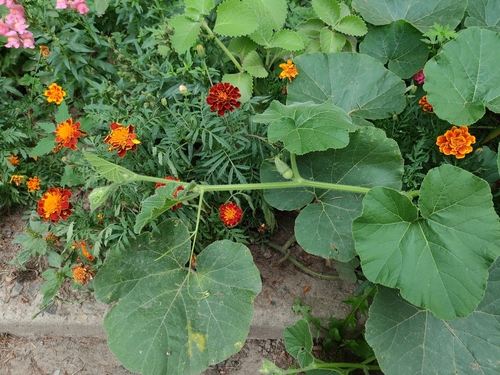
Verbatim
t0“Acremonium cucurbitacearum”
e0“Highly resistant cucurbits included Cucurbita maxima (autumn squash), Luffa acutangula , L. aegyptiaca (sponge gourd) and Benincasa hispida (ash gourd).”
Claim · model-written summary
Luffa acutangula was highly resistant.
- Taxon
- Luffa acutangula
 Luffa acutangulae0
- Interactor
- Acremonium cucurbitacearum[Acremonium] cucurbitacearumt0pathogen
- Outcome
- Highly resistante0
Organisms pictured · Representative pictures of the matched species, not figures from the paper.

Verbatim
t0“Acremonium cucurbitacearum”
e0“Highly resistant cucurbits included Cucurbita maxima (autumn squash), Luffa acutangula , L. aegyptiaca (sponge gourd) and Benincasa hispida (ash gourd).”
Claim · model-written summary
L. aegyptiaca was highly resistant.
- Taxon
- L. aegyptiaca
 Luffa aegyptiacae0
- Interactor
- Acremonium cucurbitacearum[Acremonium] cucurbitacearumt0pathogen
- Outcome
- Highly resistante0
Organisms pictured · Representative pictures of the matched species, not figures from the paper.

Verbatim
t0“Acremonium cucurbitacearum”
e0“Highly resistant cucurbits included Cucurbita maxima (autumn squash), Luffa acutangula , L. aegyptiaca (sponge gourd) and Benincasa hispida (ash gourd).”
Claim · model-written summary
Benincasa hispida was highly resistant.
- Taxon
- Benincasa hispida
 Benincasa hispidae0
- Interactor
- Acremonium cucurbitacearum[Acremonium] cucurbitacearumt0pathogen
- Outcome
- Highly resistante0
Organisms pictured · Representative pictures of the matched species, not figures from the paper.

Verbatim
t0“Acremonium cucurbitacearum”
e0“Highly resistant cucurbits included Cucurbita maxima (autumn squash), Luffa acutangula , L. aegyptiaca (sponge gourd) and Benincasa hispida (ash gourd).”
Claim · model-written summary
Cyclanthera pedata was resistant.
- Taxon
- Cyclanthera pedata
 Cyclanthera pedatae0
- Interactor
- Acremonium cucurbitacearum[Acremonium] cucurbitacearumt0pathogen
- Outcome
- resistante0
Organisms pictured · Representative pictures of the matched species, not figures from the paper.

Verbatim
t0“Acremonium cucurbitacearum”
e0“Cyclanthera pedata and Cucumis miriocarpus were rated as resistant.”
Claim · model-written summary
Cucumis miriocarpus was resistant.
- Taxon
- Cucumis miriocarpuse0
- Interactor
- Acremonium cucurbitacearum[Acremonium] cucurbitacearumt0pathogen
- Outcome
- resistante0
Verbatim
t0“Acremonium cucurbitacearum”
e0“Cyclanthera pedata and Cucumis miriocarpus were rated as resistant.”
Claim · model-written summary
Fungal recovery ranged from 8% to 100%.
- Taxon
- plantsViridiplantaee0
- Interactor
- A. cucurbitacearum[Acremonium] cucurbitacearume0pathogen
- Outcome
- percentage recovery of A. cucurbitacearume0
- Value
- 8% to 100%e0
Verbatim
e0“The percentage recovery of A. cucurbitacearum ranged from 8% to 100% and tended to be higher in plants with a higher DSI.”
Claim · model-written summary
Fungal recovery tended to be higher in plants with higher disease severity.
- Taxon
- plantsViridiplantaee0
- Interactor
- A. cucurbitacearum[Acremonium] cucurbitacearume0pathogen
- Outcome
- percentage recovery of A. cucurbitacearume0
- Direction
- highere0
Verbatim
e0“The percentage recovery of A. cucurbitacearum ranged from 8% to 100% and tended to be higher in plants with a higher DSI.”
Claim · model-written summary
Other crops and weeds were unlikely to perpetuate the fungus.
Verbatim
e0“Other crops and weed species common to muskmelon production fields are not likely to be involved in the perpetuation or propagation of the fungus.”