Abstract
ABSTRACT To determine the relationship among the Papaveroideae, a data set, originally gathered for classification of the Papaveroideae using DNA restriction sites, was subjected to an multidimensional scaling (MDS) analysis, leading to a more appropriate taxonomy of the Papavereae tribe (especially in Papaver, Stylomecon, and Roemeria genera). The spatial configuration of Papavereae was developed on the basis of absolute distances of taxa in relation to Papaver alpinum and made possible the 3D projection of the tribe. The configuration consisted of two different sets and provided a divergent rank image of taxa from the cladistic assumption. In one of these sets, taxa of Roemeria and the Papaver section Argemonidium, were not mixed, but formed two distinct groups in view of the genera. Papaver hybridum was the closest species to Roemeria, but Papaver pavoninum was the farthest and most distant taxon. In case of annual poppy species of the other set, the Papaver somniferum and Papaver macrostomum were not nested with Papaver dubium (Papaver rhoeas was the nearest relative), while Papaver gracile was the farthest and most distant taxon. Regarding poppy biennials and perennials of this second set, Papaver atlanticum was closer to Papaver caucasicum than to Papaver bracteatum. The MDS also revealed an unclarified taxonomic problem of the Papavereae, that of the infratribal links of Papaver alpinum (section Meconella). The dissimilarities of distant species, Papaver pavoninum and Papaver gracile, as opposed to opposite sets, suggested that Papaver alpinum could not be inserted in the set Roemeria-Argemonidium or in a hierarchy of all Papavereae taxa, but instead belonged, with 99.5 percent probability, to the set of Pseudopilosa, Meconidium, Macrantha, Rhoeadium and Papaver sections. Application of MDS at different systematical levels (tribe, set, or species) matched dissimilarities of taxa and the links within the taxa, ensuring true projections according to real views of Papavereae.
Abstract from the paper’s OpenAlex record, shown for indexing and research. Copyright remains with the authors or the publisher. Read at the source ↗
The text the model read, with the source record’s inline markup (italics, sub- and superscripts) rendered and its character entities decoded; quote offsets refer to the raw text.
Claims 10
Claim · model-written summary
The multidimensional scaling configuration separated Roemeria and Papaver section Argemonidium into distinct groups.
Verbatim
e0“taxa of Roemeria and the Papaver section Argemonidium, were not mixed, but formed two distinct groups”
t0“Papavereae”
Claim · model-written summary
Papaver hybridum was closest to Roemeria.
- Taxon
- Papaver hybridum
 Papaver hybridume0
- Outcome
- closest species to Roemeriae0
Organisms pictured · Representative pictures of the matched species, not figures from the paper.

Verbatim
e0“Papaver hybridum was the closest species to Roemeria”
Claim · model-written summary
Papaver pavoninum was the farthest taxon from Roemeria.
- Taxon
- Papaver pavoninum
 Roemeria pavoninae0
- Outcome
- farthest and most distant taxone0
Organisms pictured · Representative pictures of the matched species, not figures from the paper.

Verbatim
e0“Papaver pavoninum was the farthest and most distant taxon”
t0“Papavereae”
Claim · model-written summary
Papaver somniferum and Papaver macrostomum did not cluster with Papaver dubium.
- Taxon
- Papaver somniferum and Papaver macrostomum
 Papaver somniferum
 Papaver macrostomume0
- Outcome
- not nested with Papaver dubiume0
Organisms pictured · Representative pictures of the matched species, not figures from the paper.


Verbatim
e0“Papaver somniferum and Papaver macrostomum were not nested with Papaver dubium”
Claim · model-written summary
Papaver rhoeas was the nearest relative of Papaver dubium.
- Taxon
- Papaver rhoeas
 Papaver rhoease0
- Outcome
- nearest relativee0
Organisms pictured · Representative pictures of the matched species, not figures from the paper.

Verbatim
e0“Papaver dubium (Papaver rhoeas was the nearest relative)”
Claim · model-written summary
Papaver gracile was the farthest taxon in the annual poppy set.
- Taxon
- Papaver gracile
 Papaver gracilee0
- Outcome
- farthest and most distant taxone0
Organisms pictured · Representative pictures of the matched species, not figures from the paper.
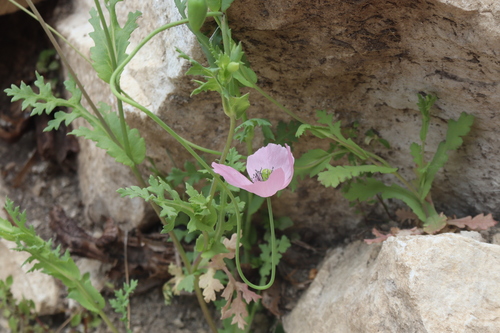
Verbatim
e0“Papaver gracile was the farthest and most distant taxon”
Claim · model-written summary
Papaver atlanticum was closer to Papaver caucasicum than to Papaver bracteatum.
- Taxon
- Papaver atlanticum
 Papaver atlanticume0
- Outcome
- closer to Papaver caucasicum than to Papaver bracteatume0
Organisms pictured · Representative pictures of the matched species, not figures from the paper.

Verbatim
e0“Papaver atlanticum was closer to Papaver caucasicum than to Papaver bracteatum”
Claim · model-written summary
The analysis left the infratribal placement of Papaver alpinum unresolved.
- Taxon
- Papaver alpinum
 Oreomecon alpinae0
- Outcome
- unclarified taxonomic probleme0
Organisms pictured · Representative pictures of the matched species, not figures from the paper.

Verbatim
e0“The MDS also revealed an unclarified taxonomic problem of the Papavereae, that of the infratribal links of Papaver alpinum”
Claim · model-written summary
Papaver alpinum was assigned with 99.5 percent probability to the set containing Pseudopilosa, Meconidium, Macrantha, Rhoeadium and Papaver sections.
- Taxon
- Papaver alpinumOreomecon alpinae0
- Outcome
- belonged, with 99.5 percent probability, to the set of Pseudopilosa, Meconidium, Macrantha, Rhoeadium and Papaver sectionse0
- Value
- 99.5 percente0
Organisms pictured · Representative pictures of the matched species, not figures from the paper.
Verbatim
e0“Papaver alpinum could not be inserted in the set Roemeria-Argemonidium or in a hierarchy of all Papavereae taxa, but instead belonged, with 99.5 percent probability, to the set of Pseudopilosa, Meconidium, Macrantha, Rhoeadium and Papaver sections”
Claim · model-written summary
MDS projections at tribe, set and species levels matched taxon dissimilarities and links.
Verbatim
e0“Application of MDS at different systematical levels (tribe, set, or species) matched dissimilarities of taxa and the links within the taxa”
t0“Papavereae”