Abstract
The frequency and distribution of different specific phenotypes for resistance to Erysiphe fischeri was studied in two populations of the annual weed Senecio vulgaris (groundsel) one located in Glasgow, Scotland the other located about 480 km south at Wellesbourne, England. Progeny of individual plants from the two host populations were tested for their response to up to 10 different isolates of E. fischeri , five from each location; each isolate had a different specific virulence phenotype. Most plants in each sample were susceptible to all 10 isolates. The proportion of plants whose progeny were resistant to a particular isolate ranged from 1% to 10% with the exception of resistance to one isolate that occurred with a frequency of 37% at Wellesbourne. Overall, resistance to one or more of the 10 isolates appeared to be more common in the plant population sampled at Wellesbourne than at Glasgow. Of the total number of groundsel line/isolate combinations tested, 10% involving Wellesbourne plants and 2% involving Glasgow plants were incompatible, i.e. resistant/avirulent. Both groundsel populations tended to be dominated by one or two resistance phenotypes but they were nevertheless highly heterogeneous when less frequent resistance phenotypes were considered. This was particularly evident at Wellesbourne where 10 different resistance phenotypes were recorded amongst a total of 75 plants growing within an area of 1 m 2 .
Abstract from the paper’s OpenAlex record, shown for indexing and research. Copyright remains with the authors or the publisher. Read at the source ↗
The text the model read, with the source record’s inline markup (italics, sub- and superscripts) rendered and its character entities decoded; quote offsets refer to the raw text.
Claims 8
Claim · model-written summary
Most plants in both populations were susceptible to all ten isolates.
- Taxon
- Senecio vulgaris
 Senecio vulgarist0
- Interactor
- Erysiphe fischeri
 Golovinomyces fischerit0pathogen
- Outcome
- susceptible to all 10 isolatese0
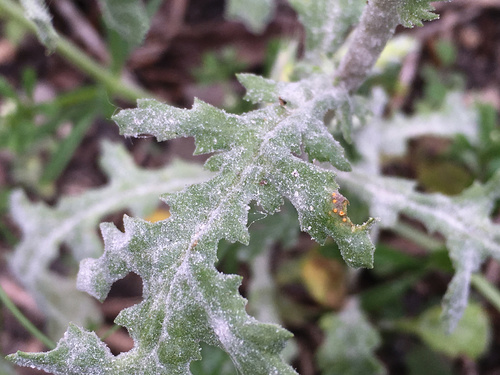
Organisms pictured · Representative pictures of the matched species, not figures from the paper.

Verbatim
e0“Most plants in each sample were susceptible to all 10 isolates.”
t0“Erysiphe fischeri in two populations of Senecio vulgaris”
Claim · model-written summary
Resistance to individual isolates generally occurred in 1% to 10% of progeny lines.
- Taxon
- Senecio vulgarisSenecio vulgarist0
- Interactor
- Erysiphe fischeriGolovinomyces fischerit0pathogen
- Outcome
- progeny were resistant to a particular isolatee0
- Value
- 1% to 10%e0
Organisms pictured · Representative pictures of the matched species, not figures from the paper.
Verbatim
e0“The proportion of plants whose progeny were resistant to a particular isolate ranged from 1% to 10%”
t0“Erysiphe fischeri in two populations of Senecio vulgaris”
Claim · model-written summary
One isolate elicited resistance in 37% of Wellesbourne plants.
- Taxon
- Senecio vulgarisSenecio vulgarist0
- Interactor
- Erysiphe fischeriGolovinomyces fischerit0pathogen
- Outcome
- resistance to one isolatee0
- Value
- 37%e0
- Setting
- Wellesbournee0
Organisms pictured · Representative pictures of the matched species, not figures from the paper.
Verbatim
e0“resistance to one isolate that occurred with a frequency of 37% at Wellesbourne.”
t0“Erysiphe fischeri in two populations of Senecio vulgaris”
Claim · model-written summary
Resistance to at least one isolate was more common at Wellesbourne than Glasgow.
- Taxon
- Senecio vulgarisSenecio vulgarist0
- Interactor
- Erysiphe fischeriGolovinomyces fischerit0pathogen
- Outcome
- resistance to one or more of the 10 isolatese0
- Direction
- more commone0
- Comparator
- Glasgowe0
- Setting
- Wellesbournee0
Organisms pictured · Representative pictures of the matched species, not figures from the paper.
Verbatim
e0“resistance to one or more of the 10 isolates appeared to be more common in the plant population sampled at Wellesbourne than at Glasgow.”
t0“Erysiphe fischeri in two populations of Senecio vulgaris”
Claim · model-written summary
Ten percent of Wellesbourne plant-isolate combinations were incompatible.
- Taxon
- Senecio vulgarisSenecio vulgarist0
- Interactor
- Erysiphe fischeriGolovinomyces fischerit0pathogen
- Outcome
- incompatible, i.e. resistant/avirulente0
- Value
- 10%e0
- Setting
- Wellesbournee0
Organisms pictured · Representative pictures of the matched species, not figures from the paper.
Verbatim
e0“10% involving Wellesbourne plants and 2% involving Glasgow plants were incompatible, i.e. resistant/avirulent.”
t0“Erysiphe fischeri in two populations of Senecio vulgaris”
Claim · model-written summary
Two percent of Glasgow plant-isolate combinations were incompatible.
- Taxon
- Senecio vulgarisSenecio vulgarist0
- Interactor
- Erysiphe fischeriGolovinomyces fischerit0pathogen
- Outcome
- incompatible, i.e. resistant/avirulente0
- Value
- 2%e0
- Setting
- Glasgowe0
Organisms pictured · Representative pictures of the matched species, not figures from the paper.
Verbatim
e0“10% involving Wellesbourne plants and 2% involving Glasgow plants were incompatible, i.e. resistant/avirulent.”
t0“Erysiphe fischeri in two populations of Senecio vulgaris”
Claim · model-written summary
Both populations were dominated by one or two resistance phenotypes but had substantial rare-phenotype diversity.
- Taxon
- Senecio vulgarisSenecio vulgarist0
- Interactor
- Erysiphe fischeriGolovinomyces fischerit0pathogen
- Outcome
- dominated by one or two resistance phenotypese0
- Qualifier
- highly heterogeneous when less frequent resistance phenotypes were considerede0
Organisms pictured · Representative pictures of the matched species, not figures from the paper.
Verbatim
e0“Both groundsel populations tended to be dominated by one or two resistance phenotypes but they were nevertheless highly heterogeneous when less frequent resistance phenotypes were considered.”
t0“Erysiphe fischeri in two populations of Senecio vulgaris”
Claim · model-written summary
Ten resistance phenotypes occurred among 75 plants within one square meter at Wellesbourne.
- Taxon
- Senecio vulgarisSenecio vulgarist0
- Interactor
- Erysiphe fischeriGolovinomyces fischerit0pathogen
- Outcome
- different resistance phenotypese0
- Value
- 10e0
- Qualifier
- 75 plants growing within an area of 1 m 2e0
- Setting
- Wellesbournee0
Organisms pictured · Representative pictures of the matched species, not figures from the paper.
Verbatim
e0“at Wellesbourne where 10 different resistance phenotypes were recorded amongst a total of 75 plants growing within an area of 1 m 2 .”
t0“Erysiphe fischeri in two populations of Senecio vulgaris”