Abstract
Marssonina betulae , Discula betulina , Melanconium bicolor and Fusarium avenaceum were inoculated onto shoots of 1‐ and 2‐year‐old seedlings of Betula pendula and B. pubescens and symptom development monitored over several seasons. Marssonina betulae caused disease on B. pendula , but not on B. pubescens . On B. pendula symptoms included discrete lesions, which often girdled, causing dieback of inoculated leading shoots, and the development of secondary sunken cankers on the main stems, which were usually centred around a dead sideshoot. Cankers on the main stems expanded during subsequent growing and dormant seasons, and often coalesced, girdling stems and causing the death of some seedlings. All isolates of M. betulae caused disease on B. pendula and conidia were able to infect young shoots in early flush without requiring a wound. Discula betulina caused lesions and dieback on B. pendula and B. pubescens within 3 months of inoculation, but disease did not progress thereafter and all inoculated seedlings recovered. Melanconium bicolor and F. avenaceum caused very little disease on either birch species. This study showed that M. betulae is an aggressive pathogen on B. pendula , causing sunken stem cankers and progressive crown dieback, which are symptoms commonly observed on young, planted birch at field sites across Scotland.
Abstract from the paper’s OpenAlex record, shown for indexing and research. Copyright remains with the authors or the publisher. Read at the source ↗
The text the model read, with the source record’s inline markup (italics, sub- and superscripts) rendered and its character entities decoded; quote offsets refer to the raw text.
Claims 11
Claim · model-written summary
Marssonina betulae caused disease on B. pendula.
- Taxon
- B. pendula
 Betula pendulae0
- Interactor
- Marssonina betulaee0pathogen
- Outcome
- diseasee0
Organisms pictured · Representative pictures of the matched species, not figures from the paper.

Verbatim
e0“Marssonina betulae caused disease on B. pendula , but not on B. pubescens”
Claim · model-written summary
Marssonina betulae did not cause disease on B. pubescens.
- Taxon
- B. pubescens
 Betula pubescense0
- Interactor
- Marssonina betulaee0pathogen
- Outcome
- not on B. pubescense0
Organisms pictured · Representative pictures of the matched species, not figures from the paper.

Verbatim
e0“Marssonina betulae caused disease on B. pendula , but not on B. pubescens”
Claim · model-written summary
On B. pendula, Marssonina caused lesions, shoot dieback, and stem cankers.
- Taxon
- B. pendulaBetula pendulae0
- Outcome
- discrete lesions, which often girdled, causing dieback of inoculated leading shoots, and the development of secondary sunken cankerse0
Organisms pictured · Representative pictures of the matched species, not figures from the paper.
Verbatim
e0“On B. pendula symptoms included discrete lesions, which often girdled, causing dieback of inoculated leading shoots, and the development of secondary sunken cankers on the main stems”
Claim · model-written summary
Stem cankers expanded and coalesced across seasons, killing some seedlings.
- Taxon
- B. pendulaBetula pendulae1
- Outcome
- Cankers on the main stemse0
- Direction
- expandede0
Organisms pictured · Representative pictures of the matched species, not figures from the paper.
Verbatim
e0“Cankers on the main stems expanded during subsequent growing and dormant seasons, and often coalesced, girdling stems and causing the death of some seedlings”
e1“M. betulae caused disease on B. pendula”
Claim · model-written summary
All M. betulae isolates caused disease on B. pendula.
- Taxon
- B. pendulaBetula pendulae0
- Interactor
- M. betulaee0pathogen
- Outcome
- diseasee0
Organisms pictured · Representative pictures of the matched species, not figures from the paper.
Verbatim
e0“All isolates of M. betulae caused disease on B. pendula”
Claim · model-written summary
M. betulae conidia infected young shoots without a wound.
- Taxon
- B. pendulaBetula pendulae1
- Interactor
- M. betulaee1pathogen
- Outcome
- infect young shootse0
- Qualifier
- without requiring a wounde0
Organisms pictured · Representative pictures of the matched species, not figures from the paper.
Verbatim
e0“conidia were able to infect young shoots in early flush without requiring a wound”
e1“M. betulae caused disease on B. pendula”
Claim · model-written summary
Discula betulina caused lesions and dieback on B. pendula within three months.
- Taxon
- B. pendulaBetula pendulae0
- Interactor
- Discula betulina
 Discula betulinae0pathogen
- Outcome
- lesions and diebacke0
Organisms pictured · Representative pictures of the matched species, not figures from the paper.
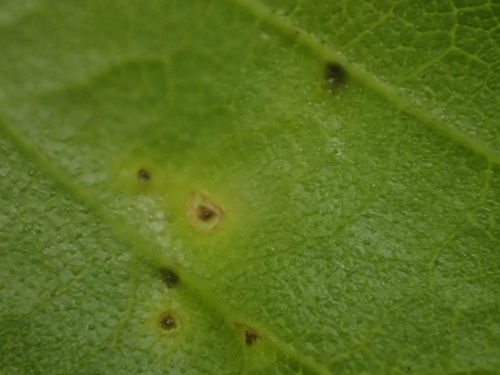
Verbatim
e0“Discula betulina caused lesions and dieback on B. pendula and B. pubescens within 3 months of inoculation”
Claim · model-written summary
Discula betulina caused lesions and dieback on B. pubescens within three months.
- Taxon
- B. pubescensBetula pubescense0
- Interactor
- Discula betulinaDiscula betulinae0pathogen
- Outcome
- lesions and diebacke0
Organisms pictured · Representative pictures of the matched species, not figures from the paper.
Verbatim
e0“Discula betulina caused lesions and dieback on B. pendula and B. pubescens within 3 months of inoculation”
Claim · model-written summary
Discula disease did not progress and inoculated seedlings recovered.
- Taxon
- B. pendulaBetula pendulae1
- Outcome
- all inoculated seedlings recoverede0
Organisms pictured · Representative pictures of the matched species, not figures from the paper.
Verbatim
e0“disease did not progress thereafter and all inoculated seedlings recovered”
e1“B. pendula and B. pubescens”
Claim · model-written summary
Melanconium bicolor caused very little disease on either birch species.
- Taxon
- Betula pendulaBetula pendulae1
- Interactor
- Melanconium bicolorMelanconium bicolore0pathogen
- Outcome
- very little diseasee0
Organisms pictured · Representative pictures of the matched species, not figures from the paper.
Verbatim
e0“Melanconium bicolor and F. avenaceum caused very little disease on either birch species”
e1“Betula pendula and B. pubescens”
Claim · model-written summary
F. avenaceum caused very little disease on either birch species.
- Taxon
- Betula pendulaBetula pendulae1
- Interactor
- F. avenaceum
 Fusarium avenaceume0pathogen
- Outcome
- very little diseasee0
Organisms pictured · Representative pictures of the matched species, not figures from the paper.

Verbatim
e0“Melanconium bicolor and F. avenaceum caused very little disease on either birch species”
e1“Betula pendula and B. pubescens”