Abstract
The biology and impact of Gryon clavigrallae Mineo, an egg parasitoid of Clavigralla scutellaris Spinola and C. gibbosa (Westwood), was investigated. The calculated developmental threshold temperatures for females and males were 15.6 degrees C and 15.8 degrees C, respectively. Emergence exceeded 94% at temperatures between 22 and 30 degrees C. Adult females lived on average 28-96 days when fed with honey. Without food, adults lived < 6 days. Mean fecundity was 56.4 eggs per female. A significant trend of lower fecundity after longer periods of host deprivation was observed. Gryon clavigrallae females successfully oviposited in host eggs of all ages though eggs < 4 days old were preferred. Total host handling times were significantly longer on C. gibbosa eggs (23.5 min) than on C. scutellaris eggs (12.0 min). Females readily distinguished parasitized from non-parasitized host eggs. Superparasitism was observed when few or no unparasitized eggs were available. Eggs of the two Clavigralla species can be separated by surface structure and condition after eclosion. Clavigralla scutellaris laid significantly larger egg clusters than C. gibbosa (19.9 versus 10.5 eggs per cluster). Gryon clavigrallae was present as soon as the first Clavigralla spp. egg clusters were found on pigeonpea. The percentage of egg clusters parasitized increased early in the season with egg cluster density and remained high (up to 83%) despite fluctuations in host density. Overall, G. clavigrallae parasitized 40 and 58% of C. gibbosa and C. scutellaris eggs. The percentage of egg clusters parasitized and the number of eggs parasitized per cluster increased significantly with egg cluster size. The overall parasitoid sex ratio was highly female biased but varied with the number of eggs parasitized per cluster.
Abstract from the paper’s OpenAlex record, shown for indexing and research. Copyright remains with the authors or the publisher. Read at the source ↗
The text the model read, with the source record’s inline markup (italics, sub- and superscripts) rendered and its character entities decoded; quote offsets refer to the raw text.
Claims 19
Claim · model-written summary
The calculated developmental threshold temperature for females was 15.6 degrees C.
- Taxon
- pigeonpea
 Cajanus cajane2
- Outcome
- developmental threshold temperaturese1
- Value
- 15.6 degrees Ce1
- Qualifier
- for femalese1
- Setting
- Indiat0
Organisms pictured · Representative pictures of the matched species, not figures from the paper.

Verbatim
e1“The calculated developmental threshold temperatures for females and males were 15.6 degrees C and 15.8 degrees C, respectively”
e2“egg clusters were found on pigeonpea”
t0“in India”
Claim · model-written summary
The calculated developmental threshold temperature for males was 15.8 degrees C.
- Taxon
- pigeonpeaCajanus cajane2
- Outcome
- developmental threshold temperaturese1
- Value
- 15.8 degrees Ce1
- Qualifier
- and malese1
- Setting
- Indiat0
Organisms pictured · Representative pictures of the matched species, not figures from the paper.
Verbatim
e1“The calculated developmental threshold temperatures for females and males were 15.6 degrees C and 15.8 degrees C, respectively”
e2“egg clusters were found on pigeonpea”
t0“in India”
Claim · model-written summary
Parasitoid emergence exceeded 94% at temperatures between 22 and 30 degrees C.
- Taxon
- pigeonpeaCajanus cajane2
- Outcome
- Emergencee1
- Value
- 94%e1
- Qualifier
- at temperatures between 22 and 30 degrees Ce1
- Setting
- Indiat0
Organisms pictured · Representative pictures of the matched species, not figures from the paper.
Verbatim
e1“Emergence exceeded 94% at temperatures between 22 and 30 degrees C”
e2“egg clusters were found on pigeonpea”
t0“in India”
Claim · model-written summary
Adult females lived on average 28-96 days when fed with honey.
- Taxon
- pigeonpeaCajanus cajane2
- Outcome
- lived on averagee1
- Value
- 28-96 dayse1
- Qualifier
- when fed with honeye1
- Setting
- Indiat0
Organisms pictured · Representative pictures of the matched species, not figures from the paper.
Verbatim
e1“Adult females lived on average 28-96 days when fed with honey”
e2“egg clusters were found on pigeonpea”
t0“in India”
Claim · model-written summary
Without food, adults lived less than 6 days.
- Taxon
- pigeonpeaCajanus cajane2
- Outcome
- adults livede1
- Value
- < 6 dayse1
- Qualifier
- Without foode1
- Setting
- Indiat0
Organisms pictured · Representative pictures of the matched species, not figures from the paper.
Verbatim
e1“Without food, adults lived < 6 days”
e2“egg clusters were found on pigeonpea”
t0“in India”
Claim · model-written summary
Mean fecundity was 56.4 eggs per female.
- Taxon
- pigeonpeaCajanus cajane2
- Outcome
- Mean fecunditye1
- Value
- 56.4 eggs per femalee1
- Setting
- Indiat0
Organisms pictured · Representative pictures of the matched species, not figures from the paper.
Verbatim
e1“Mean fecundity was 56.4 eggs per female”
e2“egg clusters were found on pigeonpea”
t0“in India”
Claim · model-written summary
Fecundity was significantly lower after longer periods of host deprivation.
- Taxon
- pigeonpeaCajanus cajane2
- Treatment
- longer periods of host deprivatione1
- Outcome
- fecunditye1
- Direction
- lowere1
- Setting
- Indiat0
Organisms pictured · Representative pictures of the matched species, not figures from the paper.
Verbatim
e1“A significant trend of lower fecundity after longer periods of host deprivation was observed”
e2“egg clusters were found on pigeonpea”
t0“in India”
Claim · model-written summary
Gryon clavigrallae females successfully oviposited in host eggs of all ages.
- Taxon
- pigeonpeaCajanus cajane2
- Organ / stage
- host eggs of all agese1
- Interactor
- Gryon clavigrallaee1biocontrol_agent
- Outcome
- successfully ovipositede1
- Setting
- Indiat0
Organisms pictured · Representative pictures of the matched species, not figures from the paper.
Verbatim
e1“Gryon clavigrallae females successfully oviposited in host eggs of all ages”
e2“egg clusters were found on pigeonpea”
t0“in India”
Claim · model-written summary
Eggs less than 4 days old were preferred for oviposition.
- Taxon
- pigeonpeaCajanus cajane2
- Organ / stage
- eggs < 4 days olde1
- Outcome
- were preferrede1
- Setting
- Indiat0
Organisms pictured · Representative pictures of the matched species, not figures from the paper.
Verbatim
e1“eggs < 4 days old were preferred”
e2“egg clusters were found on pigeonpea”
t0“in India”
Claim · model-written summary
Females readily distinguished parasitized from non-parasitized host eggs.
- Taxon
- pigeonpeaCajanus cajane2
- Outcome
- distinguished parasitized from non-parasitized host eggse1
- Setting
- Indiat0
Organisms pictured · Representative pictures of the matched species, not figures from the paper.
Verbatim
e1“Females readily distinguished parasitized from non-parasitized host eggs”
e2“egg clusters were found on pigeonpea”
t0“in India”
Claim · model-written summary
Superparasitism was observed when few or no unparasitized eggs were available.
- Taxon
- pigeonpeaCajanus cajane2
- Outcome
- Superparasitisme1
- Qualifier
- when few or no unparasitized eggs were availablee1
- Setting
- Indiat0
Organisms pictured · Representative pictures of the matched species, not figures from the paper.
Verbatim
e1“Superparasitism was observed when few or no unparasitized eggs were available”
e2“egg clusters were found on pigeonpea”
t0“in India”
Claim · model-written summary
Eggs of the two Clavigralla species can be separated by surface structure and condition after eclosion.
- Taxon
- pigeonpeaCajanus cajane2
- Interactor
- Clavigralla
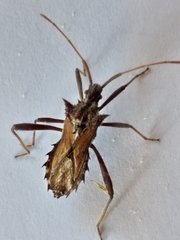 Clavigrallae1pest
- Outcome
- can be separatede1
- Qualifier
- by surface structure and condition after eclosione1
- Setting
- Indiat0
Organisms pictured · Representative pictures of the matched species, not figures from the paper.
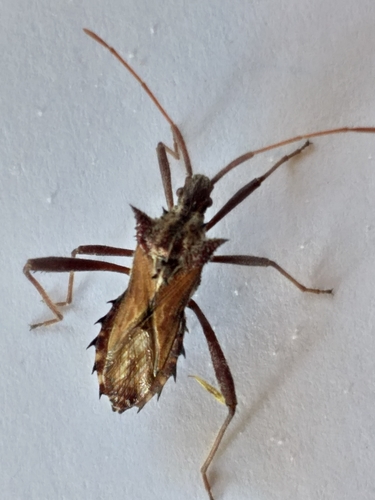
Verbatim
e1“Eggs of the two Clavigralla species can be separated by surface structure and condition after eclosion”
e2“egg clusters were found on pigeonpea”
t0“in India”
Claim · model-written summary
Clavigralla scutellaris laid significantly larger egg clusters than C. gibbosa.
- Taxon
- pigeonpeaCajanus cajane2
- Interactor
- Clavigralla scutellaris
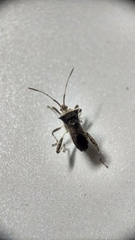 Clavigralla scutellarise1pest
- Outcome
- egg clusterse1
- Direction
- largere1
- Value
- 19.9 versus 10.5 eggs per clustere1
- Comparator
- C. gibbosae1
- Setting
- Indiat0
Organisms pictured · Representative pictures of the matched species, not figures from the paper.

Verbatim
e1“Clavigralla scutellaris laid significantly larger egg clusters than C. gibbosa (19.9 versus 10.5 eggs per cluster)”
e2“egg clusters were found on pigeonpea”
t0“in India”
Claim · model-written summary
Gryon clavigrallae parasitized 40 and 58% of C. gibbosa and C. scutellaris eggs overall.
- Taxon
- pigeonpeaCajanus cajane2
- Interactor
- G. clavigrallaee1biocontrol_agent
- Second interactor
- C. gibbosae1pest
- Outcome
- parasitizede1
- Value
- 40 and 58%e1
- Qualifier
- C. scutellaris eggse1
- Setting
- Indiat0
Organisms pictured · Representative pictures of the matched species, not figures from the paper.
Verbatim
e1“Overall, G. clavigrallae parasitized 40 and 58% of C. gibbosa and C. scutellaris eggs”
e2“egg clusters were found on pigeonpea”
t0“in India”
Claim · model-written summary
The percentage of egg clusters parasitized increased early in the season with egg cluster density.
- Taxon
- pigeonpeaCajanus cajane2
- Treatment
- egg cluster densitye1
- Outcome
- percentage of egg clusters parasitizede1
- Direction
- increasede1
- Qualifier
- early in the seasone1
- Setting
- Indiat0
Organisms pictured · Representative pictures of the matched species, not figures from the paper.
Verbatim
e1“The percentage of egg clusters parasitized increased early in the season with egg cluster density and remained high (up to 83%) despite fluctuations in host density”
e2“egg clusters were found on pigeonpea”
t0“in India”
Claim · model-written summary
The percentage of egg clusters parasitized remained high, up to 83%, despite fluctuations in host density.
- Taxon
- pigeonpeaCajanus cajane2
- Outcome
- percentage of egg clusters parasitizede1
- Value
- up to 83%e1
- Qualifier
- despite fluctuations in host densitye1
- Setting
- Indiat0
Organisms pictured · Representative pictures of the matched species, not figures from the paper.
Verbatim
e1“The percentage of egg clusters parasitized increased early in the season with egg cluster density and remained high (up to 83%) despite fluctuations in host density”
e2“egg clusters were found on pigeonpea”
t0“in India”
Claim · model-written summary
The percentage of egg clusters parasitized and the number of eggs parasitized per cluster increased significantly with egg cluster size.
- Taxon
- pigeonpeaCajanus cajane2
- Treatment
- egg cluster sizee1
- Outcome
- percentage of egg clusters parasitized and the number of eggs parasitized per clustere1
- Direction
- increasede1
- Setting
- Indiat0
Organisms pictured · Representative pictures of the matched species, not figures from the paper.
Verbatim
e1“The percentage of egg clusters parasitized and the number of eggs parasitized per cluster increased significantly with egg cluster size”
e2“egg clusters were found on pigeonpea”
t0“in India”
Claim · model-written summary
The overall parasitoid sex ratio was highly female biased.
- Taxon
- pigeonpeaCajanus cajane2
- Outcome
- overall parasitoid sex ratioe1
- Qualifier
- highly female biasede1
- Setting
- Indiat0
Organisms pictured · Representative pictures of the matched species, not figures from the paper.
Verbatim
e1“The overall parasitoid sex ratio was highly female biased but varied with the number of eggs parasitized per cluster”
e2“egg clusters were found on pigeonpea”
t0“in India”
Claim · model-written summary
The parasitoid sex ratio varied with the number of eggs parasitized per cluster.
- Taxon
- pigeonpeaCajanus cajane2
- Treatment
- the number of eggs parasitized per clustere1
- Outcome
- overall parasitoid sex ratioe1
- Setting
- Indiat0
Not reportedDirection
Organisms pictured · Representative pictures of the matched species, not figures from the paper.
Verbatim
e1“The overall parasitoid sex ratio was highly female biased but varied with the number of eggs parasitized per cluster”
e2“egg clusters were found on pigeonpea”
t0“in India”