Abstract
This study examines the direct and indirect effects of insecticides in maize—pest—ant system in Nicaragua. Population levels of two herbivores, the fall armyworm, Spodoptera frugiperda J. E. Smith, and the corn leafhopper, Dalbulus maidis De Long, were monitored and compared among four insecticide treatments: (1) carbofuran, a systemic insecticide; (2) chlorpyrifos, a broad—spectrum insecticide; (3) a combination of carbofuran and chlorpyrifos; and (4) a control, where no insecticide was applied. Ant foraging activity also was monitored throughout the season for all four insecticide treatments. Predation of S. frugiperda pupae was estimated with relation to insecticide treatment and ant foraging activity. Carbofuran reduced ant foraging activity and increased population levels of the fall armyworm. Ant predation was apparently responsible for a higher pupal removal rate in the plots with no insecticides. Chlorpyrifos significantly reduced ant foraging activity as well as densities of the fall armyworm, but it resulted in higher levels of the corn leafhopper. The results of this study are discussed in light of the possibility of developing integrated pest management programs in which ants may play an important role as agents of biological control. In such a case, ant susceptibility to chemical insecticides should be taken into consideration.
Abstract from the paper’s OpenAlex record, shown for indexing and research. Copyright remains with the authors or the publisher. Read at the source ↗
The text the model read, with the source record’s inline markup (italics, sub- and superscripts) rendered and its character entities decoded; quote offsets refer to the raw text.
Claims 7
Claim · model-written summary
Carbofuran reduced ant foraging activity relative to the no-insecticide control
- Treatment
- Carbofurane1
- Interactor
- ante1biocontrol_agent
- Outcome
- ant foraging activitye1
- Direction
- reducede1
- Comparator
- controle2
- Setting
- Nicaraguat0
 Zea mays
Organisms pictured · Representative pictures of the matched species, not figures from the paper.

Verbatim
t0“Maize‐Pest‐Ant System in Nicaragua”
e1“Carbofuran reduced ant foraging activity and increased population levels of the fall armyworm”
e2“a control, where no insecticide was applied”
Claim · model-written summary
Carbofuran increased fall armyworm population levels relative to the no-insecticide control
- Treatment
- Carbofurane1
- Interactor
- fall armyworm
 Spodoptera frugiperdae1pest
- Outcome
- population levelse1
- Direction
- increasede1
- Comparator
- controle2
- Setting
- Nicaraguat0
Organisms pictured · Representative pictures of the matched species, not figures from the paper.

Verbatim
t0“Maize‐Pest‐Ant System in Nicaragua”
e1“Carbofuran reduced ant foraging activity and increased population levels of the fall armyworm”
e2“a control, where no insecticide was applied”
Claim · model-written summary
Chlorpyrifos significantly reduced ant foraging activity relative to the no-insecticide control
- Treatment
- Chlorpyrifose3
- Interactor
- ante3biocontrol_agent
- Outcome
- ant foraging activitye3
- Direction
- reducede3
- Comparator
- controle2
- Setting
- Nicaraguat0
Organisms pictured · Representative pictures of the matched species, not figures from the paper.
Verbatim
t0“Maize‐Pest‐Ant System in Nicaragua”
e3“Chlorpyrifos significantly reduced ant foraging activity as well as densities of the fall armyworm, but it resulted in higher levels of the corn leafhopper”
e2“a control, where no insecticide was applied”
Claim · model-written summary
Chlorpyrifos significantly reduced fall armyworm densities relative to the no-insecticide control
- Treatment
- Chlorpyrifose3
- Interactor
- fall armywormSpodoptera frugiperdae3pest
- Outcome
- densities of the fall armyworme3
- Direction
- reducede3
- Comparator
- controle2
- Setting
- Nicaraguat0
Organisms pictured · Representative pictures of the matched species, not figures from the paper.
Verbatim
t0“Maize‐Pest‐Ant System in Nicaragua”
e3“Chlorpyrifos significantly reduced ant foraging activity as well as densities of the fall armyworm, but it resulted in higher levels of the corn leafhopper”
e2“a control, where no insecticide was applied”
Claim · model-written summary
Chlorpyrifos resulted in higher levels of the corn leafhopper relative to the no-insecticide control
- Treatment
- Chlorpyrifose3
- Interactor
- corn leafhopper
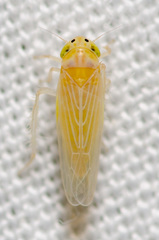 Dalbulus maidise3pest
- Outcome
- levels of the corn leafhoppere3
- Direction
- highere3
- Comparator
- controle2
- Setting
- Nicaraguat0
Organisms pictured · Representative pictures of the matched species, not figures from the paper.

Verbatim
t0“Maize‐Pest‐Ant System in Nicaragua”
e3“Chlorpyrifos significantly reduced ant foraging activity as well as densities of the fall armyworm, but it resulted in higher levels of the corn leafhopper”
e2“a control, where no insecticide was applied”
Claim · model-written summary
Ant predation was apparently responsible for a higher pupal removal rate in plots without insecticides
- Interactor
- Ante4biocontrol_agent
- Outcome
- pupal removal ratee4
- Direction
- highere4
- Qualifier
- apparently responsiblee4
- Setting
- Nicaraguat0
Organisms pictured · Representative pictures of the matched species, not figures from the paper.
Verbatim
t0“Maize‐Pest‐Ant System in Nicaragua”
e4“Ant predation was apparently responsible for a higher pupal removal rate in the plots with no insecticides”
Claim · model-written summary
Ant susceptibility to chemical insecticides should be taken into consideration in maize pest management
- Outcome
- ant susceptibility to chemical insecticidese5
Organisms pictured · Representative pictures of the matched species, not figures from the paper.
Verbatim
t0“Maize‐Pest‐Ant System in Nicaragua”
e5“ant susceptibility to chemical insecticides should be taken into consideration”
The same questions in other papers
carbofuran · Spodoptera frugiperda · Zea mays (maize)Positive and negative results
1 paper in the same direction as this paper · 1 in the opposite direction
- positive
- negative
chlorpyrifos · Spodoptera frugiperda · Zea mays (maize)Positive and negative results
7 papers in the same direction as this paper · 2 in the opposite direction · 1 reporting no difference from an alternative
- no effect
- negative
- no effect
7 papers more in this group
See all 11 papers →Claims are grouped by organism, treatment and what was measured or targeted. A paper counts as positive when any of its claims in the group is positive.