Abstract
Abstract. Two South African mountain fynbos sites were studied to determine the effect of short fire cycles on the cover and density of understorey sprouting species and their subsequent effect on plant‐species richness. Frequent fires (4–6 years between burns) increased the cover of sprouting species by 32% when compared to an adjacent site where the penultimate fire was 28 years previously. There was little or no effect of fire frequency on the densities of understorey sprouters; however, individuals were larger at sites with short fire cycles. The response of individual species of sprouters was variable with one species, Hypodiscus striatus , showing no response to fire frequency. The impact of sprouting species on the species richness of the plant community was great. The mean number of species recorded in quadrats with a high cover of sprouters was 60% lower in comparison to quadrats with low covers or under the burned skeletons of overstorey proteas. The effect of sprouters was consistent for all functional groups of species (i.e. sprouters, non‐sprouters, short‐lived and long‐lived species), in each case reducing the number of species present.
Abstract from the paper’s OpenAlex record, shown for indexing and research. Copyright remains with the authors or the publisher. Read at the source ↗
The text the model read, with the source record’s inline markup (italics, sub- and superscripts) rendered and its character entities decoded; quote offsets refer to the raw text.
Claims 6
Claim · model-written summary
Frequent fires increased sprouter cover by 32% against the longer-fire-interval site.
Verbatim
e0“Frequent fires (4–6 years between burns) increased the cover of sprouting species by 32% when compared to an adjacent site where the penultimate fire was 28 years previously.”
Claim · model-written summary
Fire frequency had little or no effect on sprouter density.
Verbatim
t0“understorey sprouting species”
e0“There was little or no effect of fire frequency on the densities of understorey sprouters”
Claim · model-written summary
Sprouter individuals were larger with short fire cycles.
Verbatim
t0“understorey sprouting species”
e0“individuals were larger at sites with short fire cycles.”
Claim · model-written summary
Hypodiscus striatus showed no response to fire frequency.
- Taxon
- Hypodiscus striatus
 Hypodiscus striatuse0
- Treatment
- fire frequencye0
- Outcome
- response to fire frequencye0
- Direction
- no responsee0
Organisms pictured · Representative pictures of the matched species, not figures from the paper.
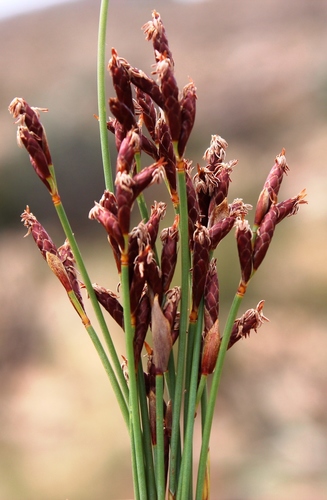
Verbatim
e0“Hypodiscus striatus , showing no response to fire frequency.”
Claim · model-written summary
High sprouter cover quadrats had 60% fewer species than low-cover or burned-protea quadrats.
Verbatim
t0“understorey sprouting species”
e0“The mean number of species recorded in quadrats with a high cover of sprouters was 60% lower in comparison to quadrats with low covers or under the burned skeletons of overstorey proteas.”
Claim · model-written summary
Sprouter effects reduced species numbers across all four functional groups.
Verbatim
t0“understorey sprouting species”
e0“The effect of sprouters was consistent for all functional groups of species (i.e. sprouters, non‐sprouters, short‐lived and long‐lived species), in each case reducing the number of species present.”