Abstract
Larvae of the dusky wireworm, Agriotes obscurus , and the Pacific Coast wireworm, Limonius canus , were exposed to germinated, insecticide-treated wheat seeds in a soil-filled bioassay in 2005 and 2006. Position in the bioassay and contact and/or repellence behaviour towards the seeds were recorded every 5 min for 3 or 5 h. Wireworm health was recorded for 70 or 126 d after exposure. Seeds were treated with the fungicides Dividend XLRTA (difenoconazole, mefenoxam) or Raxil MD (tebuconazole, metalaxyl), and/or the insecticides Vitavax Dual (lindane), Poncho 600F (clothianidin), Cruiser 350FS (thiamethoxam), Admire 240FS (imidacloprid), Gaucho 480FL (imidacloprid), Tefluthrin 20CS (tefluthrin), or Tefluthrin-Cruiser combinations. Most wireworms (> 80%) came into contact with the seeds in all treatments. Wireworms generally remained in contact throughout the observation period in the control treatments (Dividend, Raxil, untreated seeds). Unless moribund, wireworms were repelled after brief (< 20 min) contact in all Tefluthrin treatments. Most wireworms recovered from contact-induced morbidity within 21 d and did not relapse, except L. canus exposed to Cruiser and some A. obscurus exposed to Gaucho and Admire. Wireworm mortality was low (< 50%) in all treatments except L. canus exposed to Cruiser at 15 and 30 g a.i. 100 kg-1 seed (60 and 75%, respectively). Mortality was significantly less important when L. canus larvae were exposed to Tefluthrin-Cruiser combinations than when exposed to Cruiser alone. We suggest that efficacy assessments of insecticides for wireworm control require direct observation of their behaviour and long-term post-exposure health assessments, and discuss the impact of repellence and/or morbidity elicited by insecticides on wireworm control in the field.
Abstract from the paper’s OpenAlex record, shown for indexing and research. Copyright remains with the authors or the publisher. Read at the source ↗
The text the model read, with the source record’s inline markup (italics, sub- and superscripts) rendered and its character entities decoded; quote offsets refer to the raw text.
Claims 9
Claim · model-written summary
More than 80% of wireworms contacted seeds under every treatment.
- Taxon
- wheat
 Triticum aestivumt0
- Interactor
- wirewormse0pest
- Outcome
- came into contact with the seedse0
- Value
- > 80%e0
Organisms pictured · Representative pictures of the matched species, not figures from the paper.

Verbatim
e0“Most wireworms (> 80%) came into contact with the seeds in all treatments”
t0“wheat seeds”
Claim · model-written summary
Wireworms generally remained in contact with control seeds through observation.
- Taxon
- wheatTriticum aestivumt0
- Interactor
- Wirewormse0pest
- Outcome
- Wireworms generally remained in contacte0
- Comparator
- control treatments (Dividend, Raxil, untreated seeds)e0
Organisms pictured · Representative pictures of the matched species, not figures from the paper.
Verbatim
e0“Wireworms generally remained in contact throughout the observation period in the control treatments (Dividend, Raxil, untreated seeds)”
t0“wheat seeds”
Claim · model-written summary
Tefluthrin treatments repelled nonmoribund wireworms after less than 20 minutes of contact.
- Taxon
- wheatTriticum aestivumt0
- Treatment
- Tefluthrin treatmentse0
- Interactor
- wirewormse0pest
- Outcome
- wireworms were repellede0
- Direction
- repellede0
- Value
- < 20 mine0
Not reportedComparator
Organisms pictured · Representative pictures of the matched species, not figures from the paper.
Verbatim
e0“Unless moribund, wireworms were repelled after brief (< 20 min) contact in all Tefluthrin treatments”
t0“wheat seeds”
Claim · model-written summary
Most wireworms recovered from contact-induced morbidity within 21 days, with specified insecticide exceptions.
- Taxon
- wheatTriticum aestivumt0
- Interactor
- wirewormse0pest
- Outcome
- wireworms recovered from contact-induced morbiditye0
- Value
- 21 de0
- Qualifier
- except L. canus exposed to Cruiser and some A. obscurus exposed to Gaucho and Admiree0
Organisms pictured · Representative pictures of the matched species, not figures from the paper.
Verbatim
e0“Most wireworms recovered from contact-induced morbidity within 21 d and did not relapse, except L. canus exposed to Cruiser and some A. obscurus exposed to Gaucho and Admire”
t0“wheat seeds”
Claim · model-written summary
Wireworm mortality was below 50% in all treatments except the specified Limonius canus Cruiser doses.
- Taxon
- wheatTriticum aestivumt0
- Interactor
- L. canus
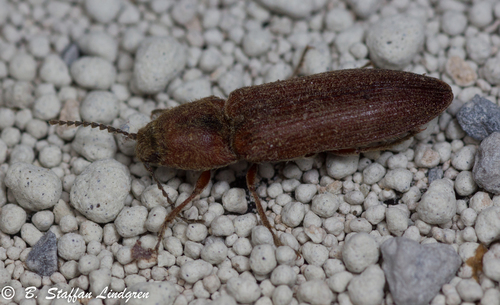
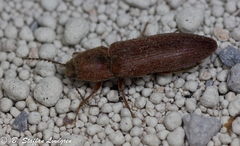 Limonius canuse0pest
- Outcome
- Wireworm mortalitye0
- Direction
- lowe0
- Value
- < 50%e0
- Qualifier
- except L. canus exposed to Cruiser at 15 and 30 g a.i. 100 kg-1 seede0
Organisms pictured · Representative pictures of the matched species, not figures from the paper.
Verbatim
e0“Wireworm mortality was low (< 50%) in all treatments except L. canus exposed to Cruiser at 15 and 30 g a.i. 100 kg-1 seed (60 and 75%, respectively)”
t0“wheat seeds”
Claim · model-written summary
Cruiser at 15 g active ingredient per 100 kg seed produced 60% mortality in L. canus.
- Taxon
- wheatTriticum aestivumt0
- Treatment
- Cruiser at 15 and 30 g a.i. 100 kg-1 seede0
- Interactor
- L. canusLimonius canuse0pest
- Outcome
- L. canuse0
- Value
- 60e0
Not reportedComparatorDirection
Organisms pictured · Representative pictures of the matched species, not figures from the paper.
Verbatim
e0“L. canus exposed to Cruiser at 15 and 30 g a.i. 100 kg-1 seed (60 and 75%, respectively)”
t0“wheat seeds”
Claim · model-written summary
Cruiser at 30 g active ingredient per 100 kg seed produced 75% mortality in L. canus.
- Taxon
- wheatTriticum aestivumt0
- Treatment
- Cruiser at 15 and 30 g a.i. 100 kg-1 seede0
- Interactor
- L. canusLimonius canuse0pest
- Outcome
- L. canuse0
- Value
- 75%e0
Not reportedComparatorDirection
Organisms pictured · Representative pictures of the matched species, not figures from the paper.
Verbatim
e0“L. canus exposed to Cruiser at 15 and 30 g a.i. 100 kg-1 seed (60 and 75%, respectively)”
t0“wheat seeds”
Claim · model-written summary
Combining tefluthrin with Cruiser significantly reduced L. canus mortality compared with Cruiser alone.
- Taxon
- wheatTriticum aestivumt0
- Treatment
- Tefluthrin-Cruiser combinationse0
- Interactor
- L. canusLimonius canuse0pest
- Outcome
- L. canus larvaee0
- Direction
- less importante0
- Comparator
- Cruiser alonee0
Organisms pictured · Representative pictures of the matched species, not figures from the paper.
Verbatim
e0“Mortality was significantly less important when L. canus larvae were exposed to Tefluthrin-Cruiser combinations than when exposed to Cruiser alone”
t0“wheat seeds”
Claim · model-written summary
Assessments of wireworm insecticide efficacy should include direct behavioral observation and long-term health assessment.
- Taxon
- wheatTriticum aestivumt0
- Outcome
- efficacy assessments of insecticides for wireworm control require direct observation of their behaviour and long-term post-exposure health assessmentse0
Organisms pictured · Representative pictures of the matched species, not figures from the paper.
Verbatim
e0“efficacy assessments of insecticides for wireworm control require direct observation of their behaviour and long-term post-exposure health assessments”
t0“wheat seeds”