Abstract
The genus Neurada includes three taxa: Neurada procumbens L. var. procumbens, N. procumbens L. var. stellata M. and D. Zohary and N. al-eisawii Barsotti, Borzatti and Garbari, a recently described endemie unit of the Hisma Basin (Southern Jordan). Chromosome number and karyotype morphology of N. procumbens var. stellata and N. al-eisawii were investigated. All plants show 2n=14 chromosomes. The great morphological differentiation of the mentioned units is probably due to a local schizogenic process of populational fragmentation of Neurada procumbens, the diploid annual prostrate plant widespread mainly in subtropical desertic habitats.
Abstract from the paper’s OpenAlex record, shown for indexing and research. Copyright remains with the authors or the publisher. Read at the source ↗
The text the model read, with the source record’s inline markup (italics, sub- and superscripts) rendered and its character entities decoded; quote offsets refer to the raw text.
Claims 2
Claim · model-written summary
All plants of N. procumbens var. stellata and N. al-eisawii show 2n=14 chromosomes.
- Taxon
- N. procumbens var. stellata and N. al-eisawii
 Neurada procumbens
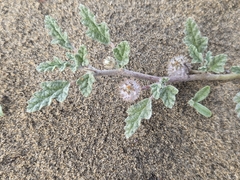 Neurada al-eisawiie1
- Outcome
- Chromosome numbere1
- Value
- 2n=14e1
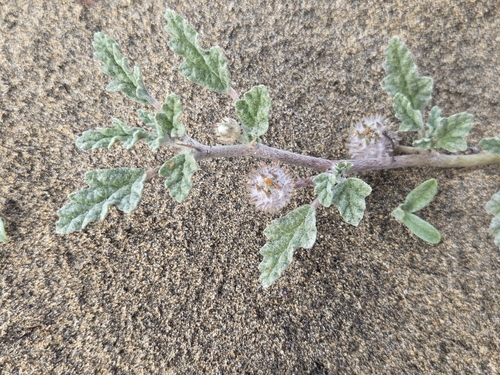
Organisms pictured · Representative pictures of the matched species, not figures from the paper.

Verbatim
e1“Chromosome number and karyotype morphology of N. procumbens var. stellata and N. al-eisawii were investigated. All plants show 2n=14 chromosomes”
Claim · model-written summary
The morphological differentiation of the Neurada units is probably due to a local schizogenic process of populational fragmentation of N. procumbens.
- Taxon
- Neurada procumbensNeurada procumbense2
- Outcome
- great morphological differentiatione2
- Qualifier
- probably due to a local schizogenic process of populational fragmentatione2
Organisms pictured · Representative pictures of the matched species, not figures from the paper.
Verbatim
e2“The great morphological differentiation of the mentioned units is probably due to a local schizogenic process of populational fragmentation of Neurada procumbens”