Abstract
This study demonstrates that the spectral quality of radiation sources applied with ultraviolet-B (UV-B; background radiation) affects the suppression of cucumber powdery mildew (Podosphaera xanthii) by UV-B. Suppression provided by daily UV-B exposure of 1 W/m 2 for 10 min was greatest in the presence of red light or by a complete lack of background light, and powdery mildew suppression was least in the presence of ultraviolet-A (UV-A) or blue radiation compared with plants exposed only to 16 h of daily natural light supplemented with high-pressure sodium lamps that supply broad-spectrum radiation with peaks in the yellow-orange region. Exposure of powdery mildew-inoculated plants to supplemental red light without UV-B, beginning at the end of the daylight period, also reduced disease severity; however, supplemental blue light applied in the same fashion had no effect. Daily application of UV-B at 1 W/m 2 beginning on the day of inoculation significantly reduced the severity of powdery mildew to 15% compared with 100% severity on control plants. Maximum suppression of powdery mildew was observed following 15 min of exposure to UV-B (1.1% severity compared with 100% severity on control plants) but exposure time had to be limited to 5 to 10 min to reduce phytotoxicity. There was no additional disease suppression when plants were exposed to UV-B beginning 2 days prior to inoculation compared with plants exposed to UV-B beginning on the day of inoculation. UV-B inhibited germination, infection, colony expansion, and sporulation of P. xanthii. The results suggest that efficacy of UV-B treatments, alone or in combination with red light, against P. xanthii can be enhanced by exposure of inoculated plants to these wavelengths of radiation during the night, thereby circumventing the counteracting effects of blue light and UV-A radiation. The effect of UV-B on powdery mildew seemed to be directly upon the pathogen, rather than induced resistance of the host. Night exposure of plants to 5 to 10 min of UV-B at 1 W/m 2 and inexpensive, spectral-specific, light-emitting diodes may provide additional tools to suppress powdery mildews of diverse greenhouse crops.
Abstract from the paper’s OpenAlex record, shown for indexing and research. Copyright remains with the authors or the publisher. Read at the source ↗
The text the model read, with the source record’s inline markup (italics, sub- and superscripts) rendered and its character entities decoded; quote offsets refer to the raw text.
Claims 13
Claim · model-written summary
Daily UV-B at 1 W/m 2 for 10 min suppressed powdery mildew most with red light or with no background light
- Taxon
- cucumber
 Cucumis sativuse1
- Treatment
- daily UV-B exposure of 1 W/m 2 for 10 mine2
- Interactor
- Podosphaera xanthii
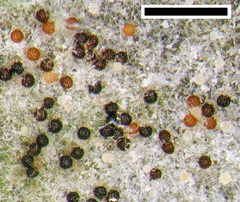 Podosphaera xanthiie1pathogen
- Outcome
- powdery mildew suppressione2
- Direction
- greateste2
- Qualifier
- in the presence of red light or by a complete lack of background lighte2
- Comparator
- plants exposed only to 16 h of daily natural light supplemented with high-pressure sodium lampse2
Organisms pictured · Representative pictures of the matched species, not figures from the paper.


Verbatim
e1“suppression of cucumber powdery mildew (Podosphaera xanthii) by UV-B”
e2“Suppression provided by daily UV-B exposure of 1 W/m 2 for 10 min was greatest in the presence of red light or by a complete lack of background light, and powdery mildew suppression was least in the presence of ultraviolet-A (UV-A) or blue radiation compared with plants exposed only to 16 h of daily natural light supplemented with high-pressure sodium lamps”
Claim · model-written summary
UV-B with UV-A or blue background radiation gave the least powdery mildew suppression
- Taxon
- cucumberCucumis sativuse1
- Treatment
- ultraviolet-A (UV-A) or blue radiatione2
- Interactor
- Podosphaera xanthiiPodosphaera xanthiie1pathogen
- Outcome
- powdery mildew suppressione2
- Direction
- leaste2
- Comparator
- plants exposed only to 16 h of daily natural light supplemented with high-pressure sodium lampse2
Organisms pictured · Representative pictures of the matched species, not figures from the paper.
Verbatim
e1“suppression of cucumber powdery mildew (Podosphaera xanthii) by UV-B”
e2“Suppression provided by daily UV-B exposure of 1 W/m 2 for 10 min was greatest in the presence of red light or by a complete lack of background light, and powdery mildew suppression was least in the presence of ultraviolet-A (UV-A) or blue radiation compared with plants exposed only to 16 h of daily natural light supplemented with high-pressure sodium lamps”
Claim · model-written summary
Supplemental red light without UV-B reduced powdery mildew severity
- Taxon
- cucumberCucumis sativuse1
- Treatment
- supplemental red light without UV-Be4
- Interactor
- Podosphaera xanthiiPodosphaera xanthiie1pathogen
- Outcome
- disease severitye4
- Direction
- reducede4
Not reportedComparator
Organisms pictured · Representative pictures of the matched species, not figures from the paper.
Verbatim
e1“suppression of cucumber powdery mildew (Podosphaera xanthii) by UV-B”
e4“Exposure of powdery mildew-inoculated plants to supplemental red light without UV-B, beginning at the end of the daylight period, also reduced disease severity; however, supplemental blue light applied in the same fashion had no effect”
Claim · model-written summary
Supplemental blue light applied in the same fashion had no effect on powdery mildew
- Taxon
- cucumberCucumis sativuse1
- Treatment
- supplemental blue lighte4
- Interactor
- Podosphaera xanthiiPodosphaera xanthiie1pathogen
- Outcome
- disease severitye4
- Direction
- no effecte4
Not reportedComparator
Organisms pictured · Representative pictures of the matched species, not figures from the paper.
Verbatim
e1“suppression of cucumber powdery mildew (Podosphaera xanthii) by UV-B”
e4“Exposure of powdery mildew-inoculated plants to supplemental red light without UV-B, beginning at the end of the daylight period, also reduced disease severity; however, supplemental blue light applied in the same fashion had no effect”
Claim · model-written summary
Daily UV-B at 1 W/m 2 from the day of inoculation significantly reduced powdery mildew severity to 15%
- Taxon
- cucumberCucumis sativuse1
- Treatment
- Daily application of UV-B at 1 W/m 2 beginning on the day of inoculatione5
- Interactor
- Podosphaera xanthiiPodosphaera xanthiie1pathogen
- Outcome
- severity of powdery mildewe5
- Direction
- reducede5
- Value
- 15%e5
- Qualifier
- 100% severity on control plantse5
- Comparator
- control plantse5
Organisms pictured · Representative pictures of the matched species, not figures from the paper.
Verbatim
e1“suppression of cucumber powdery mildew (Podosphaera xanthii) by UV-B”
e5“Daily application of UV-B at 1 W/m 2 beginning on the day of inoculation significantly reduced the severity of powdery mildew to 15% compared with 100% severity on control plants”
Claim · model-written summary
Fifteen minutes of UV-B gave maximum suppression of powdery mildew, to 1.1% severity
- Taxon
- cucumberCucumis sativuse1
- Treatment
- 15 min of exposure to UV-Be6
- Interactor
- Podosphaera xanthiiPodosphaera xanthiie1pathogen
- Outcome
- suppression of powdery mildewe6
- Direction
- Maximume6
- Value
- 1.1%e6
- Comparator
- control plantse6
Organisms pictured · Representative pictures of the matched species, not figures from the paper.
Verbatim
e1“suppression of cucumber powdery mildew (Podosphaera xanthii) by UV-B”
e6“Maximum suppression of powdery mildew was observed following 15 min of exposure to UV-B (1.1% severity compared with 100% severity on control plants)”
Claim · model-written summary
Exposure time should be limited to 5 to 10 min to avoid phytotoxicity
- Taxon
- cucumberCucumis sativuse1
- Outcome
- exposure timee7
- Qualifier
- to reduce phytotoxicitye7
Organisms pictured · Representative pictures of the matched species, not figures from the paper.
Verbatim
e1“suppression of cucumber powdery mildew (Podosphaera xanthii) by UV-B”
e7“exposure time had to be limited to 5 to 10 min to reduce phytotoxicity”
Claim · model-written summary
UV-B starting 2 days before inoculation gave no additional suppression over UV-B starting on the day of inoculation
- Taxon
- cucumberCucumis sativuse1
- Treatment
- UV-B beginning 2 days prior to inoculatione3
- Interactor
- Podosphaera xanthiiPodosphaera xanthiie1pathogen
- Outcome
- disease suppressione3
- Direction
- no additionale3
- Comparator
- plants exposed to UV-B beginning on the day of inoculatione3
Organisms pictured · Representative pictures of the matched species, not figures from the paper.
Verbatim
e1“suppression of cucumber powdery mildew (Podosphaera xanthii) by UV-B”
e3“There was no additional disease suppression when plants were exposed to UV-B beginning 2 days prior to inoculation compared with plants exposed to UV-B beginning on the day of inoculation”
Claim · model-written summary
UV-B inhibited germination, infection and colony expansion of P. xanthii
- Taxon
- cucumberCucumis sativuse1
- Treatment
- UV-Be4
- Interactor
- P. xanthiie4pathogen
- Outcome
- germination, infection, colony expansione4
- Direction
- inhibitede4
Not reportedComparator
Organisms pictured · Representative pictures of the matched species, not figures from the paper.
Verbatim
e1“suppression of cucumber powdery mildew (Podosphaera xanthii) by UV-B”
e4“UV-B inhibited germination, infection, colony expansion, and sporulation of P. xanthii”
Claim · model-written summary
UV-B inhibited sporulation of P. xanthii
- Taxon
- cucumberCucumis sativuse1
- Treatment
- UV-Be4
- Interactor
- P. xanthiie4pathogen
- Outcome
- sporulatione4
- Direction
- inhibitede4
Not reportedComparator
Organisms pictured · Representative pictures of the matched species, not figures from the paper.
Verbatim
e1“suppression of cucumber powdery mildew (Podosphaera xanthii) by UV-B”
e4“UV-B inhibited germination, infection, colony expansion, and sporulation of P. xanthii”
Claim · model-written summary
Night exposure to UV-B, alone or with red light, may enhance efficacy against P. xanthii
- Taxon
- cucumberCucumis sativuse1
- Treatment
- exposure of inoculated plants to these wavelengths of radiation during the nighte5
- Interactor
- P. xanthiie5pathogen
- Outcome
- efficacy of UV-B treatmentse5
Organisms pictured · Representative pictures of the matched species, not figures from the paper.
Verbatim
e1“suppression of cucumber powdery mildew (Podosphaera xanthii) by UV-B”
e5“efficacy of UV-B treatments, alone or in combination with red light, against P. xanthii can be enhanced by exposure of inoculated plants to these wavelengths of radiation during the night”
Claim · model-written summary
The effect of UV-B on powdery mildew acts directly on the pathogen rather than through induced host resistance
- Taxon
- cucumberCucumis sativuse1
- Outcome
- effect of UV-B on powdery mildewe6
- Qualifier
- directly upon the pathogen, rather than induced resistance of the hoste6
Organisms pictured · Representative pictures of the matched species, not figures from the paper.
Verbatim
e1“suppression of cucumber powdery mildew (Podosphaera xanthii) by UV-B”
e6“The effect of UV-B on powdery mildew seemed to be directly upon the pathogen, rather than induced resistance of the host”
Claim · model-written summary
Night UV-B at 5 to 10 min with LEDs may provide tools to suppress powdery mildews of greenhouse crops
Verbatim
e7“Night exposure of plants to 5 to 10 min of UV-B at 1 W/m 2 and inexpensive, spectral-specific, light-emitting diodes may provide additional tools to suppress powdery mildews of diverse greenhouse crops”
The same questions in other papers
uv · growth · Cucumis sativus (cucumber)Results differ
9 papers in the same direction as this paper · 29 in the opposite direction
- negative
- no effect
- no effect
35 papers more in this group
See all 39 papers →inoculation · Podosphaera xanthii · Cucumis sativus (cucumber)Positive and negative results
1 in the opposite direction
- negative
uv · disease · Cucumis sativus (cucumber)Positive and negative results
7 papers in the same direction as this paper · 4 in the opposite direction
- positive
- no effect
- negative
8 papers more in this group
See all 12 papers →uv · Podosphaera xanthii · Cucumis sativus (cucumber)Results agree
1 paper in the same direction as this paper
- positive
Claims are grouped by organism, treatment and what was measured or targeted. A paper counts as positive when any of its claims in the group is positive.