Abstract
Abstract Four aphidiine parasitoid species (Hymenoptera: Braconidae) were evaluated with respect to their potential to control Aphis gossypii Glover (Homoptera: Aphididae) in glasshouse cucumbers. In a laboratory experiment thirty cotton aphids were offered to individual females for two hours. Aphidius matricariae Haliday parasitized less than six percent of the aphids and was ruled out as potential biological control agent. Ephedrus cerasicola Starý and Lysiphlebus testaceipes Cresson parasitized 23 and 26 percent of the aphids, respectively. Aphidius colemani Viereck parasitized 72 to 80 percent of the aphids. With the latter three species, experiments were performed in small glasshouses with cucumbers ( Cucumis sativus L. cv. ‘Aramon’). As in the laboratory test A. colemani performed best; significantly more colonies were found and parasitization rates in the colonies were higher by A. colemani than by E. cerasicola and L. testaceipes. Because of the good correspondence between laboratory and glasshouse experiments, it is suggested that bad performance of an aphid parasitoid species in a simple laboratory trial might be sufficient evidence to disregard this species for further tests.
Abstract from the paper’s OpenAlex record, shown for indexing and research. Copyright remains with the authors or the publisher. Read at the source ↗
The text the model read, with the source record’s inline markup (italics, sub- and superscripts) rendered and its character entities decoded; quote offsets refer to the raw text.
Claims 8
Claim · model-written summary
Aphidius colemani parasitized 72 to 80 percent of Aphis gossypii aphids in the laboratory test.
- Taxon
- cucumbers
 Cucumis sativuse1
- Interactor
- Aphis gossypii
 Aphis gossypiie2pest
- Second interactor
- Aphidius colemani Viereck
 Aphidius colemanie0biocontrol_agent
- Outcome
- parasitizede0
- Value
- 72 to 80 percente0
Organisms pictured · Representative pictures of the matched species, not figures from the paper.


Verbatim
e0“Aphidius colemani Viereck parasitized 72 to 80 percent of the aphids”
e1“in glasshouse cucumbers”
e2“Aphis gossypii Glover (Homoptera: Aphididae)”
Claim · model-written summary
Ephedrus cerasicola parasitized 23 percent of the aphids in the laboratory test.
- Taxon
- cucumbersCucumis sativuse1
- Interactor
- Aphis gossypiiAphis gossypiie2pest
- Second interactor
- Ephedrus cerasicola StarýEphedrus cerasicolae4biocontrol_agent
- Outcome
- parasitizede4
- Value
- 23e4
Organisms pictured · Representative pictures of the matched species, not figures from the paper.
Verbatim
e1“in glasshouse cucumbers”
e2“Aphis gossypii Glover (Homoptera: Aphididae)”
e4“Ephedrus cerasicola Starý and Lysiphlebus testaceipes Cresson parasitized 23 and 26 percent of the aphids, respectively”
Claim · model-written summary
Lysiphlebus testaceipes parasitized 26 percent of the aphids in the laboratory test.
- Taxon
- cucumbersCucumis sativuse1
- Interactor
- Aphis gossypiiAphis gossypiie2pest
- Second interactor
- Lysiphlebus testaceipes CressonLysiphlebus testaceipese4biocontrol_agent
- Outcome
- parasitizede4
- Value
- 26 percente4
Organisms pictured · Representative pictures of the matched species, not figures from the paper.
Verbatim
e1“in glasshouse cucumbers”
e2“Aphis gossypii Glover (Homoptera: Aphididae)”
e4“Ephedrus cerasicola Starý and Lysiphlebus testaceipes Cresson parasitized 23 and 26 percent of the aphids, respectively”
Claim · model-written summary
Aphidius matricariae parasitized less than six percent of the aphids and was ruled out.
- Taxon
- cucumbersCucumis sativuse1
- Interactor
- Aphis gossypiiAphis gossypiie2pest
- Second interactor
- Aphidius matricariae Haliday
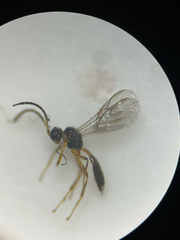 Aphidius matricariaee3biocontrol_agent
- Outcome
- parasitizede3
- Value
- less than six percente3
Organisms pictured · Representative pictures of the matched species, not figures from the paper.
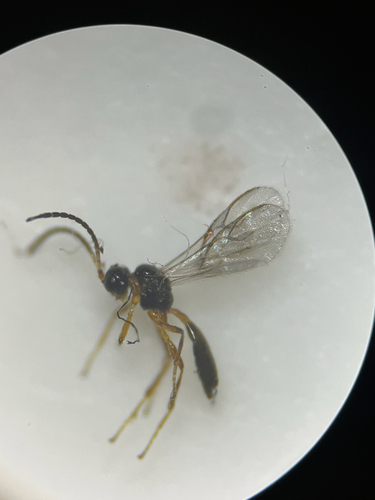
Verbatim
e1“in glasshouse cucumbers”
e2“Aphis gossypii Glover (Homoptera: Aphididae)”
e3“Aphidius matricariae Haliday parasitized less than six percent of the aphids”
Claim · model-written summary
Aphidius colemani produced significantly more aphid colonies in glasshouse cucumbers than Ephedrus cerasicola and Lysiphlebus testaceipes.
- Taxon
- cucumbersCucumis sativuse1
- Treatment
- A. colemanie5
- Interactor
- Aphis gossypiiAphis gossypiie2pest
- Second interactor
- A. colemaniAphidius colemanie5biocontrol_agent
- Outcome
- colonies were founde5
- Direction
- moree5
- Comparator
- E. cerasicola and L. testaceipese5
- Setting
- small glasshousese3
Organisms pictured · Representative pictures of the matched species, not figures from the paper.
Verbatim
e1“in glasshouse cucumbers”
e2“Aphis gossypii Glover (Homoptera: Aphididae)”
e5“As in the laboratory test A. colemani performed best; significantly more colonies were found and parasitization rates in the colonies were higher by A. colemani than by E. cerasicola and L. testaceipes”
e3“experiments were performed in small glasshouses with cucumbers”
Claim · model-written summary
Parasitization rates in the colonies were higher with Aphidius colemani than with Ephedrus cerasicola and Lysiphlebus testaceipes.
- Taxon
- cucumbersCucumis sativuse1
- Treatment
- A. colemanie5
- Interactor
- Aphis gossypiiAphis gossypiie2pest
- Second interactor
- A. colemaniAphidius colemanie5biocontrol_agent
- Outcome
- parasitization rates in the coloniese5
- Direction
- highere5
- Comparator
- E. cerasicola and L. testaceipese5
Organisms pictured · Representative pictures of the matched species, not figures from the paper.
Verbatim
e1“in glasshouse cucumbers”
e2“Aphis gossypii Glover (Homoptera: Aphididae)”
e5“As in the laboratory test A. colemani performed best; significantly more colonies were found and parasitization rates in the colonies were higher by A. colemani than by E. cerasicola and L. testaceipes”
Claim · model-written summary
Poor performance of a parasitoid in a simple laboratory trial may justify disregarding that species.
- Taxon
- cucumbersCucumis sativuse1
- Outcome
- disregard this speciese6
Organisms pictured · Representative pictures of the matched species, not figures from the paper.
Verbatim
e1“in glasshouse cucumbers”
e6“bad performance of an aphid parasitoid species in a simple laboratory trial might be sufficient evidence to disregard this species”
Claim · model-written summary
Laboratory and glasshouse experiments corresponded well for the parasitoids tested.
- Taxon
- cucumbersCucumis sativuse1
- Outcome
- good correspondence between laboratory and glasshouse experimentse7
Organisms pictured · Representative pictures of the matched species, not figures from the paper.
Verbatim
e1“in glasshouse cucumbers”
e7“Because of the good correspondence between laboratory and glasshouse experiments”