Abstract
The research was conducted at the Lithuanian Institute of Agriculture (LIA) during the period 2005–2008. Resistance of advanced winter wheat breeding lines to Bipolaris sorokiniana monoconidial isolates obtained from wheat straw and grain was evaluated under laboratory conditions using the detached leaf technique. A total of three checks with a known resistance level and 104 advanced breeding lines were investigated using four B. sorokiniana isolates. The screening technique used revealed a low resistance of the test material. The resistant cultivar BR8 and the moderately resistant cultivar BH1146 were found to be moderately susceptible (6.1 and 7.0 scores, respectively). The line ‘Zentos / Lut97-4’ was slightly more resistant (5.9 scores) than BR8 (6.1 scores). The ten lines possessed a resistance level similar to that of the cultivars BR8 and BH1146. The rest of the lines (79.4%) were susceptible or very susceptible. Analysis of the pedigree of the lines did not reveal any clear impact of parental cultivars on the resistance of lines. Only the line WW2498 conferred resistance as all the four breeding lines possessing it were given 6.8 to 7.0 scores. Pathogen isolates with a lower aggressiveness could be more adequate for testing low-resistant wheat.
Abstract from the paper’s OpenAlex record, shown for indexing and research. Copyright remains with the authors or the publisher. Read at the source ↗
The text the model read, with the source record’s inline markup (italics, sub- and superscripts) rendered and its character entities decoded; quote offsets refer to the raw text.
Claims 9
Claim · model-written summary
The screening technique found low resistance in the tested wheat lines.
- Taxon
- winter wheat
 Triticum aestivumt0
- Outcome
- low resistance of the test materiale0
Not reportedComparatorValue
Organisms pictured · Representative pictures of the matched species, not figures from the paper.

Verbatim
e0“The screening technique used revealed a low resistance of the test material”
t0“winter wheat breeding lines”
Claim · model-written summary
BR8 was moderately susceptible with a 6.1 score.
- Taxon
- winter wheatTriticum aestivumt0
- Material
- BR8e0
- Interactor
- Bipolaris sorokiniana
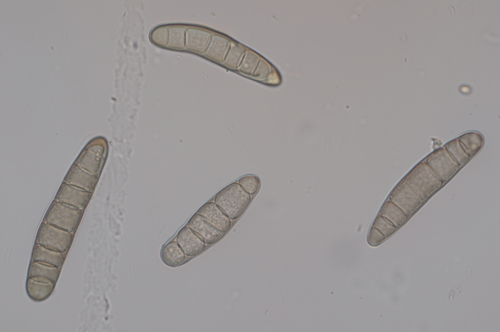
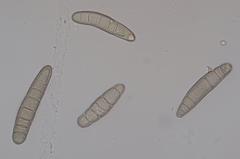 Bipolaris sorokinianae1pathogen
- Outcome
- moderately susceptiblee0
- Value
- 6.1e0
Organisms pictured · Representative pictures of the matched species, not figures from the paper.
Verbatim
e0“The resistant cultivar BR8 and the moderately resistant cultivar BH1146 were found to be moderately susceptible (6.1 and 7.0 scores, respectively)”
t0“winter wheat breeding lines”
e1“Bipolaris sorokiniana monoconidial isolates”
Claim · model-written summary
BH1146 was moderately susceptible with a 7.0 score.
- Taxon
- winter wheatTriticum aestivumt0
- Material
- BH1146e0
- Interactor
- Bipolaris sorokinianaBipolaris sorokinianae1pathogen
- Outcome
- moderately susceptiblee0
- Value
- 7.0e0
Organisms pictured · Representative pictures of the matched species, not figures from the paper.
Verbatim
e0“The resistant cultivar BR8 and the moderately resistant cultivar BH1146 were found to be moderately susceptible (6.1 and 7.0 scores, respectively)”
t0“winter wheat breeding lines”
e1“Bipolaris sorokiniana monoconidial isolates”
Claim · model-written summary
Zentos / Lut97-4 was slightly more resistant than BR8, scoring 5.9 versus 6.1.
- Taxon
- winter wheatTriticum aestivumt0
- Material
- Zentos / Lut97-4e0
- Outcome
- resistante0
- Direction
- moree0
- Value
- 5.9 scorese0
- Qualifier
- 6.1 scorese0
- Comparator
- BR8e0
Organisms pictured · Representative pictures of the matched species, not figures from the paper.
Verbatim
e0“The line ‘Zentos / Lut97-4’ was slightly more resistant (5.9 scores) than BR8 (6.1 scores)”
t0“winter wheat breeding lines”
Claim · model-written summary
Ten lines had resistance similar to BR8 and BH1146.
- Taxon
- winter wheatTriticum aestivumt0
- Outcome
- resistance level similar to that of the cultivars BR8 and BH1146e0
- Value
- ten linese0
Organisms pictured · Representative pictures of the matched species, not figures from the paper.
Verbatim
e0“The ten lines possessed a resistance level similar to that of the cultivars BR8 and BH1146”
t0“winter wheat breeding lines”
Claim · model-written summary
Most remaining lines, 79.4%, were susceptible or very susceptible.
- Taxon
- winter wheatTriticum aestivumt0
- Outcome
- susceptible or very susceptiblee0
- Value
- 79.4%e0
Organisms pictured · Representative pictures of the matched species, not figures from the paper.
Verbatim
e0“The rest of the lines (79.4%) were susceptible or very susceptible”
t0“winter wheat breeding lines”
Claim · model-written summary
Pedigree analysis showed no clear parental-cultivar impact on line resistance.
- Taxon
- winter wheatTriticum aestivumt0
- Material
- parental cultivarse0
- Outcome
- resistance of linese0
- Direction
- did not reveal any clear impacte0
Organisms pictured · Representative pictures of the matched species, not figures from the paper.
Verbatim
e0“Analysis of the pedigree of the lines did not reveal any clear impact of parental cultivars on the resistance of lines”
t0“winter wheat breeding lines”
Claim · model-written summary
WW2498 was the only line conferring resistance, with four derived lines scoring 6.8 to 7.0.
- Taxon
- winter wheatTriticum aestivumt0
- Material
- WW2498e0
- Outcome
- conferred resistancee0
- Value
- 6.8 to 7.0 scorese0
Organisms pictured · Representative pictures of the matched species, not figures from the paper.
Verbatim
e0“Only the line WW2498 conferred resistance as all the four breeding lines possessing it were given 6.8 to 7.0 scores”
t0“winter wheat breeding lines”
Claim · model-written summary
The authors suggest less aggressive isolates may better test low-resistance wheat.
- Taxon
- wheatTriticum aestivume0
- Outcome
- Pathogen isolates with a lower aggressiveness could be more adequate for testing low-resistant wheate0
Organisms pictured · Representative pictures of the matched species, not figures from the paper.
Verbatim
e0“Pathogen isolates with a lower aggressiveness could be more adequate for testing low-resistant wheat”