Abstract
Arbuscular mycorrhizal (AM) fungi form symbiotic associations with plant roots. Around 150 species have been described and it is becoming clear that many of these species have different functional properties. The species diversity of AM fungi actively growing in roots is therefore an important component of ecosystem diversity. However, it is difficult to identify AM fungi below the genus level from morphology in planta , as they possess few informative characters. We present here a molecular method for identifying infrageneric sequence types that estimate the taxonomic diversity of AM fungi present in actively growing roots. Bluebell roots were sampled from beneath two different canopy types, oak and sycamore, and DNA sequences were amplified from roots by the polymerase chain reaction with fungal‐specific primers for part of the small subunit ribosomal RNA gene. Restriction fragment length polymorphism among 141 clones was assessed and 62 clones were sequenced. When aligned, discrete sequence groups emerged that cluster into the three families of AM fungi: Acaulosporaceae, Gigasporaceae and Glomaceae. The sequence variation is consistent with rRNA secondary structure. The same sequence types were found at both sampling times. Frequencies of Scutellospora increased in December, and Acaulospora increased in abundance in July. Sites with a sycamore canopy show a reduced abundance of Acaulospora , and those with oak showed a reduced abundance of Glomus . These distribution patterns are consistent with previous morphological studies carried out in this woodland. The molecular method provides an alternative method of estimating the distribution and abundance of AM fungi, and has the potential to provide greater resolution at the infrageneric level.
Abstract from the paper’s OpenAlex record, shown for indexing and research. Copyright remains with the authors or the publisher. Read at the source ↗
The text the model read, with the source record’s inline markup (italics, sub- and superscripts) rendered and its character entities decoded; quote offsets refer to the raw text.
Claims 7
Claim · model-written summary
A molecular PCR-RFLP method identified infrageneric AM fungal sequence types in bluebell roots, where morphology cannot.
Verbatim
e1“Bluebell roots were sampled from beneath two different canopy types, oak and sycamore”
e2“We present here a molecular method for identifying infrageneric sequence types that estimate the taxonomic diversity of AM fungi present in actively growing roots”
e3“it is difficult to identify AM fungi below the genus level from morphology in planta”
Claim · model-written summary
Discrete AM fungal sequence groups clustered into the three families Acaulosporaceae, Gigasporaceae and Glomaceae.
- Taxon
- Bluebelle1
- Interactor
- AM fungiGlomeromycotae4symbiont
- Outcome
- discrete sequence groupse4
- Qualifier
- cluster into the three families of AM fungie4
Verbatim
e1“Bluebell roots were sampled from beneath two different canopy types, oak and sycamore”
e4“When aligned, discrete sequence groups emerged that cluster into the three families of AM fungi: Acaulosporaceae, Gigasporaceae and Glomaceae”
Claim · model-written summary
The same AM fungal sequence types were found at both sampling times.
Verbatim
e1“Bluebell roots were sampled from beneath two different canopy types, oak and sycamore”
e5“The same sequence types were found at both sampling times”
Claim · model-written summary
Scutellospora frequencies increased in December.
- Taxon
- Bluebelle1
- Interactor
- Scutellospora
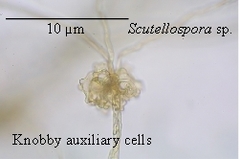 Scutellosporae6symbiont
- Outcome
- Frequencies of Scutellosporae6
- Direction
- increasede6
- Qualifier
- in Decembere6
Organisms pictured · Representative pictures of the matched species, not figures from the paper.
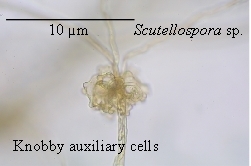
Verbatim
e1“Bluebell roots were sampled from beneath two different canopy types, oak and sycamore”
e6“Frequencies of Scutellospora increased in December, and Acaulospora increased in abundance in July”
Claim · model-written summary
Acaulospora abundance increased in July.
Verbatim
e1“Bluebell roots were sampled from beneath two different canopy types, oak and sycamore”
e6“Frequencies of Scutellospora increased in December, and Acaulospora increased in abundance in July”
Claim · model-written summary
Sycamore canopy reduced the abundance of Acaulospora in bluebell roots.
Verbatim
e1“Bluebell roots were sampled from beneath two different canopy types, oak and sycamore”
e7“Sites with a sycamore canopy show a reduced abundance of Acaulospora”
Claim · model-written summary
Oak canopy reduced the abundance of Glomus in bluebell roots.
 Glomus
Organisms pictured · Representative pictures of the matched species, not figures from the paper.

Verbatim
e1“Bluebell roots were sampled from beneath two different canopy types, oak and sycamore”
e7“those with oak showed a reduced abundance of Glomus”