Abstract
Larvae of a flea-beetle, Chaetocnema arida , were found mining in the stems of young barley shoots in June 1939. Chlorops pumilionis larvae infested barley most heavily in fields where Agriotes larvae were doing most damage. The Chlorops adults showed marked sexual dimorphism in both size and colour. The size range for this species is correlated with a proportionate size range in its parasites Coelinius niger and Stenomalus micans . Perforations 1·3 mm. in diameter in the top of a cage were sufficient for the escape of Stenomalus but not of Chlorops or Coelinius . Lasiosina cinctipes larvae were commonly synoecious with Chlorops in barley shoots, but in some cases (5–10 per cent.) they were living without Chlorops . In these shoots the nodes were not swollen as in Chlorops infestation. Lasiosina was not attacked by the above parasites of Chlorops . The larvae of Elachiptera cornuta infested shoots already badly damaged by other species and were accompanied by many Lasiosina larvae. Wet weather in July favours these two species. Their puparia differ in the form of the posterior spiracles. Elachiptera also occurred in maize and wheat. Meromyza saltatrix var. nigriventris was present in stunted barley shoots in small numbers, producing swelling of the nodes very like that due to Chlorops . The summer pigmentation in both these species in Hampshire differed from that reported by Mesnil in France. Meromyza was also bred from wheat. Meromyza puparia, unlike those of Chlorops , were attached to barley sheathing-leaves by silk. Oscinella frit larvae, infesting young sweet maize shoots at Gosden, Surrey, were either accompanied or followed by those of Aphanotrigonum trilineatum and Elachiptera . Infesting oat shoots at Long Sutton, Hampshire, Oscinella frit larvae were accompanied by larvae of Lasiosina and Camarota curvinervis . Adults of the latter emerged from stunted barley shoots in September. They showed some resemblance to flea beetles, possibly protective. Oscinella frit was also bred in small numbers from stunted wheat and barley shoots. The Chalcid, Callitula pyrrhogaster , was reared from pupae of this species found in oat shoots. Larvae of a Muscid, Hylemyia ( Phorbia ) genitalis , infested a winter wheat crop in large numbers in May 1940. Tropidoscinis albipalpis, Oscinella? gracilior and Agromyza nigripes , were bred in small numbers from potted plants of this crop kept in a cage in the laboratory during the summer. Hylemyia genitalis and Agromyza ( Domomyza ) ambigua pupated in the soil surrounding the roots of these plants. The adults (together with a Braconxd parasite, Phaenocarpa pullata , Hal.) emerged from the soil in the following spring.
Abstract from the paper’s OpenAlex record, shown for indexing and research. Copyright remains with the authors or the publisher. Read at the source ↗
The text the model read, with the source record’s inline markup (italics, sub- and superscripts) rendered and its character entities decoded; quote offsets refer to the raw text.
Claims 9
Claim · model-written summary
Chaetocnema arida larvae were found mining in the stems of young barley shoots.
- Taxon
- Barley
 Hordeum vulgaret0
- Organ / stage
- stems of young barley shootse1
- Interactor
- Chaetocnema arida
 Chaetocnema aridae1pest
- Outcome
- mining in the stemse1
Organisms pictured · Representative pictures of the matched species, not figures from the paper.


Verbatim
t0“Barley”
e1“Larvae of a flea-beetle, Chaetocnema arida , were found mining in the stems of young barley shoots in June 1939”
Claim · model-written summary
Chlorops pumilionis infested barley most heavily in fields where Agriotes larvae were doing most damage.
- Taxon
- BarleyHordeum vulgaret0
- Interactor
- Chlorops pumilionis
 Chlorops pumilionise2pest
- Outcome
- infested barleye2
- Direction
- most heavilye2
 Agriotes
Organisms pictured · Representative pictures of the matched species, not figures from the paper.


Verbatim
t0“Barley”
e2“Chlorops pumilionis larvae infested barley most heavily in fields where Agriotes larvae were doing most damage”
Claim · model-written summary
Lasiosina cinctipes larvae commonly lived synoecious with Chlorops in barley shoots.
- Taxon
- BarleyHordeum vulgaret0
- Organ / stage
- barley shootse3
- Interactor
- Lasiosina cinctipesLasiosina cinctipese3pest
- Outcome
- synoecious with Chloropse3
Organisms pictured · Representative pictures of the matched species, not figures from the paper.
Verbatim
t0“Barley”
e3“Lasiosina cinctipes larvae were commonly synoecious with Chlorops in barley shoots”
Claim · model-written summary
Elachiptera cornuta larvae infested barley shoots already badly damaged by other species.
- Taxon
- BarleyHordeum vulgaret0
- Organ / stage
- shootse4
- Interactor
- Elachiptera cornuta
 Elachiptera cornutae4pest
- Outcome
- infested shootse4
- Qualifier
- already badly damaged by other speciese4
Organisms pictured · Representative pictures of the matched species, not figures from the paper.

Verbatim
t0“Barley”
e4“The larvae of Elachiptera cornuta infested shoots already badly damaged by other species and were accompanied by many Lasiosina larvae”
Claim · model-written summary
Wet weather in July favoured these two species on barley.
- Taxon
- BarleyHordeum vulgaret0
- Treatment
- Wet weather in Julye5
- Outcome
- these two speciese5
Not reportedDirection
Organisms pictured · Representative pictures of the matched species, not figures from the paper.
Verbatim
t0“Barley”
e5“Wet weather in July favours these two species”
Claim · model-written summary
Meromyza saltatrix var. nigriventris was present in stunted barley shoots and produced node swelling like that of Chlorops.
- Taxon
- barleyHordeum vulgaree6
- Organ / stage
- nodese6
- Interactor
- Meromyza saltatrix var. nigriventris
 Meromyza saltatrixe6pest
- Outcome
- swelling of the nodese6
Organisms pictured · Representative pictures of the matched species, not figures from the paper.

Verbatim
e6“Meromyza saltatrix var. nigriventris was present in stunted barley shoots in small numbers, producing swelling of the nodes very like that due to Chlorops”
Claim · model-written summary
Oscinella frit larvae in young sweet maize shoots at Gosden, Surrey were either accompanied or followed by Aphanotrigonum trilineatum and Elachiptera.
- Taxon
- sweet maizee7
- Organ / stage
- young sweet maize shootse7
- Interactor
- Oscinella frit
 Oscinella frite7pest
- Second interactor
- Aphanotrigonum trilineatumAphanotrigonum trilineatume7pest
- Outcome
- accompanied or followede7
- Setting
- Gosden, Surreye7
Organisms pictured · Representative pictures of the matched species, not figures from the paper.

Verbatim
e7“Oscinella frit larvae, infesting young sweet maize shoots at Gosden, Surrey, were either accompanied or followed by those of Aphanotrigonum trilineatum and Elachiptera”
Claim · model-written summary
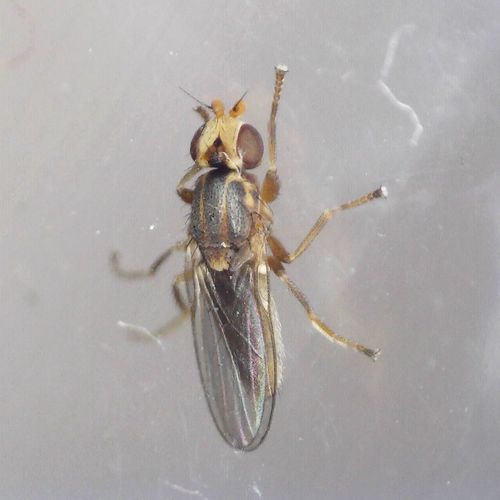
In oat shoots at Long Sutton, Hampshire, Oscinella frit larvae were accompanied by Lasiosina larvae.
- Taxon
- oat
 Avena sativae1
- Interactor
- Oscinella fritOscinella frite1pest
- Outcome
- accompanied by larvaee1
- Setting
- Long Sutton, Hampshiree1
 Lasiosina
Organisms pictured · Representative pictures of the matched species, not figures from the paper.

Verbatim
e1“Infesting oat shoots at Long Sutton, Hampshire, Oscinella frit larvae were accompanied by larvae of Lasiosina and Camarota curvinervis”
Claim · model-written summary
Callitula pyrrhogaster was reared from pupae of the host species found in oat shoots.
- Taxon
- oatAvena sativae1
- Interactor
- Callitula pyrrhogastere1parasite
- Outcome
- reared from pupaee1
Organisms pictured · Representative pictures of the matched species, not figures from the paper.
Verbatim
e1“The Chalcid, Callitula pyrrhogaster , was reared from pupae of this species found in oat shoots”