Abstract
On 22 September 1998, Hurricane Georges passed over the Dominican Republic causing extensive damage to a 4700 ha mangrove forest that has been the site of a detailed study of vegetation and ecosystem dynamics since 1994. We resurveyed the vegetation in permanent plots at 7 and 18 months after the hurricane to document structural damage of the forest and evaluate early recovery patterns. The intensity of damage was patchy across the landscape. Mortality (≥5 cm DBH) ranged from 14 to 100 percent (by density) among the 23 different plots and averaged 47.7 percent across all plots. Reductions in total basal area ranged from 9 to 100 percent, averaging 42.4 percent. Mortality increased by 9 percent between surveys at 7 and 18 months post-hurricane. Interspecific differences in susceptibility to wind damage appeared to be a primary factor contributing to spatial patterns in mortality. Laguncularia racemosa experienced much less mortality (26%) than either Rhizophora mangle (50%) or Avicennia germinans (64%), and plot-level mortality was strongly associated with differences in species composition. There were no clear relationships between canopy height and tree damage at this site. Over 80 percent of the of the surviving R. mangle trees exhibited less than 50 percent crown damage, whereas ca 60 percent of the L. racemosa survivors suffered almost complete (75–100%) crown loss. By 18 months after the hurricane, the percentage of L. racemosa trees in the 75 to 100 percent damage class was reduced to 20 percent; in contrast, the health of many R. mangle individuals appeared to be declining, as the percentage of trees in the 50 to 100 percent damage class increased from 16 to 36 percent. Understory light levels, as measured by the gap light index, increased from an average value of 3 percent in the pre-hurricane forest to 51 percent at 7 months after the hurricane and decreased slightly to 47 percent at 18 months. Few saplings (>1 m tall and <5 cm DBH) survived the hurricane; 72 percent of the tagged individuals in transect-based plots and 66 percent of saplings in pre-hurricane canopy gaps were killed. Seedling and sapling populations of all three species appear to be recovering rapidly although their densities still are lower than in the pre-hurricane forest. It is too early to predict the trajectory of forest recovery, and continued monitoring of the spatial and temporal patterns of forest development is needed to improve our understanding of the role that large-scale disturbance events play on the dynamics of mangrove forest ecosystems.
Abstract from the paper’s OpenAlex record, shown for indexing and research. Copyright remains with the authors or the publisher. Read at the source ↗
The text the model read, with the source record’s inline markup (italics, sub- and superscripts) rendered and its character entities decoded; quote offsets refer to the raw text.
Claims 18
Claim · model-written summary
Damage intensity varied across the mangrove landscape.
Verbatim
t0“Mangrove Forest”
e0“The intensity of damage was patchy across the landscape.”
Claim · model-written summary
Tree mortality ranged from 14 to 100 percent among plots and averaged 47.7 percent.
Verbatim
t0“Mangrove Forest”
e0“Mortality (≥5 cm DBH) ranged from 14 to 100 percent (by density) among the 23 different plots and averaged 47.7 percent across all plots.”
Claim · model-written summary
Total basal area fell by 9 to 100 percent among plots, averaging 42.4 percent.
Verbatim
t0“Mangrove Forest”
e0“Reductions in total basal area ranged from 9 to 100 percent, averaging 42.4 percent.”
Claim · model-written summary
Mortality increased by 9 percent between the 7 and 18 month surveys.
Verbatim
t0“Mangrove Forest”
e0“Mortality increased by 9 percent between surveys at 7 and 18 months post-hurricane.”
Claim · model-written summary
Species composition was strongly associated with plot mortality.
Not reportedDirection
Verbatim
t0“Mangrove Forest”
e0“plot-level mortality was strongly associated with differences in species composition”
Claim · model-written summary
Laguncularia racemosa mortality was 26%, lower than mortality of the other two species.
- Taxon
- Laguncularia racemosa
 Laguncularia racemosae0
- Outcome
- mortalitye0
- Direction
- much lesse0
- Value
- 26%e0
- Comparator
- Rhizophora manglee0
Organisms pictured · Representative pictures of the matched species, not figures from the paper.

Verbatim
e0“Laguncularia racemosa experienced much less mortality (26%) than either Rhizophora mangle (50%) or Avicennia germinans (64%)”
Claim · model-written summary
Rhizophora mangle mortality was 50%.
- Taxon
- Rhizophora mangle
 Rhizophora manglee0
- Outcome
- Rhizophora manglee0
- Value
- 50%e0
Organisms pictured · Representative pictures of the matched species, not figures from the paper.
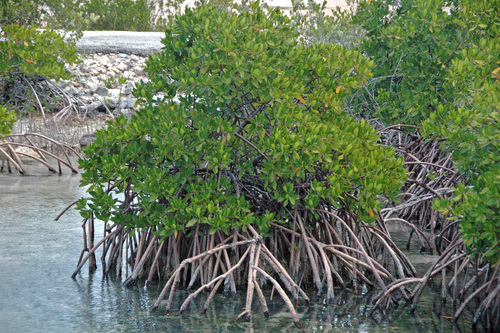
Verbatim
e0“Rhizophora mangle (50%)”
Claim · model-written summary
Avicennia germinans mortality was 64%.
- Taxon
- Avicennia germinans
 Avicennia germinanse0
- Outcome
- Avicennia germinanse0
- Value
- 64%e0
Organisms pictured · Representative pictures of the matched species, not figures from the paper.

Verbatim
e0“Avicennia germinans (64%)”
Claim · model-written summary
Canopy height had no clear relationship with tree damage.
Not reportedDirection
Verbatim
t0“Mangrove Forest”
e0“There were no clear relationships between canopy height and tree damage at this site.”
Claim · model-written summary
Over 80 percent of surviving R. mangle had less than 50 percent crown damage.
- Taxon
- R. mangleRhizophora manglee0
- Outcome
- crown damagee0
- Value
- less than 50 percente0
- Qualifier
- Over 80 percente0
Organisms pictured · Representative pictures of the matched species, not figures from the paper.
Verbatim
e0“Over 80 percent of the of the surviving R. mangle trees exhibited less than 50 percent crown damage”
Claim · model-written summary
About 60 percent of surviving L. racemosa had 75–100% crown loss.
- Taxon
- L. racemosaLaguncularia racemosae0
- Outcome
- crown losse0
- Value
- 75–100%e0
- Qualifier
- ca 60 percente0
Organisms pictured · Representative pictures of the matched species, not figures from the paper.
Verbatim
e0“ca 60 percent of the L. racemosa survivors suffered almost complete (75–100%) crown loss”
Claim · model-written summary
The share of L. racemosa in the 75 to 100 percent crown damage class fell to 20 percent by 18 months.
- Taxon
- L. racemosaLaguncularia racemosae0
- Outcome
- percentage of L. racemosa trees in the 75 to 100 percent damage classe0
- Direction
- reducede0
- Value
- 20 percente0
Organisms pictured · Representative pictures of the matched species, not figures from the paper.
Verbatim
e0“By 18 months after the hurricane, the percentage of L. racemosa trees in the 75 to 100 percent damage class was reduced to 20 percent”
Claim · model-written summary
The share of R. mangle in the 50 to 100 percent crown damage class rose from 16 to 36 percent.
- Taxon
- R. mangleRhizophora manglee1
- Outcome
- percentage of trees in the 50 to 100 percent damage classe0
- Direction
- increasede0
- Value
- 16 to 36 percente0
Organisms pictured · Representative pictures of the matched species, not figures from the paper.
Verbatim
e0“the percentage of trees in the 50 to 100 percent damage class increased from 16 to 36 percent”
e1“R. mangle individuals”
Claim · model-written summary
Understory gap light index rose from 3 percent before the hurricane to 51 percent at 7 months.
Verbatim
t0“Mangrove Forest”
e0“Understory light levels, as measured by the gap light index, increased from an average value of 3 percent in the pre-hurricane forest to 51 percent at 7 months after the hurricane”
Claim · model-written summary
Understory gap light index declined slightly to 47 percent at 18 months.
Verbatim
t0“Mangrove Forest”
e0“decreased slightly to 47 percent at 18 months”
Claim · model-written summary
The hurricane killed 72 percent of tagged saplings in transect plots.
Verbatim
t0“Mangrove Forest”
e0“72 percent of the tagged individuals in transect-based plots and 66 percent of saplings in pre-hurricane canopy gaps were killed”
e1“Few saplings (>1 m tall and <5 cm DBH) survived the hurricane”
Claim · model-written summary
The hurricane killed 66 percent of saplings in canopy gaps.
Verbatim
t0“Mangrove Forest”
e0“66 percent of saplings in pre-hurricane canopy gaps were killed”
Claim · model-written summary
Seedling and sapling populations of all three species were recovering rapidly but remained below pre-hurricane densities.
Verbatim
t0“Mangrove Forest”
e0“Seedling and sapling populations of all three species appear to be recovering rapidly although their densities still are lower than in the pre-hurricane forest.”