Abstract
A bioassay for observing wireworm behavior in soil is described. The bioassay permits analysis of orientation, feeding, repellency, and postcontact toxicity behaviors of wireworms in response to insecticide-treated wheat seeds. Wireworm positions were recorded every 5 min for 3 h, and the time required to orient to and contact seeds, and the duration of individual feeding events, was calculated. Both avoidance (before contact with seeds) and repellency (after contact) were quantified. A high proportion of Agriotes obscurus (0.95), Limonius canus (1.00), Ctenicera pruinina (0.80), Melanotus communis/dietrichi (0.80), and Hypolithus sp. (0.70) larvae contacted untreated wheat seeds and began feeding within 120 min when seeds were preincubated for 60 min in soil with 20% moisture. A smaller proportion of A. obscurus contacted seeds if seeds were not incubated in the bioassay before wireworm introduction (0.80) or in soil with 10% moisture (0.65). L. canus larvae required a significantly shorter time (25.3 min) to contact seeds if seeds were incubated for 60 min than if seeds were not incubated before wireworm introduction (43.1 min). Wireworms exposed to untreated seeds and seeds treated with the fungicide Dividend XLRTA fed normally (i.e., sustained feeding for at least 60 min), but a significant proportion of wireworms exposed to seeds treated with Tefluthrin 20 CS (containing the synthetic pyrethroid tefluthrin) fed for 15 min or less and were subsequently repelled. Wireworms exposed to Vitavax Dual (containing the organochlorine lindane) were not repelled after feeding and showed symptoms of illness for up to 28 d before making a full recovery (89%) or dying (11%).
Abstract from the paper’s OpenAlex record; open copy licensed cc-by-nc. Read at the source ↗
The text the model read, with the source record’s inline markup (italics, sub- and superscripts) rendered and its character entities decoded; quote offsets refer to the raw text.
Claims 14
Claim · model-written summary
The bioassay quantifies wireworm orientation, feeding, avoidance and repellency around treated wheat seed.
- Taxon
- wheat
 Triticum aestivume0
- Interactor
- wirewormse0pest
- Outcome
- orientation, feeding, repellency, and postcontact toxicity behaviors of wirewormse0
Not reportedComparatorValue
Organisms pictured · Representative pictures of the matched species, not figures from the paper.

Verbatim
e0“The bioassay permits analysis of orientation, feeding, repellency, and postcontact toxicity behaviors of wireworms in response to insecticide-treated wheat seeds”
Claim · model-written summary
Agriotes obscurus larvae contacted untreated wheat seed and began feeding within 120 minutes at a proportion of 0.95.
- Taxon
- wheatTriticum aestivume0
- Interactor
- Agriotes obscurus
 Agriotes obscuruse0pest
- Outcome
- larvae contacted untreated wheat seeds and began feedinge0
- Value
- 0.95e0
Organisms pictured · Representative pictures of the matched species, not figures from the paper.

Verbatim
e0“Agriotes obscurus (0.95), Limonius canus (1.00), Ctenicera pruinina (0.80), Melanotus communis/dietrichi (0.80), and Hypolithus sp. (0.70) larvae contacted untreated wheat seeds and began feeding within 120 min”
Claim · model-written summary
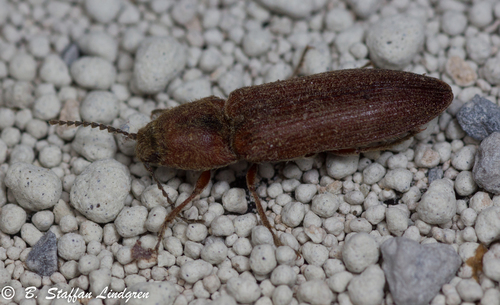
Limonius canus larvae contacted untreated wheat seed and began feeding at a proportion of 1.00.
- Taxon
- wheatTriticum aestivume0
- Interactor
- Limonius canus
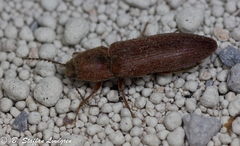 Limonius canuse0pest
- Outcome
- larvae contacted untreated wheat seeds and began feedinge0
- Value
- 1.00e0
Organisms pictured · Representative pictures of the matched species, not figures from the paper.
Verbatim
e0“Limonius canus (1.00), Ctenicera pruinina (0.80), Melanotus communis/dietrichi (0.80), and Hypolithus sp. (0.70) larvae contacted untreated wheat seeds and began feeding within 120 min”
Claim · model-written summary
Ctenicera pruinina larvae contacted untreated wheat seed and began feeding at a proportion of 0.80.
- Taxon
- wheatTriticum aestivume0
- Interactor
- Ctenicera pruininae0pest
- Outcome
- larvae contacted untreated wheat seeds and began feedinge0
- Value
- 0.80e0
Organisms pictured · Representative pictures of the matched species, not figures from the paper.
Verbatim
e0“Ctenicera pruinina (0.80), Melanotus communis/dietrichi (0.80), and Hypolithus sp. (0.70) larvae contacted untreated wheat seeds and began feeding within 120 min”
Claim · model-written summary
Melanotus communis/dietrichi larvae contacted untreated wheat seed and began feeding at a proportion of 0.80.
- Taxon
- wheatTriticum aestivume0
- Interactor
- Melanotus communis/dietrichie0pest
- Outcome
- larvae contacted untreated wheat seeds and began feedinge0
- Value
- 0.80e0
Organisms pictured · Representative pictures of the matched species, not figures from the paper.
Verbatim
e0“Melanotus communis/dietrichi (0.80), and Hypolithus sp. (0.70) larvae contacted untreated wheat seeds and began feeding within 120 min”
Claim · model-written summary
Hypolithus sp. larvae contacted untreated wheat seed and began feeding at a proportion of 0.70.
- Taxon
- wheatTriticum aestivume0
- Interactor
- Hypolithus sp.
 Hypolithuse0pest
- Outcome
- larvae contacted untreated wheat seeds and began feedinge0
- Value
- 0.70e0
Organisms pictured · Representative pictures of the matched species, not figures from the paper.

Verbatim
e0“Hypolithus sp. (0.70) larvae contacted untreated wheat seeds and began feeding within 120 min”
Claim · model-written summary
Without seed preincubation, fewer A. obscurus contacted seed, at a proportion of 0.80.
- Taxon
- wheatTriticum aestivumt0
- Treatment
- not incubatede0
- Interactor
- A. obscurusAgriotes obscuruse0pest
- Outcome
- proportion of A. obscurus contacted seedse0
- Direction
- smallere0
- Value
- 0.80e0
Not reportedComparator
Organisms pictured · Representative pictures of the matched species, not figures from the paper.
Verbatim
e0“A smaller proportion of A. obscurus contacted seeds if seeds were not incubated in the bioassay before wireworm introduction (0.80)”
t0“Wheat Seed”
Claim · model-written summary
At 10% soil moisture, fewer A. obscurus contacted seed, at a proportion of 0.65.
- Taxon
- wheatTriticum aestivumt0
- Treatment
- soil with 10% moisturee0
- Outcome
- A. obscurus contacted seedse1
- Value
- 0.65e0
Not reportedComparatorDirection
Organisms pictured · Representative pictures of the matched species, not figures from the paper.
Verbatim
e0“or in soil with 10% moisture (0.65)”
e1“A smaller proportion of A. obscurus contacted seeds if seeds were not incubated in the bioassay before wireworm introduction (0.80)”
t0“Wheat Seed”
Claim · model-written summary
L. canus contacted preincubated seed faster, at 25.3 versus 43.1 minutes.
- Taxon
- wheatTriticum aestivumt0
- Treatment
- seeds were incubated for 60 mine0
- Interactor
- L. canusLimonius canuse0pest
- Outcome
- timee0
- Direction
- shortere0
- Value
- 25.3 mine0
- Qualifier
- 43.1 mine0
- Comparator
- seeds were not incubatede0
Organisms pictured · Representative pictures of the matched species, not figures from the paper.
Verbatim
e0“L. canus larvae required a significantly shorter time (25.3 min) to contact seeds if seeds were incubated for 60 min than if seeds were not incubated before wireworm introduction (43.1 min)”
t0“Wheat Seed”
Claim · model-written summary
Wireworms fed normally on untreated seed.
- Taxon
- wheatTriticum aestivumt0
- Interactor
- Wirewormse0pest
- Outcome
- Wireworms exposed to untreated seeds and seeds treated with the fungicide Dividend XLRTA fed normallye0
Organisms pictured · Representative pictures of the matched species, not figures from the paper.
Verbatim
e0“Wireworms exposed to untreated seeds and seeds treated with the fungicide Dividend XLRTA fed normally”
t0“Wheat Seed”
Claim · model-written summary
Wireworms fed normally on Dividend XLRTA treated seed.
- Taxon
- wheatTriticum aestivumt0
- Treatment
- fungicide Dividend XLRTAe0
- Outcome
- fed normallye0
Not reportedComparatorDirection
Organisms pictured · Representative pictures of the matched species, not figures from the paper.
Verbatim
e0“seeds treated with the fungicide Dividend XLRTA fed normally”
t0“Wheat Seed”
Claim · model-written summary
Tefluthrin 20 CS exposure limited feeding to 15 minutes or less and repelled wireworms.
- Taxon
- wheatTriticum aestivumt0
- Treatment
- Tefluthrin 20 CSe0
- Interactor
- wirewormse0pest
- Outcome
- wireworms exposed to seeds treated with Tefluthrin 20 CS (containing the synthetic pyrethroid tefluthrin) fed for 15 min or less and were subsequently repellede0
Not reportedComparatorDirection
Organisms pictured · Representative pictures of the matched species, not figures from the paper.
Verbatim
e0“wireworms exposed to seeds treated with Tefluthrin 20 CS (containing the synthetic pyrethroid tefluthrin) fed for 15 min or less and were subsequently repelled”
t0“Wheat Seed”
Claim · model-written summary
Vitavax Dual exposure did not repel wireworms after feeding.
- Taxon
- wheatTriticum aestivumt0
- Treatment
- Vitavax Duale0
- Interactor
- Wirewormse0pest
- Outcome
- Wireworms exposed to Vitavax Dual (containing the organochlorine lindane) were not repelled after feedinge0
Not reportedComparatorDirection
Organisms pictured · Representative pictures of the matched species, not figures from the paper.
Verbatim
e0“Wireworms exposed to Vitavax Dual (containing the organochlorine lindane) were not repelled after feeding”
t0“Wheat Seed”
Claim · model-written summary
Vitavax Dual exposed wireworms became ill, with 89% recovering and 11% dying.
- Taxon
- wheatTriticum aestivumt0
- Outcome
- symptoms of illnesse0
- Value
- 89%e0
- Qualifier
- 11%e0
Organisms pictured · Representative pictures of the matched species, not figures from the paper.
Verbatim
e0“showed symptoms of illness for up to 28 d before making a full recovery (89%) or dying (11%)”
t0“Wheat Seed”