Abstract
Field studies were conducted in Oregon in an attempt to determine if a relationship existed between clover root curculio (Sitona hispidula (Fabr.)) injury to the roots of alsike clover and the incidence of pathogenic fungi. Soil insecticide treatments of aldrin, heptachlor, and DDT were applied during the spring of 1957. During the autumns of 1958 and 1959 seed yields were obtained and roots were sampled and rated for the incidence and severity of both insect injury and disease. There were no differences in seed yields between treated and untreated plots in 1958, but in 1959, all treatments resulted in significantly increased yields over the untreated plots. All the treated plots showed less larval injury of the roots during 1958, and all except those treated with DDT during 1959. There was also a corresponding significant reduction of vascular root decay in aldrin-treated plots during 1958, and in aldrin and heptachlor-treated plots during 1959. During both years some diseased plants showed 110 insect injury and, conversely, some healthy plants had been injured by inscets. The fungi most frequently isolated from diseased roots were Fusariurn oxysporurn Schl. sensu Snyd. and Han., Verticillium albo-alrurn Reinke & Berth., and an undescribed species of Phoma All three species are pathogenic to alsike clover, but only species of Fusariurn are known to be assisted in host penetration by insect wounds.
Abstract from the paper’s OpenAlex record, shown for indexing and research. Copyright remains with the authors or the publisher. Read at the source ↗
The text the model read, with the source record’s inline markup (italics, sub- and superscripts) rendered and its character entities decoded; quote offsets refer to the raw text.
Claims 13
Claim · model-written summary
Insecticide treatments did not change clover seed yield in 1958.
Verbatim
e0“There were no differences in seed yields between treated and untreated plots in 1958”
t0“Alsike Clover”
Claim · model-written summary
All insecticide treatments significantly increased clover seed yield in 1959.
Verbatim
e0“in 1959, all treatments resulted in significantly increased yields over the untreated plots”
t0“Alsike Clover”
Claim · model-written summary
Treated plots had less root larval injury in 1958.
- Taxon
- Alsike Clovert0
- Treatment
- treated plotse0
- Interactor
- Sitona hispidula
 Sitona hispidulust1pest
- Outcome
- larval injury of the rootse0
- Direction
- lesse0
Not reportedComparator
Organisms pictured · Representative pictures of the matched species, not figures from the paper.

Verbatim
e0“All the treated plots showed less larval injury of the roots during 1958”
t0“Alsike Clover”
t1“clover root curculio (Sitona hispidula (Fabr.))”
Claim · model-written summary
In 1959, insecticide treatments other than DDT reduced larval root injury.
- Taxon
- Alsike Clovert0
- Treatment
- treated with DDTe0
- Interactor
- Sitona hispidulaSitona hispidulust1pest
- Outcome
- injury to the rootst1
Not reportedComparatorDirection
Organisms pictured · Representative pictures of the matched species, not figures from the paper.
Verbatim
e0“all except those treated with DDT during 1959”
t0“Alsike Clover”
t1“clover root curculio (Sitona hispidula (Fabr.)) injury to the roots”
Claim · model-written summary
Aldrin significantly reduced vascular root decay in 1958.
- Taxon
- Alsike Clovert0
- Treatment
- aldrin-treated plotse0
- Outcome
- vascular root decaye0
- Direction
- reductione0
- Qualifier
- 1958e0
Not reportedComparator
Verbatim
e0“significant reduction of vascular root decay in aldrin-treated plots during 1958”
t0“Alsike Clover”
Claim · model-written summary
Aldrin significantly reduced vascular root decay in 1959.
- Taxon
- Alsike Clovert0
- Treatment
- aldrine0
- Outcome
- vascular root decayt1
- Direction
- reductiont1
- Qualifier
- 1959e0
Not reportedComparator
Verbatim
e0“in aldrin and heptachlor-treated plots during 1959”
t0“Alsike Clover”
t1“significant reduction of vascular root decay”
Claim · model-written summary
Heptachlor significantly reduced vascular root decay in 1959.
- Taxon
- Alsike Clovert0
- Treatment
- heptachlor-treated plotse0
- Outcome
- vascular root decayt1
- Direction
- reductiont1
- Qualifier
- 1959e0
Not reportedComparator
Verbatim
e0“heptachlor-treated plots during 1959”
t0“Alsike Clover”
t1“significant reduction of vascular root decay”
Claim · model-written summary
Some diseased plants had no insect injury and some healthy plants had insect injury.
Verbatim
e0“During both years some diseased plants showed 110 insect injury and, conversely, some healthy plants had been injured by inscets.”
t0“Alsike Clover”
Claim · model-written summary
Fusariurn oxysporurn was frequently isolated from diseased clover roots.
Verbatim
e0“The fungi most frequently isolated from diseased roots were Fusariurn oxysporurn Schl. sensu Snyd. and Han., Verticillium albo-alrurn Reinke & Berth., and an undescribed species of Phoma”
t0“Alsike Clover”
Claim · model-written summary
Verticillium albo-alrurn was frequently isolated from diseased clover roots.
Verbatim
e0“The fungi most frequently isolated from diseased roots were Fusariurn oxysporurn Schl. sensu Snyd. and Han., Verticillium albo-alrurn Reinke & Berth., and an undescribed species of Phoma”
t0“Alsike Clover”
Claim · model-written summary
An undescribed Phoma species was frequently isolated from diseased clover roots.
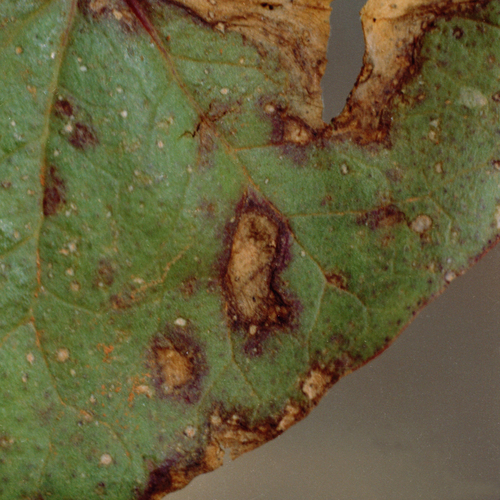
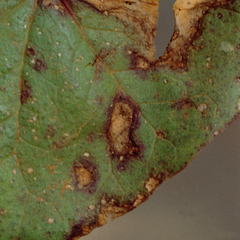 Phoma
Organisms pictured · Representative pictures of the matched species, not figures from the paper.
Verbatim
e0“The fungi most frequently isolated from diseased roots were Fusariurn oxysporurn Schl. sensu Snyd. and Han., Verticillium albo-alrurn Reinke & Berth., and an undescribed species of Phoma”
t0“Alsike Clover”
Claim · model-written summary
All three isolated fungal species were pathogenic to alsike clover.
Verbatim
e0“All three species are pathogenic to alsike clover”
Claim · model-written summary
Only Fusariurn species were known to exploit insect wounds for host penetration.
Verbatim
e0“only species of Fusariurn are known to be assisted in host penetration by insect wounds”
t0“Alsike Clover”