Abstract
The Panel on Plant Health performed a pest categorisation of Circulifer tenellus (Ct) and C. haematoceps (Ch) (Hemiptera, Cicadellidae) for the European Union (EU) territory. They are well-defined insect species that can be identified on the basis of external morphology and male genitalia. Ch and Ct are considered to originate from the Old World; Ct is also present in North America and the Caribbean. In the EU, Ch is reported in 11 Member States, mostly in southern or central Europe, and Ct is reported in Spain, France, Italy and Greece. Neither species is harmful by itself, but they are vectors of Spiroplasma citri, the causal agent of, for example, citrus stubborn disease. The major impact of Ct in North America results from the transmission of Beet curly top virus to sugarbeet. Ct also transmits ‘Candidatus Phytoplasma trifolii’ and Ch transmits ‘Ca P. asteris’. There is no transovarial transmission of the pathogens. Ch and Ct are regulated harmful organisms in the EU and listed in Annex II, Part A, Section II, of Council Directive 2000/29/EC together with Spiroplasma citri and with respect to plants of Citrus, Fortunella, Poncirus and their hybrids, other than fruit and seeds, despite the fact that Ct and Ch have a larger host range. Ch and Ct are likely to be disseminated by plants for planting (the eggs are laid into the leaf veins and petioles), they have also been observed to hitch-hike on terrestrial vehicles, and Ct is known for its very high flight capacity. Both species have many hosts, in particular in the Chenopodiaceae, Brassicaceae and Asteraceae. Ecological conditions in the risk assessment area are suitable for the establishment and spread of S. citri, at least where citrus is currently grown.
Abstract from the paper’s OpenAlex record; open copy licensed cc-by-nd. Read at the source ↗
The text the model read, with the source record’s inline markup (italics, sub- and superscripts) rendered and its character entities decoded; quote offsets refer to the raw text.
Claims 15
Claim · model-written summary
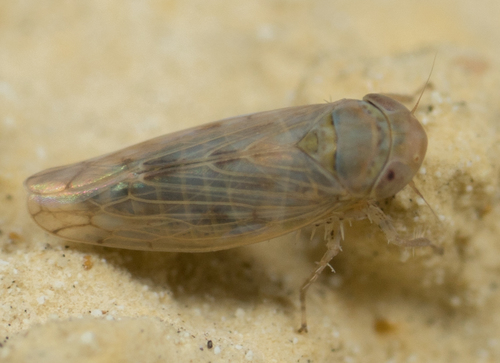
Circulifer tenellus and C. haematoceps are identifiable insect species using external morphology and male genitalia.
- Taxon
- Circulifer tenellus
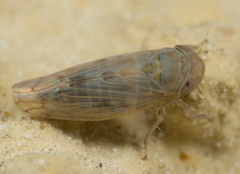 Neoaliturus tenelluse0
- Outcome
- well-defined insect speciese1
- Qualifier
- external morphology and male genitaliae1
Organisms pictured · Representative pictures of the matched species, not figures from the paper.
Verbatim
e0“Circulifer tenellus (Ct) and C. haematoceps (Ch)”
e1“They are well-defined insect species that can be identified on the basis of external morphology and male genitalia.”
Claim · model-written summary
Both vectors are considered Old World natives; Ct also occurs in North America and the Caribbean.
Verbatim
e0“Ch and Ct are considered to originate from the Old World; Ct is also present in North America and the Caribbean.”
Claim · model-written summary
Ch is reported in 11 EU Member States.
Verbatim
e0“In the EU, Ch is reported in 11 Member States, mostly in southern or central Europe”
Claim · model-written summary
Ct is reported in Spain, France, Italy and Greece.
Verbatim
e0“Ct is reported in Spain, France, Italy and Greece.”
Claim · model-written summary
Neither vector is harmful itself, but both transmit Spiroplasma citri, which causes citrus stubborn disease.
- Interactor
- Spiroplasma citriSpiroplasma citrie0pathogen
- Outcome
- citrus stubborn diseasee0
- Qualifier
- Neither species is harmful by itselfe0
 Citrus
Organisms pictured · Representative pictures of the matched species, not figures from the paper.

Verbatim
e0“Neither species is harmful by itself, but they are vectors of Spiroplasma citri, the causal agent of, for example, citrus stubborn disease.”
Claim · model-written summary
Ct's major North American impact is transmission of Beet curly top virus to sugarbeet.
- Taxon
- sugarbeet
 Beta vulgaris subsp. vulgarise0
- Interactor
- Beet curly top virus
 Beet curly top viruse0pathogen
- Second interactor
- Cte0pest
- Outcome
- transmission of Beet curly top viruse0
- Setting
- North Americae0
Organisms pictured · Representative pictures of the matched species, not figures from the paper.


Verbatim
e0“The major impact of Ct in North America results from the transmission of Beet curly top virus to sugarbeet.”
Claim · model-written summary
Ct transmits Candidatus Phytoplasma trifolii.
- Taxon
- Cte0
- Interactor
- Candidatus Phytoplasma trifoliiCandidatus Phytoplasma trifoliie0pathogen
- Outcome
- transmitse0
Verbatim
e0“Ct also transmits ‘Candidatus Phytoplasma trifolii’”
Claim · model-written summary
Ch transmits Ca P. asteris.
Verbatim
e0“Ch transmits ‘Ca P. asteris’”
Claim · model-written summary
The pathogens are not transmitted transovarially.
- Taxon
- Spiroplasma citriSpiroplasma citrie2
- Outcome
- no transovarial transmissione0
- Qualifier
- pathogense0
Verbatim
e0“There is no transovarial transmission of the pathogens.”
e1“Ct also transmits ‘Candidatus Phytoplasma trifolii’ and Ch transmits ‘Ca P. asteris’.”
e2“vectors of Spiroplasma citri”
e3“transmission of Beet curly top virus to sugarbeet”
Claim · model-written summary
Ch and Ct are regulated EU harmful organisms for Citrus, Fortunella and Poncirus planting material despite broader host ranges.
Verbatim
e0“Ch and Ct are regulated harmful organisms in the EU and listed in Annex II, Part A, Section II, of Council Directive 2000/29/EC together with Spiroplasma citri and with respect to plants of Citrus, Fortunella, Poncirus and their hybrids, other than fruit and seeds, despite the fact that Ct and Ch have a larger host range.”
Claim · model-written summary
Ch and Ct likely spread on planting material because eggs are laid in leaf veins and petioles.
Verbatim
e0“Ch and Ct are likely to be disseminated by plants for planting (the eggs are laid into the leaf veins and petioles)”
Claim · model-written summary
Both vectors have been observed hitch-hiking on terrestrial vehicles.
Verbatim
e0“Ch and Ct are likely to be disseminated by plants for planting (the eggs are laid into the leaf veins and petioles), they have also been observed to hitch-hike on terrestrial vehicles”
Claim · model-written summary
Ct has very high flight capacity.
Verbatim
e0“Ct is known for its very high flight capacity.”
Claim · model-written summary
Both vectors have many hosts, especially Chenopodiaceae, Brassicaceae and Asteraceae.
- Taxon
- Circulifer tenellusNeoaliturus tenelluse1
- Outcome
- many hostse0
- Qualifier
- Chenopodiaceae, Brassicaceae and Asteraceaee0
Organisms pictured · Representative pictures of the matched species, not figures from the paper.
Verbatim
e0“Both species have many hosts, in particular in the Chenopodiaceae, Brassicaceae and Asteraceae.”
e1“Circulifer tenellus (Ct) and C. haematoceps (Ch)”
Claim · model-written summary
Risk-area ecological conditions suit S. citri establishment and spread where citrus grows.
- Interactor
- S. citriSpiroplasma citrie0pathogen
- Outcome
- establishment and spread of S. citrie0
- Qualifier
- at least where citrus is currently growne0
Organisms pictured · Representative pictures of the matched species, not figures from the paper.
Verbatim
e0“Ecological conditions in the risk assessment area are suitable for the establishment and spread of S. citri, at least where citrus is currently grown.”