Abstract
In 1997, in 50 surveys of irrigated rice fields (0 ryza sativa L.), 47 species of vascular plants were recorded in 19 families. Most of the species belonged to the Gramineae and Cyperaceae families. Seven species of algae were found, mostly Hydrodictyon reticulatum (42%) and Chara vulgaris (38%). Echinochloa crus-galli and Paspalum paspalodes showed a relative frequency of 98% and 82%, respectively. An interpretation of the major factors is presented influencing weed distribution. Amongst the weeds recorded, 13 were alien species. For these alien species the probable date of introduction into Portugal and into rice fields was determined. The recently introduced neophytes Heteranthera limosa and Heteranthera reniformis and the increasing presence of red rice (Oryza sativa), represent a potential danger to rice culture.
Abstract from the paper’s OpenAlex record, shown for indexing and research. Copyright remains with the authors or the publisher. Read at the source ↗
The text the model read, with the source record’s inline markup (italics, sub- and superscripts) rendered and its character entities decoded; quote offsets refer to the raw text.
Claims 11
Claim · model-written summary
The survey recorded 47 vascular plant species in 19 families.
Verbatim
t0“Aquatic plants in the rice fields of the Tagus Valley, Portugal”
e0“In 1997, in 50 surveys of irrigated rice fields (0 ryza sativa L.), 47 species of vascular plants were recorded in 19 families.”
Claim · model-written summary
Most recorded vascular plant species belonged to Gramineae and Cyperaceae.
Verbatim
e0“Most of the species belonged to the Gramineae and Cyperaceae families.”
t0“Aquatic plants”
Claim · model-written summary
Seven algae species were found.
Verbatim
e0“Seven species of algae were found”
t0“Aquatic plants”
Claim · model-written summary
Hydrodictyon reticulatum accounted for 42% of the algae observations.
- Taxon
- Hydrodictyon reticulatum
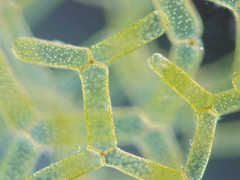 Hydrodictyon reticulatume0
- Outcome
- Hydrodictyon reticulatume0
- Value
- 42%e0
Organisms pictured · Representative pictures of the matched species, not figures from the paper.
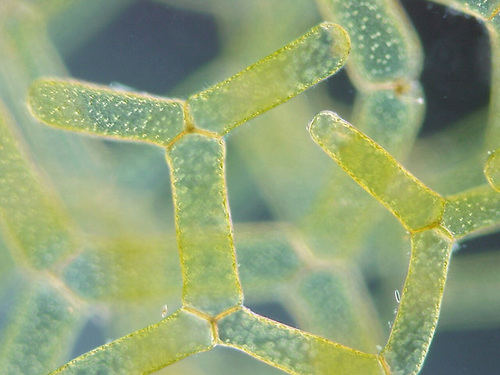
Verbatim
e0“mostly Hydrodictyon reticulatum (42%) and Chara vulgaris (38%)”
Claim · model-written summary
Chara vulgaris accounted for 38% of the algae observations.
- Taxon
- Chara vulgaris
 Chara vulgarise0
- Outcome
- Chara vulgarise0
- Value
- 38%e0
Organisms pictured · Representative pictures of the matched species, not figures from the paper.

Verbatim
e0“Hydrodictyon reticulatum (42%) and Chara vulgaris (38%)”
Claim · model-written summary
Echinochloa crus-galli had a relative frequency of 98%.
- Taxon
- Echinochloa crus-galli
 Echinochloa crus-gallie0
- Outcome
- relative frequencye0
- Value
- 98%e0
Organisms pictured · Representative pictures of the matched species, not figures from the paper.

Verbatim
e0“Echinochloa crus-galli and Paspalum paspalodes showed a relative frequency of 98% and 82%, respectively.”
Claim · model-written summary
Paspalum paspalodes had a relative frequency of 82%.
- Taxon
- Paspalum paspalodes
 Paspalum distichume0
- Outcome
- relative frequencye0
- Value
- 82%e0
Organisms pictured · Representative pictures of the matched species, not figures from the paper.

Verbatim
e0“Echinochloa crus-galli and Paspalum paspalodes showed a relative frequency of 98% and 82%, respectively.”
Claim · model-written summary
Thirteen recorded weed species were alien.
Verbatim
e0“Amongst the weeds recorded, 13 were alien species.”
Claim · model-written summary
The authors identify Heteranthera limosa as a potential danger to rice culture.
- Taxon
- rice
 Oryza sativae0
- Interactor
- Heteranthera limosa
 Heteranthera limosae0weed
- Outcome
- potential danger to rice culturee0
Organisms pictured · Representative pictures of the matched species, not figures from the paper.


Verbatim
e0“The recently introduced neophytes Heteranthera limosa and Heteranthera reniformis and the increasing presence of red rice (Oryza sativa), represent a potential danger to rice culture.”
Claim · model-written summary
The authors identify Heteranthera reniformis as a potential danger to rice culture.
- Taxon
- riceOryza sativae0
- Interactor
- Heteranthera reniformis
 Heteranthera reniformise0weed
- Outcome
- potential danger to rice culturee0
Organisms pictured · Representative pictures of the matched species, not figures from the paper.

Verbatim
e0“The recently introduced neophytes Heteranthera limosa and Heteranthera reniformis and the increasing presence of red rice (Oryza sativa), represent a potential danger to rice culture.”
Claim · model-written summary
Increasing red rice presence is identified as a potential danger to rice culture.
- Taxon
- riceOryza sativae0
- Interactor
- red ricee0weed
- Outcome
- potential danger to rice culturee0
- Direction
- increasinge0
Organisms pictured · Representative pictures of the matched species, not figures from the paper.
Verbatim
e0“the increasing presence of red rice (Oryza sativa), represent a potential danger to rice culture.”