Abstract
Delimitation and classification of the large, cosmopolitan liverwort family Lophoziaceae is controversial. Many recent workers have included it in Jungermanniaceae, and even in its strictest sense, internal classification has varied widely among different treatments. We analyse variation in DNA sequences of the chloroplast rps4 gene and the trnG intron to provide resolution of phylogenetic relationships in the leafy liverworts with emphasis on the various elements usually placed in Lophoziaceae. The following conclusions are drawn. Lophoziaceae is not closely related to Jungermanniaceae. Lophoziaceae, and perhaps also Cephaloziellaceae, should be included in Scapaniaceae unless many small families are recognised. Delavayella and Blepharidophyllum are excluded from Scapaniaceae. Jamesonielloideae is a family of its own (Jamesoniellaceae) sister to Adelanthaceae (or a subfamily of Adelanthaceae). The genus Anastrophyllum should be split into Anastrophyllum and Sphenolobus. Lophozia is polyphyletic and the genera Isopaches and Schistochilopsis , and perhaps Obtusifolium , should be recognised while L. sudetica could be transferred to Barbilophozia. Barbilophozia s.str. is monophyletic while Orthocaulis is polyphyletic with the four sampled species appearing in 3 different clades; their relationships are poorly resolved. Lophozia silvicola Buch is clearly separated from L. ventricosa and Jamesoniella oenops from J. colorata at species level.
Abstract from the paper’s OpenAlex record, shown for indexing and research. Copyright remains with the authors or the publisher. Read at the source ↗
The text the model read, with the source record’s inline markup (italics, sub- and superscripts) rendered and its character entities decoded; quote offsets refer to the raw text.
Claims 12
Claim · model-written summary
Lophoziaceae is not closely related to Jungermanniaceae.
- Taxon
- LophoziaceaeLophoziaceaee0
- Outcome
- not closely related to Jungermanniaceaee0
Verbatim
e0“Lophoziaceae is not closely related to Jungermanniaceae”
Claim · model-written summary
Lophoziaceae and possibly Cephaloziellaceae should be included in Scapaniaceae.
- Taxon
- LophoziaceaeLophoziaceaee0
- Outcome
- should be included in Scapaniaceaee0
- Qualifier
- unless many small families are recognisede0
Verbatim
e0“Lophoziaceae, and perhaps also Cephaloziellaceae, should be included in Scapaniaceae unless many small families are recognised”
Claim · model-written summary
Delavayella and Blepharidophyllum are excluded from Scapaniaceae.
- Taxon
- Delavayella and BlepharidophyllumDelavayellaBlepharidophyllume0
- Outcome
- excluded from Scapaniaceaee0
Verbatim
e0“Delavayella and Blepharidophyllum are excluded from Scapaniaceae”
Claim · model-written summary
Jamesonielloideae is a separate family sister to Adelanthaceae.
- Taxon
- JamesonielloideaeJamesonielloideaee0
- Outcome
- a family of its own (Jamesoniellaceae) sister to Adelanthaceaee0
- Qualifier
- or a subfamily of Adelanthaceaee0
Verbatim
e0“Jamesonielloideae is a family of its own (Jamesoniellaceae) sister to Adelanthaceae (or a subfamily of Adelanthaceae)”
Claim · model-written summary
Anastrophyllum should be split into Anastrophyllum and Sphenolobus.
- Taxon
- Anastrophyllum
 Anastrophyllume0
- Outcome
- should be split into Anastrophyllum and Sphenolobuse0
Organisms pictured · Representative pictures of the matched species, not figures from the paper.

Verbatim
e0“The genus Anastrophyllum should be split into Anastrophyllum and Sphenolobus”
Claim · model-written summary
Lophozia is polyphyletic.
- Outcome
- polyphyletice0
 Lophozia
Organisms pictured · Representative pictures of the matched species, not figures from the paper.

Verbatim
e0“Lophozia is polyphyletic”
Claim · model-written summary
Isopaches, Schistochilopsis and perhaps Obtusifolium should be recognized.
- Taxon
- Isopaches and Schistochilopsis
 Isopaches
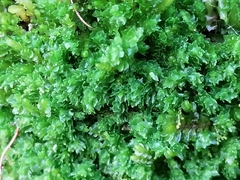 Schistochilopsise0
- Outcome
- should be recognisede0
- Qualifier
- perhaps Obtusifoliume0
Organisms pictured · Representative pictures of the matched species, not figures from the paper.

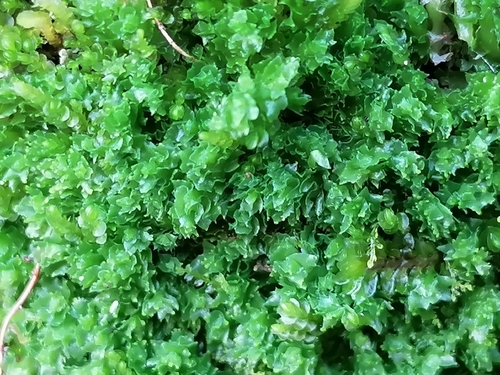
Verbatim
e0“the genera Isopaches and Schistochilopsis , and perhaps Obtusifolium , should be recognised”
Claim · model-written summary
L. sudetica could be transferred to Barbilophozia.
- Taxon
- L. sudetica
 Barbilophozia sudeticae0
- Outcome
- could be transferred to Barbilophoziae0
Organisms pictured · Representative pictures of the matched species, not figures from the paper.

Verbatim
e0“L. sudetica could be transferred to Barbilophozia”
Claim · model-written summary
Barbilophozia s.str. is monophyletic.
Verbatim
e0“Barbilophozia s.str. is monophyletic”
Claim · model-written summary
Orthocaulis is polyphyletic across three clades with poorly resolved relationships.
- Taxon
- Orthocaulis
 Orthocaulise0
- Outcome
- polyphyletice0
- Value
- 3 different cladese0
- Qualifier
- their relationships are poorly resolvede0
Organisms pictured · Representative pictures of the matched species, not figures from the paper.
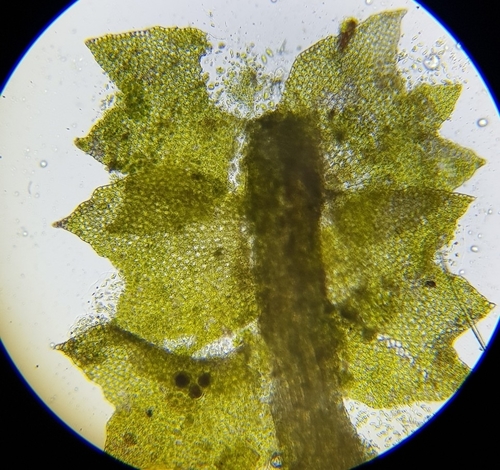
Verbatim
e0“Orthocaulis is polyphyletic with the four sampled species appearing in 3 different clades; their relationships are poorly resolved”
Claim · model-written summary
Lophozia silvicola is distinct from L. ventricosa at species level.
- Taxon
- Lophozia silvicola Buch
 Lophozia silvicolae0
- Outcome
- clearly separated from L. ventricosae0
Organisms pictured · Representative pictures of the matched species, not figures from the paper.

Verbatim
e0“Lophozia silvicola Buch is clearly separated from L. ventricosa”
Claim · model-written summary
Jamesoniella oenops is distinct from J. colorata at species level.
- Taxon
- Jamesoniella oenopsSyzygiella oenopse0
- Outcome
- from J. colorata at species levele0
Verbatim
e0“Jamesoniella oenops from J. colorata at species level”