Abstract
We evaluated the organic control of the potato psyllid Bactericera cockerelli and the silverleaf whitefly Bemisia tabaci in South Texas, USA, in 2013 and 2014. We found that azadirachtin, pyrethrin, or spinosad did not adequately control B. cockerelli in 2013. However, the numbers of B. tabaci nymphs and phytoseiid mites were significantly lower after azadirachtin and pyrethrin treatments than those after spinosad treatment or in untreated control. The highest numbers of phytoseiids and lowest numbers of potato psyllids in the control plots in 2013 suggested a predator-prey relationship between these organisms. In 2014, the tallies of B. cockerelli and B. tabaci were too low in all treated and control plots for reliable conclusions about insecticide treatments. We identified the phytoseiid mites Amblyseius largoensis, Typhlodromips near tennesseensis, and Typhlodromalus near peregrinus and report for first time that A. largoensis is a predator of B. cockerelli eggs and nymphs. We did not study predation by the other two phytoseiid species. In addition, fungivorous tydeid mites of the genus Metapronematus were found in most potato fields. Also, immature stages of Lasioerythraeus (Erythraeidae) were found parasitizing B. cockerelli nymphs in a conventional commercial field. Potato yields did not differ among treatments in both years. However, the high numbers of B. cockerelli in 2013 resulted in smaller tubers and consequently lowered yield (by 1/5-1/3) in 2013 than in 2014. The impact of predacious phytoseiids on B. cockerelli and their potential for mass rearing and release in organic production systems need further evaluations.
Abstract from the paper’s OpenAlex record, shown for indexing and research. Copyright remains with the authors or the publisher. Read at the source ↗
The text the model read, with the source record’s inline markup (italics, sub- and superscripts) rendered and its character entities decoded; quote offsets refer to the raw text.
Claims 11
Claim · model-written summary
Azadirachtin, pyrethrin or spinosad did not adequately control Bactericera cockerelli in potato in 2013.
- Taxon
- potato
 Solanum tuberosumt0
- Treatment
- azadirachtin, pyrethrin, or spinosade1
- Interactor
- B. cockerelli
 Bactericera cockerellie1pest
- Outcome
- control B. cockerellie1
- Direction
- did not adequatelye1
Not reportedComparator
Organisms pictured · Representative pictures of the matched species, not figures from the paper.


Verbatim
t0“organic potato production”
e1“We found that azadirachtin, pyrethrin, or spinosad did not adequately control B. cockerelli in 2013”
Claim · model-written summary
Numbers of Bemisia tabaci nymphs were significantly lower after azadirachtin and pyrethrin treatments than after spinosad or in untreated control.
- Taxon
- potatoSolanum tuberosumt0
- Treatment
- azadirachtin and pyrethrin treatmentse2
- Interactor
- B. tabaci
 Bemisia tabacie2pest
- Outcome
- numbers of B. tabaci nymphse2
- Direction
- lowere2
- Comparator
- spinosad treatment or in untreated controle2
Organisms pictured · Representative pictures of the matched species, not figures from the paper.

Verbatim
t0“organic potato production”
e2“the numbers of B. tabaci nymphs and phytoseiid mites were significantly lower after azadirachtin and pyrethrin treatments than those after spinosad treatment or in untreated control”
Claim · model-written summary
Phytoseiid mites were significantly lower after azadirachtin and pyrethrin treatments than after spinosad or in untreated control.
- Taxon
- potatoSolanum tuberosumt0
- Treatment
- azadirachtin and pyrethrin treatmentse2
- Interactor
- phytoseiid mitese2biocontrol_agent
- Outcome
- phytoseiid mitese2
- Direction
- lowere2
- Comparator
- spinosad treatment or in untreated controle2
Organisms pictured · Representative pictures of the matched species, not figures from the paper.
Verbatim
t0“organic potato production”
e2“the numbers of B. tabaci nymphs and phytoseiid mites were significantly lower after azadirachtin and pyrethrin treatments than those after spinosad treatment or in untreated control”
Claim · model-written summary
Potato psyllid numbers were lowest in control plots where phytoseiid numbers were highest in 2013, suggesting a predator-prey relationship.
- Taxon
- potatoSolanum tuberosumt0
- Interactor
- potato psyllidsBactericera cockerellie3pest
- Second interactor
- phytoseiidse3biocontrol_agent
- Outcome
- numbers of potato psyllidse3
- Direction
- loweste3
- Comparator
- control plotse3
Organisms pictured · Representative pictures of the matched species, not figures from the paper.
Verbatim
t0“organic potato production”
e3“The highest numbers of phytoseiids and lowest numbers of potato psyllids in the control plots in 2013 suggested a predator-prey relationship between these organisms”
Claim · model-written summary
Phytoseiid mites Amblyseius largoensis, Typhlodromips near tennesseensis and Typhlodromalus near peregrinus were identified in potato fields.
- Taxon
- potatoSolanum tuberosumt0
- Outcome
- phytoseiid mitese4
Organisms pictured · Representative pictures of the matched species, not figures from the paper.
Verbatim
t0“organic potato production”
e4“We identified the phytoseiid mites Amblyseius largoensis, Typhlodromips near tennesseensis, and Typhlodromalus near peregrinus and report for first time that A. largoensis is a predator of B. cockerelli eggs and nymphs”
Claim · model-written summary
Amblyseius largoensis is a predator of Bactericera cockerelli eggs and nymphs.
- Taxon
- potatoSolanum tuberosumt0
- Interactor
- B. cockerelliBactericera cockerellie4pest
- Second interactor
- A. largoensis
 Amblyseius largoensise4biocontrol_agent
- Outcome
- predator of B. cockerelli eggs and nymphse4
Organisms pictured · Representative pictures of the matched species, not figures from the paper.

Verbatim
t0“organic potato production”
e4“We identified the phytoseiid mites Amblyseius largoensis, Typhlodromips near tennesseensis, and Typhlodromalus near peregrinus and report for first time that A. largoensis is a predator of B. cockerelli eggs and nymphs”
Claim · model-written summary
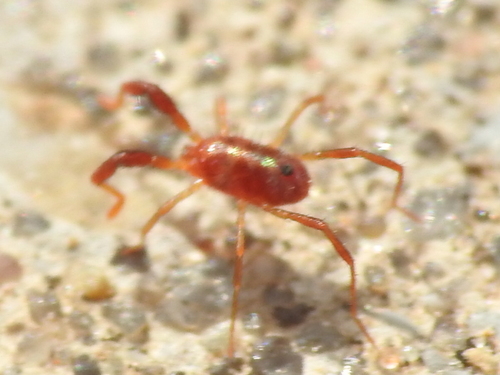
Immature Lasioerythraeus mites were found parasitizing B. cockerelli nymphs in a conventional commercial field.
- Taxon
- potatoSolanum tuberosumt0
- Interactor
- B. cockerelliBactericera cockerellie6pest
- Second interactor
- Lasioerythraeus
 Lasioerythraeuse6parasite
- Outcome
- parasitizing B. cockerelli nymphse6
- Setting
- conventional commercial fielde6
Organisms pictured · Representative pictures of the matched species, not figures from the paper.
Verbatim
t0“organic potato production”
e6“immature stages of Lasioerythraeus (Erythraeidae) were found parasitizing B. cockerelli nymphs in a conventional commercial field”
Claim · model-written summary
Fungivorous tydeid mites of the genus Metapronematus were found in most potato fields.
- Taxon
- potatoSolanum tuberosumt0
- Outcome
- Metapronematuse5
- Setting
- potato fieldse5
Organisms pictured · Representative pictures of the matched species, not figures from the paper.
Verbatim
t0“organic potato production”
e5“fungivorous tydeid mites of the genus Metapronematus were found in most potato fields”
Claim · model-written summary
Potato yields did not differ among treatments in either year.
- Taxon
- potatoSolanum tuberosumt0
- Outcome
- Potato yieldse7
- Direction
- did not differe7
- Comparator
- treatmentse7
Organisms pictured · Representative pictures of the matched species, not figures from the paper.
Verbatim
t0“organic potato production”
e7“Potato yields did not differ among treatments in both years”
Claim · model-written summary
High numbers of Bactericera cockerelli in 2013 lowered potato yield by 1/5-1/3 relative to 2014.
- Taxon
- potatoSolanum tuberosumt0
- Interactor
- B. cockerelliBactericera cockerellie0pest
- Outcome
- yielde0
- Direction
- lowerede0
- Value
- 1/5-1/3e0
Organisms pictured · Representative pictures of the matched species, not figures from the paper.
Verbatim
t0“organic potato production”
e0“the high numbers of B. cockerelli in 2013 resulted in smaller tubers and consequently lowered yield (by 1/5-1/3) in 2013 than in 2014”
Claim · model-written summary
High numbers of Bactericera cockerelli in 2013 resulted in smaller potato tubers.
- Taxon
- potatoSolanum tuberosumt0
- Interactor
- B. cockerelliBactericera cockerellie0pest
- Outcome
- tuberse0
- Direction
- smallere0
Organisms pictured · Representative pictures of the matched species, not figures from the paper.
Verbatim
t0“organic potato production”
e0“the high numbers of B. cockerelli in 2013 resulted in smaller tubers and consequently lowered yield (by 1/5-1/3) in 2013 than in 2014”
The same questions in other papers
azadirachtin · Bactericera cockerelli · Solanum tuberosum (potato)Positive and negative results
1 in the opposite direction
- positive
Claims are grouped by organism, treatment and what was measured or targeted. A paper counts as positive when any of its claims in the group is positive.