Abstract
The objective of the study was to evaluate the performance of some exotic (Sesbania sesban, Leucaena leucocephala, Grevillea robusta, Azadirachta indica, and Casuarina equisetifolia) and indigenous (Cordia africana, Millettia ferruginea, Albizia gummifera, Moringa stenopetala and Prunus africanus) tree species at the backyard and boundary of homegardens in Gimbo district, South west Ethiopia. The seedlings were produced in a nursery, transplanted around the homesteads and have been studied for three years. The saplings were monitored for survival rates and growth performances by measuring root collar diameters and heights. There was significant difference in survival among the species investigated (P<0.05). Survival percent were varies from 24.8 to 86.5 across the species. The highest survival rate was recorded for C. africana and followed by G. robusta and S. sesban at the third year of experimentation. Significant differences in height growth (P<0.05) and diameter growth were also observed. Among tree species planted at the backyard of homegardens, S. sesban performed best in terms of mean height and root collar diameter followed by C. africana. M. ferruginea showed the lowest main height. Among tree species investigated at the boundary of homegardens, G. robusta showed the highest growth in height, followed by M. stenopetala. Mean root collar diameter was highest for M. stenopetala, followed by G. robusta. A. indica showed the lowest mean root collar diameter. It was concluded that promising exotic and indigenous tree species could be used for diversification of agroforestry home gardens.
Abstract from the paper’s OpenAlex record; open copy licensed cc-by. Read at the source ↗
The text the model read, with the source record’s inline markup (italics, sub- and superscripts) rendered and its character entities decoded; quote offsets refer to the raw text.
Claims 9
Claim · model-written summary
Survival differed significantly among tree species and ranged from 24.8 to 86.5 percent.
Verbatim
e0“There was significant difference in survival among the species investigated (P<0.05). Survival percent were varies from 24.8 to 86.5 across the species”
t0“Multipurpose Tree Species”
Claim · model-written summary
C. africana had highest third-year survival, followed by G. robusta and S. sesban.
- Taxon
- C. africana
 Cordia africanae0
- Outcome
- survival ratee0
- Direction
- higheste0
- Comparator
- G. robusta and S. sesbane0
Organisms pictured · Representative pictures of the matched species, not figures from the paper.

Verbatim
e0“The highest survival rate was recorded for C. africana and followed by G. robusta and S. sesban at the third year of experimentation”
Claim · model-written summary
Height and diameter growth differed significantly among species.
Verbatim
e0“Significant differences in height growth (P<0.05) and diameter growth were also observed”
t0“Multipurpose Tree Species”
Claim · model-written summary
S. sesban had best backyard height and root collar diameter, followed by C. africana.
- Taxon
- S. sesban
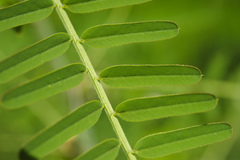 Sesbania sesbane0
- Outcome
- mean height and root collar diametere0
- Direction
- beste0
- Comparator
- C. africanae0
- Setting
- backyard of homegardense0
Organisms pictured · Representative pictures of the matched species, not figures from the paper.

Verbatim
e0“Among tree species planted at the backyard of homegardens, S. sesban performed best in terms of mean height and root collar diameter followed by C. africana”
Claim · model-written summary
M. ferruginea had the lowest mean height.
- Taxon
- M. ferrugineaMillettia ferrugineae0
- Outcome
- main heighte0
- Direction
- loweste0
Verbatim
e0“M. ferruginea showed the lowest main height”
Claim · model-written summary
G. robusta had greatest boundary height growth, followed by M. stenopetala.
- Taxon
- G. robusta
 Grevillea robustae0
- Outcome
- growth in heighte0
- Direction
- higheste0
- Comparator
- M. stenopetalae0
- Setting
- boundary of homegardense0
Organisms pictured · Representative pictures of the matched species, not figures from the paper.

Verbatim
e0“Among tree species investigated at the boundary of homegardens, G. robusta showed the highest growth in height, followed by M. stenopetala”
Claim · model-written summary
M. stenopetala had greatest root collar diameter, followed by G. robusta.
Verbatim
e0“Mean root collar diameter was highest for M. stenopetala, followed by G. robusta”
Claim · model-written summary
A. indica had lowest mean root collar diameter.
- Taxon
- A. indica
 Azadirachta indicae0
- Outcome
- mean root collar diametere0
- Direction
- loweste0
Organisms pictured · Representative pictures of the matched species, not figures from the paper.

Verbatim
e0“A. indica showed the lowest mean root collar diameter”
Claim · model-written summary
Promising exotic and indigenous trees could diversify agroforestry homegardens.
Verbatim
e0“promising exotic and indigenous tree species could be used for diversification of agroforestry home gardens”