Abstract
We studied the role of plant primary and secondary metabolites in mediating plant-insect interactions by conducting a no-choice single-plant species field experiment to compare the suitability, enzyme activities, and gene expression of Oedaleus asiaticus grasshoppers feeding on four host and non-host plants with different chemical traits. O. asiaticus growth showed a positive relationship to food nutrition content and a negative relationship to secondary compounds content. Grasshopper amylase, chymotrypsin, and lipase activities were positively related to food starch, crude protein, and lipid content, respectively. Activity of cytochrome P450s, glutathione-S-transferase, and carboxylesterase were positively related to levels of secondary plant compounds. Gene expression of UDP-glucuronosyltransferase 2C1, cytochrome P450 6K1 were also positively related to secondary compounds content in the diet. Grasshoppers feeding on Artemisia frigida, a species with low nutrient content and a high level of secondary compounds, had reduced growth and digestive enzyme activity. They also had higher detoxification enzyme activity and gene expression compared to grasshoppers feeding on the grasses Cleistogenes squarrosa, Leymus chinensis, or Stipa krylovii. These results illustrated Oedaleus asiaticus adaptive responses to diet stress resulting from toxic chemicals, and support the hypothesis that nutritious food benefits insect growth, but plant secondary compounds are detrimental for insect growth.
Abstract from the paper’s OpenAlex record; open copy licensed cc-by. Read at the source ↗
The text the model read, with the source record’s inline markup (italics, sub- and superscripts) rendered and its character entities decoded; quote offsets refer to the raw text.
Claims 7
Claim · model-written summary
Grasshopper growth increased with food nutrition.
- Taxon
- Artemisia frigida
 Artemisia frigidat0
- Interactor
- O. asiaticus
 Oedaleus asiaticuse0herbivoret0
- Compound
- food nutrition contente0
- Outcome
- O. asiaticus growthe0
- Direction
- positive relationshipe0
Organisms pictured · Representative pictures of the matched species, not figures from the paper.

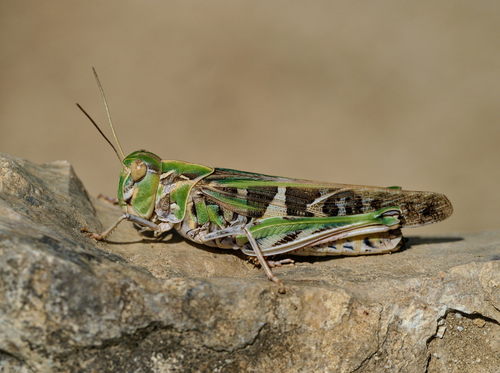
Verbatim
e0“O. asiaticus growth showed a positive relationship to food nutrition content”
t0“Grasshoppers feeding on Artemisia frigida”
t1“Grasshoppers feeding on Artemisia frigida”
Claim · model-written summary
Grasshopper growth decreased with secondary compound content.
- Taxon
- Artemisia frigidaArtemisia frigidat0
- Interactor
- O. asiaticusOedaleus asiaticuse1herbivoret1
- Compound
- secondary compounds contente0
- Outcome
- O. asiaticus growthe1
- Direction
- negative relationshipe0
Organisms pictured · Representative pictures of the matched species, not figures from the paper.
Verbatim
e0“a negative relationship to secondary compounds content”
t0“Grasshoppers feeding on Artemisia frigida”
t1“Grasshoppers feeding on Artemisia frigida”
e1“O. asiaticus growth showed a positive relationship to food nutrition content”
Claim · model-written summary
Grasshopper digestive enzyme activities were positively related to corresponding plant nutrients.
- Taxon
- plante1
- Interactor
- Oedaleus asiaticusOedaleus asiaticuse1herbivoret0
- Compound
- food starch, crude protein, and lipid contente0
- Outcome
- Grasshopper amylase, chymotrypsin, and lipase activitiese0
- Direction
- positively relatede0
Organisms pictured · Representative pictures of the matched species, not figures from the paper.
Verbatim
e0“Grasshopper amylase, chymotrypsin, and lipase activities were positively related to food starch, crude protein, and lipid content, respectively.”
t0“Grasshoppers feeding on Artemisia frigida”
t1“Grasshoppers feeding on Artemisia frigida”
e1“We studied the role of plant primary and secondary metabolites in mediating plant-insect interactions by conducting a no-choice single-plant species field experiment to compare the suitability, enzyme activities, and gene expression of Oedaleus asiaticus grasshoppers feeding on four host and non-host plants with different chemical traits.”
Claim · model-written summary
Detoxification enzyme activity increased with plant secondary compounds.
- Taxon
- plante1
- Interactor
- Oedaleus asiaticusOedaleus asiaticuse1herbivoret0
- Compound
- secondary plant compoundse0
- Outcome
- Activity of cytochrome P450s, glutathione-S-transferase, and carboxylesterasee0
- Direction
- positively relatede0
Organisms pictured · Representative pictures of the matched species, not figures from the paper.
Verbatim
e0“Activity of cytochrome P450s, glutathione-S-transferase, and carboxylesterase were positively related to levels of secondary plant compounds.”
t0“Grasshoppers feeding on Artemisia frigida”
t1“Grasshoppers feeding on Artemisia frigida”
e1“We studied the role of plant primary and secondary metabolites in mediating plant-insect interactions by conducting a no-choice single-plant species field experiment to compare the suitability, enzyme activities, and gene expression of Oedaleus asiaticus grasshoppers feeding on four host and non-host plants with different chemical traits.”
Claim · model-written summary
Two detoxification genes were positively related to secondary compounds in diet.
- Taxon
- plante1
- Interactor
- Oedaleus asiaticusOedaleus asiaticuse1herbivoret0
- Gene
- UDP-glucuronosyltransferase 2C1, cytochrome P450 6K1e0
- Compound
- secondary compounds contente0
- Outcome
- Gene expressione0
- Direction
- positively relatede0
Organisms pictured · Representative pictures of the matched species, not figures from the paper.
Verbatim
e0“Gene expression of UDP-glucuronosyltransferase 2C1, cytochrome P450 6K1 were also positively related to secondary compounds content in the diet.”
t0“Grasshoppers feeding on Artemisia frigida”
t1“Grasshoppers feeding on Artemisia frigida”
e1“We studied the role of plant primary and secondary metabolites in mediating plant-insect interactions by conducting a no-choice single-plant species field experiment to compare the suitability, enzyme activities, and gene expression of Oedaleus asiaticus grasshoppers feeding on four host and non-host plants with different chemical traits.”
Claim · model-written summary
Artemisia feeding reduced grasshopper growth and digestive activity versus grass feeding.
- Taxon
- Artemisia frigidaArtemisia frigidae0
- Interactor
- GrasshoppersAcridomorphae0herbivoret0
- Outcome
- reduced growth and digestive enzyme activitye0
- Direction
- reducede0
Organisms pictured · Representative pictures of the matched species, not figures from the paper.
Verbatim
e0“Grasshoppers feeding on Artemisia frigida, a species with low nutrient content and a high level of secondary compounds, had reduced growth and digestive enzyme activity.”
t0“Grasshoppers feeding on Artemisia frigida”
t1“Grasshoppers feeding on Artemisia frigida”
Claim · model-written summary
Artemisia feeding raised detoxification enzyme activity and gene expression versus grass feeding.
- Taxon
- Artemisia frigidaArtemisia frigidat0
- Interactor
- grasshoppersAcridomorphae0herbivoret0
- Outcome
- detoxification enzyme activity and gene expressione0
- Direction
- highere0
- Comparator
- Cleistogenes squarrosa, Leymus chinensis, or Stipa kryloviie0
Organisms pictured · Representative pictures of the matched species, not figures from the paper.
Verbatim
e0“They also had higher detoxification enzyme activity and gene expression compared to grasshoppers feeding on the grasses Cleistogenes squarrosa, Leymus chinensis, or Stipa krylovii.”
t0“Grasshoppers feeding on Artemisia frigida”
t1“Grasshoppers feeding on Artemisia frigida”