Abstract
Tomato spotted wilt tospovirus (TSWV) has become a major economic problem for tobacco growers in Georgia. Several species of thrips have been reported as vectors of TSWV. Three of these species, commonly observed on tobacco in Georgia, include Frankliniella fusca (Hinds), F. occidentalis (Pergande), and F. bispinosa (Morgan). This study examined the effectiveness of several thrips management practices on controlling thrips populations and suppressing the incidence of TSWV. Replicated field plots were used to evaluate aldicarb, acephate, imidacloprid, acibenzolar-S-methyl, spinosad, thiamethoxan alone and in combination, applied as pre-plant incorporated, tray drench, transplant water or foliar treatments. The insecticides imidacloprid (Admire® 2F or Provado® 1.6F) and thiamethoxan (Platinum 2® SC), applied in the transplant water or as a tray drench, were effective in reducing the early-season thrips populations and reducing the seasonal cumulative incidence of TSWV. These two products also were effective in reducing the seasonal mean population of tobacco aphids, Myzus nicotianae. The plant activator, acibenzolar-S-methyl (Actigard®), was effective in suppressing TSWV symptoms, but had no effect on thrips and minor impact on aphid population densities. The combination of acibenzolar-S-methyl with either imidacloprid or thiamethoxan provided better suppression of TSWV than any of the products alone. Acephate in the transplant water plus four early-season foliar sprays also was effective in reducing thrips numbers and TSWV incidence. Aldicarb and spinosad were not effective for thrips control or TSWV suppression. Acephate and aldicarb were effective in reducing aphid populations, but spinosad was not. Frankliniella fusca was the predominate thrips species at all test sites, ranging from 90 to 98% of the thrips complex. From 1.9 to 4.6% of the thrips collected were confirmed vectors of TSWV, based on ELISA test results. Imidacloprid, thiamethoxan, acibenzolar-S-methyl, and acephate provide thrips management options that can reduce the tobacco production losses associated with TSWV.
Abstract from the paper’s OpenAlex record, shown for indexing and research. Copyright remains with the authors or the publisher. Read at the source ↗
The text the model read, with the source record’s inline markup (italics, sub- and superscripts) rendered and its character entities decoded; quote offsets refer to the raw text.
Claims 20
Claim · model-written summary
Imidacloprid reduced early-season thrips populations.
- Taxon
- tobacco
 Nicotiana tabacumt0
- Treatment
- imidaclopride0
- Outcome
- early-season thrips populationse0
- Direction
- reducinge0
 Thrips
Not reportedComparator
Organisms pictured · Representative pictures of the matched species, not figures from the paper.


Verbatim
e0“The insecticides imidacloprid (Admire® 2F or Provado® 1.6F) and thiamethoxan (Platinum 2® SC), applied in the transplant water or as a tray drench, were effective in reducing the early-season thrips populations and reducing the seasonal cumulative incidence of TSWV.”
t0“Tobacco”
Claim · model-written summary
Thiamethoxan reduced early-season thrips populations.
- Taxon
- tobaccoNicotiana tabacumt0
- Treatment
- thiamethoxane0
- Outcome
- early-season thrips populationse0
- Direction
- reducinge0
Not reportedComparator
Organisms pictured · Representative pictures of the matched species, not figures from the paper.
Verbatim
e0“The insecticides imidacloprid (Admire® 2F or Provado® 1.6F) and thiamethoxan (Platinum 2® SC), applied in the transplant water or as a tray drench, were effective in reducing the early-season thrips populations and reducing the seasonal cumulative incidence of TSWV.”
t0“Tobacco”
Claim · model-written summary
Imidacloprid reduced cumulative TSWV incidence.
- Taxon
- tobaccoNicotiana tabacumt0
- Treatment
- imidaclopride0
- Interactor
- TSWV
 Orthotospovirus tomatomaculaee0pathogen
- Outcome
- seasonal cumulative incidence of TSWVe0
- Direction
- reducinge0
Not reportedComparator
Organisms pictured · Representative pictures of the matched species, not figures from the paper.

Verbatim
e0“The insecticides imidacloprid (Admire® 2F or Provado® 1.6F) and thiamethoxan (Platinum 2® SC), applied in the transplant water or as a tray drench, were effective in reducing the early-season thrips populations and reducing the seasonal cumulative incidence of TSWV.”
t0“Tobacco”
Claim · model-written summary
Thiamethoxan reduced cumulative TSWV incidence.
- Taxon
- tobaccoNicotiana tabacumt0
- Treatment
- thiamethoxane0
- Interactor
- TSWVOrthotospovirus tomatomaculaee0pathogen
- Outcome
- seasonal cumulative incidence of TSWVe0
- Direction
- reducinge0
Not reportedComparator
Organisms pictured · Representative pictures of the matched species, not figures from the paper.
Verbatim
e0“The insecticides imidacloprid (Admire® 2F or Provado® 1.6F) and thiamethoxan (Platinum 2® SC), applied in the transplant water or as a tray drench, were effective in reducing the early-season thrips populations and reducing the seasonal cumulative incidence of TSWV.”
t0“Tobacco”
Claim · model-written summary
Imidacloprid reduced mean tobacco aphid populations.
- Taxon
- tobaccoNicotiana tabacume0
- Treatment
- imidaclopride1
- Interactor
- Myzus nicotianae
 Myzus persicae nicotianaee0pest
- Outcome
- seasonal mean population of tobacco aphidse0
- Direction
- reducinge0
Not reportedComparator
Organisms pictured · Representative pictures of the matched species, not figures from the paper.

Verbatim
e0“These two products also were effective in reducing the seasonal mean population of tobacco aphids, Myzus nicotianae.”
e1“The insecticides imidacloprid (Admire® 2F or Provado® 1.6F) and thiamethoxan (Platinum 2® SC), applied in the transplant water or as a tray drench, were effective in reducing the early-season thrips populations and reducing the seasonal cumulative incidence of TSWV.”
t0“Impact of Thrips (Thysanoptera: Thripidae) Management Practices on Suppression of Tomato Spotted Wilt Virus and Aphid (Homoptera: Aphididae) Control in Flue-Cured Tobacco”
Claim · model-written summary
Thiamethoxan reduced mean tobacco aphid populations.
- Taxon
- tobaccoNicotiana tabacume0
- Treatment
- thiamethoxane1
- Interactor
- Myzus nicotianaeMyzus persicae nicotianaee0pest
- Outcome
- seasonal mean population of tobacco aphidse0
- Direction
- reducinge0
Not reportedComparator
Organisms pictured · Representative pictures of the matched species, not figures from the paper.
Verbatim
e0“These two products also were effective in reducing the seasonal mean population of tobacco aphids, Myzus nicotianae.”
e1“The insecticides imidacloprid (Admire® 2F or Provado® 1.6F) and thiamethoxan (Platinum 2® SC), applied in the transplant water or as a tray drench, were effective in reducing the early-season thrips populations and reducing the seasonal cumulative incidence of TSWV.”
t0“Impact of Thrips (Thysanoptera: Thripidae) Management Practices on Suppression of Tomato Spotted Wilt Virus and Aphid (Homoptera: Aphididae) Control in Flue-Cured Tobacco”
Claim · model-written summary
Acibenzolar-S-methyl suppressed TSWV symptoms.
- Taxon
- tobaccoNicotiana tabacumt0
- Treatment
- acibenzolar-S-methyle0
- Interactor
- TSWVOrthotospovirus tomatomaculaee0pathogen
- Outcome
- TSWV symptomse0
- Direction
- suppressinge0
Not reportedComparator
Organisms pictured · Representative pictures of the matched species, not figures from the paper.
Verbatim
e0“The plant activator, acibenzolar-S-methyl (Actigard®), was effective in suppressing TSWV symptoms, but had no effect on thrips and minor impact on aphid population densities.”
t0“Tobacco”
Claim · model-written summary
Acibenzolar-S-methyl had no effect on thrips.
- Taxon
- tobaccoNicotiana tabacumt0
- Treatment
- acibenzolar-S-methyle0
- Outcome
- thripse0
- Direction
- no effecte0
Not reportedComparator
Organisms pictured · Representative pictures of the matched species, not figures from the paper.
Verbatim
e0“The plant activator, acibenzolar-S-methyl (Actigard®), was effective in suppressing TSWV symptoms, but had no effect on thrips and minor impact on aphid population densities.”
t0“Tobacco”
Claim · model-written summary
Acibenzolar-S-methyl had minor impact on aphid density.
- Taxon
- tobaccoNicotiana tabacumt0
- Treatment
- acibenzolar-S-methyle0
- Interactor
- aphide0pest
- Outcome
- aphid population densitiese0
Not reportedComparatorDirection
Organisms pictured · Representative pictures of the matched species, not figures from the paper.
Verbatim
e0“The plant activator, acibenzolar-S-methyl (Actigard®), was effective in suppressing TSWV symptoms, but had no effect on thrips and minor impact on aphid population densities.”
t0“Tobacco”
Claim · model-written summary
Combining acibenzolar-S-methyl with imidacloprid suppressed TSWV better than single products.
- Taxon
- tobaccoNicotiana tabacumt0
- Treatment
- combination of acibenzolar-S-methyl with either imidaclopride0
- Interactor
- TSWVOrthotospovirus tomatomaculaee0pathogen
- Outcome
- suppression of TSWVe0
- Direction
- bettere0
- Comparator
- products alonee0
Organisms pictured · Representative pictures of the matched species, not figures from the paper.
Verbatim
e0“The combination of acibenzolar-S-methyl with either imidacloprid or thiamethoxan provided better suppression of TSWV than any of the products alone.”
t0“Tobacco”
Claim · model-written summary
Combining acibenzolar-S-methyl with thiamethoxan suppressed TSWV better than single products.
- Taxon
- tobaccoNicotiana tabacumt0
- Treatment
- thiamethoxane0
- Interactor
- TSWVOrthotospovirus tomatomaculaee0pathogen
- Outcome
- suppression of TSWVe0
- Direction
- bettere0
- Comparator
- products alonee0
Organisms pictured · Representative pictures of the matched species, not figures from the paper.
Verbatim
e0“The combination of acibenzolar-S-methyl with either imidacloprid or thiamethoxan provided better suppression of TSWV than any of the products alone.”
t0“Tobacco”
Claim · model-written summary
Acephate plus foliar sprays reduced thrips numbers and TSWV incidence.
- Taxon
- tobaccoNicotiana tabacumt0
- Treatment
- Acephate in the transplant water plus four early-season foliar sprayse0
- Second interactor
- TSWVOrthotospovirus tomatomaculaee0pathogen
- Outcome
- thrips numbers and TSWV incidencee0
- Direction
- reducinge0
Not reportedComparator
Organisms pictured · Representative pictures of the matched species, not figures from the paper.
Verbatim
e0“Acephate in the transplant water plus four early-season foliar sprays also was effective in reducing thrips numbers and TSWV incidence.”
t0“Tobacco”
Claim · model-written summary
Aldicarb was ineffective for thrips and TSWV suppression.
- Taxon
- tobaccoNicotiana tabacumt0
- Treatment
- Aldicarbe0
- Second interactor
- TSWVOrthotospovirus tomatomaculaee0pathogen
- Outcome
- thrips control or TSWV suppressione0
Not reportedComparatorDirection
Organisms pictured · Representative pictures of the matched species, not figures from the paper.
Verbatim
e0“Aldicarb and spinosad were not effective for thrips control or TSWV suppression.”
t0“Tobacco”
Claim · model-written summary
Spinosad was ineffective for thrips and TSWV suppression.
- Taxon
- tobaccoNicotiana tabacumt0
- Treatment
- spinosade0
- Second interactor
- TSWVOrthotospovirus tomatomaculaee0pathogen
- Outcome
- thrips control or TSWV suppressione0
Not reportedComparatorDirection
Organisms pictured · Representative pictures of the matched species, not figures from the paper.
Verbatim
e0“Aldicarb and spinosad were not effective for thrips control or TSWV suppression.”
t0“Tobacco”
Claim · model-written summary
Acephate reduced aphid populations.
- Taxon
- tobaccoNicotiana tabacumt0
- Treatment
- Acephatee0
- Interactor
- aphide0pest
- Outcome
- aphid populationse0
- Direction
- reducinge0
Not reportedComparator
Organisms pictured · Representative pictures of the matched species, not figures from the paper.
Verbatim
e0“Acephate and aldicarb were effective in reducing aphid populations, but spinosad was not.”
t0“Tobacco”
Claim · model-written summary
Aldicarb reduced aphid populations.
- Taxon
- tobaccoNicotiana tabacumt0
- Treatment
- aldicarbe0
- Interactor
- aphide0pest
- Outcome
- aphid populationse0
- Direction
- reducinge0
Not reportedComparator
Organisms pictured · Representative pictures of the matched species, not figures from the paper.
Verbatim
e0“Acephate and aldicarb were effective in reducing aphid populations, but spinosad was not.”
t0“Tobacco”
Claim · model-written summary
Spinosad did not reduce aphid populations.
- Taxon
- tobaccoNicotiana tabacumt0
- Treatment
- spinosade0
- Interactor
- aphide0pest
- Outcome
- aphid populationse0
Not reportedComparatorDirection
Organisms pictured · Representative pictures of the matched species, not figures from the paper.
Verbatim
e0“Acephate and aldicarb were effective in reducing aphid populations, but spinosad was not.”
t0“Tobacco”
Claim · model-written summary
Frankliniella fusca comprised 90 to 98% of thrips at test sites.
- Taxon
- tobaccoNicotiana tabacumt0
- Interactor
- Frankliniella fusca
 Frankliniella fuscae0pest
- Outcome
- predominate thrips speciese0
- Value
- 90 to 98%e0
- Setting
- all test sitese0
Organisms pictured · Representative pictures of the matched species, not figures from the paper.
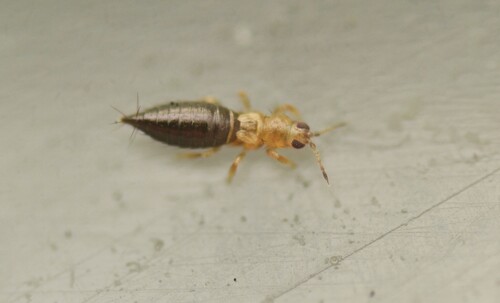
Verbatim
e0“Frankliniella fusca was the predominate thrips species at all test sites, ranging from 90 to 98% of the thrips complex.”
t0“Tobacco”
Claim · model-written summary
ELISA identified 1.9 to 4.6% of collected thrips as TSWV vectors.
- Taxon
- tobaccoNicotiana tabacumt0
- Second interactor
- TSWVOrthotospovirus tomatomaculaee0pathogen
- Outcome
- confirmed vectors of TSWVe0
- Value
- 1.9 to 4.6%e0
Organisms pictured · Representative pictures of the matched species, not figures from the paper.
Verbatim
e0“From 1.9 to 4.6% of the thrips collected were confirmed vectors of TSWV, based on ELISA test results.”
t0“Tobacco”
Claim · model-written summary
The authors identify imidacloprid, thiamethoxan, acibenzolar-S-methyl and acephate as options to reduce TSWV-linked losses.
- Taxon
- tobaccoNicotiana tabacume0
- Second interactor
- TSWVOrthotospovirus tomatomaculaee0pathogen
- Outcome
- thrips management options that can reduce the tobacco production losses associated with TSWVe0
Organisms pictured · Representative pictures of the matched species, not figures from the paper.
Verbatim
e0“Imidacloprid, thiamethoxan, acibenzolar-S-methyl, and acephate provide thrips management options that can reduce the tobacco production losses associated with TSWV.”
The same questions in other papers
aldicarb · Thrips · Nicotiana tabacum (tobacco)Positive and negative results
1 in the opposite direction
- positive
imidacloprid · Thrips · Nicotiana tabacum (tobacco)Positive and negative results
2 papers in the same direction as this paper · 2 in the opposite direction
- no effect
- no effect
- positive
1 paper more in this group
See all 5 papers →aldicarb · pest · Nicotiana tabacum (tobacco)Results agree
1 paper in the same direction as this paper
- positive
imidacloprid · Myzus persicae nicotianae · Nicotiana tabacum (tobacco)Results agree
1 paper in the same direction as this paper
- positive
acephate · Thrips · Nicotiana tabacum (tobacco)Results agree
3 papers in the same direction as this paper
- positive
- positive
- positive
imidacloprid · Orthotospovirus tomatomaculae · Nicotiana tabacum (tobacco)Results agree
4 papers in the same direction as this paper
- positive
- positive
- positive
1 paper more in this group
See all 5 papers →acibenzolar-S-methyl · Orthotospovirus tomatomaculae · Nicotiana tabacum (tobacco)Results agree
4 papers in the same direction as this paper
- positive
- positive
- positive
1 paper more in this group
See all 5 papers →application · Thrips · Nicotiana tabacum (tobacco)Positive and negative results
3 papers in the same direction as this paper · 2 in the opposite direction
- no effect
- no effect
- positive
2 papers more in this group
See all 6 papers →8 of 9 groups shown: named compounds and organisms first, then groups whose results differ (checked claim by claim), then those with positive and negative results, then the smaller groups.
Claims are grouped by organism, treatment and what was measured or targeted. A paper counts as positive when any of its claims in the group is positive.