Abstract
In 2005 in Pancevo region (Serbia) we have conducted weed population monitoring in following crops: thyme (Thymus vulgaris L.), balm (Melissa officinalis L.), lavander (Lavandula angustifolia L.) i žalfije (Salvia officinalis L.). The first evaluation was obtained before and the second evaluation was obtained after agricultural mechanical land preparation. In each crop by random sampling method we have chosen several 1m2 areas. Plant population from each one of the areas was collected and fresh and dry weight for each plant was determined. In all four crops monitored we have found 35 different weed species. The highest weed population diversity was in salvia (35 species), followed by lavender (23 species), then thyme (20 species), and the lowest weed species diversity was in balm with only 16 weed species present. Among weed species found, highest numbers belonged to terophytes (13), followed by hemicriptophytes (12), and less present were geophytes (5) and tero-hemicriptophytes (12). Weed species in highest numbers present were: Convolvulus arvensis, Agropyrum repens, Cirsium arvense, Erigeron canadensis, Lactuca serriola and Polygonum lapathifolium. Species in highest numbers (C. arvensis and A. repens) were also species with highest fresh weight, followed by: Sonchus arvensis, Sorghum halepense, L. serriola i C. arvense.
Abstract from the paper’s OpenAlex record; open copy licensed other-oa. Read at the source ↗
The text the model read, with the source record’s inline markup (italics, sub- and superscripts) rendered and its character entities decoded; quote offsets refer to the raw text.
Claims 10
Claim · model-written summary
Thirty-five different weed species were found across the four monitored crops.
- Taxon
- thyme (Thymus vulgaris L.), balm (Melissa officinalis L.), lavander (Lavandula angustifolia L.) i žalfije (Salvia officinalis L.)
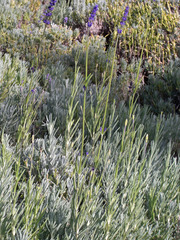 Lavandula angustifolia
 Melissa officinalis
 Thymus vulgarise1
- Interactor
- weed speciese3weed
- Outcome
- weed speciese3
- Value
- 35 different weed speciese3
- Setting
- Pancevo region (Serbia)e1
Organisms pictured · Representative pictures of the matched species, not figures from the paper.
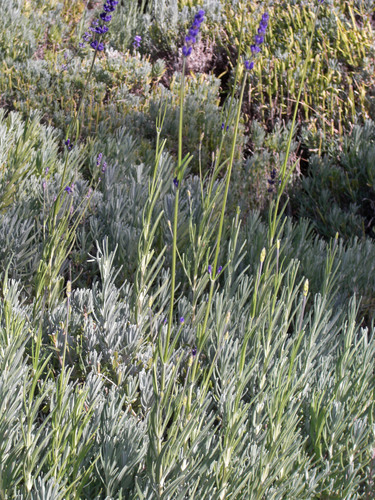


Verbatim
e1“In 2005 in Pancevo region (Serbia) we have conducted weed population monitoring in following crops: thyme (Thymus vulgaris L.), balm (Melissa officinalis L.), lavander (Lavandula angustifolia L.) i žalfije (Salvia officinalis L.)”
e3“In all four crops monitored we have found 35 different weed species”
Claim · model-written summary
Salvia had the highest weed population diversity (35 species).
- Taxon
- Salvia officinalis
 Salvia officinalise1
- Interactor
- weed speciese2weed
- Outcome
- weed population diversitye2
- Direction
- higheste2
- Value
- 35 speciese2
Organisms pictured · Representative pictures of the matched species, not figures from the paper.

Verbatim
e1“In 2005 in Pancevo region (Serbia) we have conducted weed population monitoring in following crops: thyme (Thymus vulgaris L.), balm (Melissa officinalis L.), lavander (Lavandula angustifolia L.) i žalfije (Salvia officinalis L.)”
e2“The highest weed population diversity was in salvia (35 species), followed by lavender (23 species), then thyme (20 species), and the lowest weed species diversity was in balm with only 16 weed species present”
Claim · model-written summary
Lavender had 23 weed species.
- Taxon
- Lavandula angustifoliaLavandula angustifoliae1
- Interactor
- weed speciese2weed
- Outcome
- weed species diversitye2
- Value
- 23 speciese2
Organisms pictured · Representative pictures of the matched species, not figures from the paper.
Verbatim
e1“In 2005 in Pancevo region (Serbia) we have conducted weed population monitoring in following crops: thyme (Thymus vulgaris L.), balm (Melissa officinalis L.), lavander (Lavandula angustifolia L.) i žalfije (Salvia officinalis L.)”
e2“The highest weed population diversity was in salvia (35 species), followed by lavender (23 species), then thyme (20 species), and the lowest weed species diversity was in balm with only 16 weed species present”
Claim · model-written summary
Thyme had 20 weed species.
- Taxon
- Thymus vulgarisThymus vulgarise1
- Interactor
- weed speciese2weed
- Outcome
- weed species diversitye2
- Value
- 20 speciese2
Organisms pictured · Representative pictures of the matched species, not figures from the paper.
Verbatim
e1“In 2005 in Pancevo region (Serbia) we have conducted weed population monitoring in following crops: thyme (Thymus vulgaris L.), balm (Melissa officinalis L.), lavander (Lavandula angustifolia L.) i žalfije (Salvia officinalis L.)”
e2“The highest weed population diversity was in salvia (35 species), followed by lavender (23 species), then thyme (20 species), and the lowest weed species diversity was in balm with only 16 weed species present”
Claim · model-written summary
Balm had the lowest weed species diversity (16 weed species).
- Taxon
- Melissa officinalisMelissa officinalise1
- Interactor
- weed speciese2weed
- Outcome
- weed species diversitye2
- Direction
- loweste2
- Value
- 16 weed speciese2
Organisms pictured · Representative pictures of the matched species, not figures from the paper.
Verbatim
e1“In 2005 in Pancevo region (Serbia) we have conducted weed population monitoring in following crops: thyme (Thymus vulgaris L.), balm (Melissa officinalis L.), lavander (Lavandula angustifolia L.) i žalfije (Salvia officinalis L.)”
e2“The highest weed population diversity was in salvia (35 species), followed by lavender (23 species), then thyme (20 species), and the lowest weed species diversity was in balm with only 16 weed species present”
Claim · model-written summary
Terophytes were the weed life form with the highest number of species (13).
- Taxon
- thyme (Thymus vulgaris L.), balm (Melissa officinalis L.), lavander (Lavandula angustifolia L.) i žalfije (Salvia officinalis L.)Lavandula angustifoliaMelissa officinalisThymus vulgarise1
- Outcome
- terophytese4
- Direction
- highest numberse4
- Value
- 13e4
Organisms pictured · Representative pictures of the matched species, not figures from the paper.
Verbatim
e1“In 2005 in Pancevo region (Serbia) we have conducted weed population monitoring in following crops: thyme (Thymus vulgaris L.), balm (Melissa officinalis L.), lavander (Lavandula angustifolia L.) i žalfije (Salvia officinalis L.)”
e4“Among weed species found, highest numbers belonged to terophytes (13), followed by hemicriptophytes (12), and less present were geophytes (5) and tero-hemicriptophytes (12)”
Claim · model-written summary
Hemicriptophytes were 12 weed species.
- Taxon
- thyme (Thymus vulgaris L.), balm (Melissa officinalis L.), lavander (Lavandula angustifolia L.) i žalfije (Salvia officinalis L.)Lavandula angustifoliaMelissa officinalisThymus vulgarise1
- Outcome
- hemicriptophytese4
- Value
- 12e4
Organisms pictured · Representative pictures of the matched species, not figures from the paper.
Verbatim
e1“In 2005 in Pancevo region (Serbia) we have conducted weed population monitoring in following crops: thyme (Thymus vulgaris L.), balm (Melissa officinalis L.), lavander (Lavandula angustifolia L.) i žalfije (Salvia officinalis L.)”
e4“Among weed species found, highest numbers belonged to terophytes (13), followed by hemicriptophytes (12), and less present were geophytes (5) and tero-hemicriptophytes (12)”
Claim · model-written summary
Geophytes were less present among weed species (5).
- Taxon
- thyme (Thymus vulgaris L.), balm (Melissa officinalis L.), lavander (Lavandula angustifolia L.) i žalfije (Salvia officinalis L.)Lavandula angustifoliaMelissa officinalisThymus vulgarise1
- Outcome
- geophytese4
- Direction
- less presente4
- Value
- 5e4
Organisms pictured · Representative pictures of the matched species, not figures from the paper.
Verbatim
e1“In 2005 in Pancevo region (Serbia) we have conducted weed population monitoring in following crops: thyme (Thymus vulgaris L.), balm (Melissa officinalis L.), lavander (Lavandula angustifolia L.) i žalfije (Salvia officinalis L.)”
e4“Among weed species found, highest numbers belonged to terophytes (13), followed by hemicriptophytes (12), and less present were geophytes (5) and tero-hemicriptophytes (12)”
Claim · model-written summary
Tero-hemicriptophytes were 12 weed species.
- Taxon
- thyme (Thymus vulgaris L.), balm (Melissa officinalis L.), lavander (Lavandula angustifolia L.) i žalfije (Salvia officinalis L.)Lavandula angustifoliaMelissa officinalisThymus vulgarise1
- Outcome
- tero-hemicriptophytese4
- Value
- 12e4
Organisms pictured · Representative pictures of the matched species, not figures from the paper.
Verbatim
e1“In 2005 in Pancevo region (Serbia) we have conducted weed population monitoring in following crops: thyme (Thymus vulgaris L.), balm (Melissa officinalis L.), lavander (Lavandula angustifolia L.) i žalfije (Salvia officinalis L.)”
e4“Among weed species found, highest numbers belonged to terophytes (13), followed by hemicriptophytes (12), and less present were geophytes (5) and tero-hemicriptophytes (12)”
Claim · model-written summary
Convolvulus arvensis and Agropyrum repens had the highest fresh weight among the weed species.
- Taxon
- thyme (Thymus vulgaris L.), balm (Melissa officinalis L.), lavander (Lavandula angustifolia L.) i žalfije (Salvia officinalis L.)Lavandula angustifoliaMelissa officinalisThymus vulgarise1
- Interactor
- C. arvensis
 Convolvulus arvensise5weed
- Second interactor
- A. repense5weed
- Outcome
- fresh weighte5
- Direction
- higheste5
Organisms pictured · Representative pictures of the matched species, not figures from the paper.

Verbatim
e1“In 2005 in Pancevo region (Serbia) we have conducted weed population monitoring in following crops: thyme (Thymus vulgaris L.), balm (Melissa officinalis L.), lavander (Lavandula angustifolia L.) i žalfije (Salvia officinalis L.)”
e5“Species in highest numbers (C. arvensis and A. repens) were also species with highest fresh weight”