Abstract
A new species from Asian Russia, Hedwigia kuzenevae sp. nova, is described based on integrative molecular and morphological study. It is similar to the recently described H. czernyadjevae in plant habit, highly recurved leaf margins and hair-point structure, but differs in multipapillose leaf cells. The latter character, as well as leaf margins recurved to the hair-point, correspond to H. ciliata; however, its hair-points are shorter, less strongly papillose, especially in distal part, and leaves are falcate-secund, contrary to the straight leaves of H. kuzenevae. Distribution area of H. kuzenevae includes Transbaikalia and Tukuringra Range in Amurskyaya Province; it is also known from few localities in Yakutia and Krasnoyarsk Territory. It often grows in areas with calcareous bedrocks. Another taxon, H. emodica var. echinata var. nova, is described from Asian Russia. It differs from the type variety in falcate-secund leaves and slightly shorter hair-points with sharply dentate margins and dorsal surface of hair-points covered with high, dense, branched spinulae. These morphological differences make these taxa quite distinct, though they are not separated from each other by nuclear ITS1-2 DNA marker, contrary to other taxa within Hedwigia. According to the DNA sequence data, Hedwigia mollis is also closely related to H. emodica, but it is better separated and likely deserves species status. It shares some morphological features with both varietes of H. emodica, but differs from both of them by shorter hair-points with sligtly papillose distal portion. Hedwigia emodica var. emodica has a widest distribution area throughout Russia, while H. mollis is mainly Eiuropean species and distribution of H. emodica var. echinata is restricted to the south of Russian Far East and Transbaikalia. in the previous studies DNA extraction and amplification were done according to the laboratory protocols described in The newly obtained data were supplemented by sequences available in Gen-Bank. Braunia alopecura (Brid.) Limpr. was used as outgroup. Totally 61 specimens were involved into the analysis. Vouchers of newly sequenced specimens and GenBank accession numbers are compiled in Appendix 1. Sequences were aligned using BioEdit Bayesian analysis was conducted in MrBayes 3.1.2 (Ronquist et al., 2012) using the GTR+G model, for 50,000,000 generations with sampling every 1000 generations. Three simultaneous runs were used. The first 25% of sampled trees were discarded for the burn-in. Maximum parsimony analysis was completed with Nona (Goloboff, 1994) within the Winclada shell (Nixon, 1999a, b), with bootstrap calculation with 2000 replications.
Abstract from the paper’s OpenAlex record, shown for indexing and research. Copyright remains with the authors or the publisher. Read at the source ↗
The text the model read, with the source record’s inline markup (italics, sub- and superscripts) rendered and its character entities decoded; quote offsets refer to the raw text.
Claims 15
Claim · model-written summary
A new species, Hedwigia kuzenevae sp. nova, is described from Asian Russia based on molecular and morphological study.
- Taxon
- Hedwigia kuzenevae sp. novaHedwigia kuzenevaee0
- Outcome
- new speciese0
- Setting
- Asian Russiae0
Verbatim
e0“A new species from Asian Russia, Hedwigia kuzenevae sp. nova, is described based on integrative molecular and morphological study”
Claim · model-written summary
Hedwigia kuzenevae has a distribution area including Transbaikalia and Tukuringra Range in Amurskyaya Province.
- Taxon
- H. kuzenevaeHedwigia kuzenevaee1
- Outcome
- Distribution areae1
- Setting
- Transbaikalia and Tukuringra Range in Amurskyaya Provincee1
Verbatim
e1“Distribution area of H. kuzenevae includes Transbaikalia and Tukuringra Range in Amurskyaya Province; it is also known from few localities in Yakutia and Krasnoyarsk Territory”
Claim · model-written summary
Hedwigia kuzenevae is known from few localities in Yakutia and Krasnoyarsk Territory.
- Taxon
- H. kuzenevaeHedwigia kuzenevaee1
- Outcome
- known from few localitiese1
- Setting
- Yakutia and Krasnoyarsk Territorye1
Verbatim
e1“Distribution area of H. kuzenevae includes Transbaikalia and Tukuringra Range in Amurskyaya Province; it is also known from few localities in Yakutia and Krasnoyarsk Territory”
Claim · model-written summary
Hedwigia kuzenevae often grows in areas with calcareous bedrocks.
- Taxon
- Hedwigia kuzenevaeHedwigia kuzenevaee0
- Outcome
- grows in areas with calcareous bedrockse2
- Setting
- calcareous bedrockse2
Verbatim
e0“A new species from Asian Russia, Hedwigia kuzenevae sp. nova, is described based on integrative molecular and morphological study”
e2“It often grows in areas with calcareous bedrocks”
Claim · model-written summary
Hedwigia kuzenevae differs from the recently described H. czernyadjevae in having multipapillose leaf cells, while sharing plant habit and hair-point structure.
- Taxon
- Hedwigia kuzenevae sp. novaHedwigia kuzenevaee0
- Outcome
- multipapillose leaf cellse3
- Comparator
- H. czernyadjevaee3
Verbatim
e0“A new species from Asian Russia, Hedwigia kuzenevae sp. nova, is described based on integrative molecular and morphological study”
e3“It is similar to the recently described H. czernyadjevae in plant habit, highly recurved leaf margins and hair-point structure, but differs in multipapillose leaf cells”
Claim · model-written summary
Hedwigia mollis is closely related to H. emodica according to DNA sequence data.
- Taxon
- Hedwigia mollisHedwigia mollise4
- Outcome
- closely relatede4
- Comparator
- H. emodicae4
Verbatim
e4“Hedwigia mollis is also closely related to H. emodica”
Claim · model-written summary
Hedwigia mollis is likely to deserve species status.
- Taxon
- Hedwigia mollisHedwigia mollise4
- Outcome
- species statuse5
Verbatim
e4“Hedwigia mollis is also closely related to H. emodica”
e5“it is better separated and likely deserves species status”
Claim · model-written summary
Hedwigia emodica var. echinata var. nova is described from Asian Russia as a new variety.
- Taxon
- H. emodica var. echinata var. nova
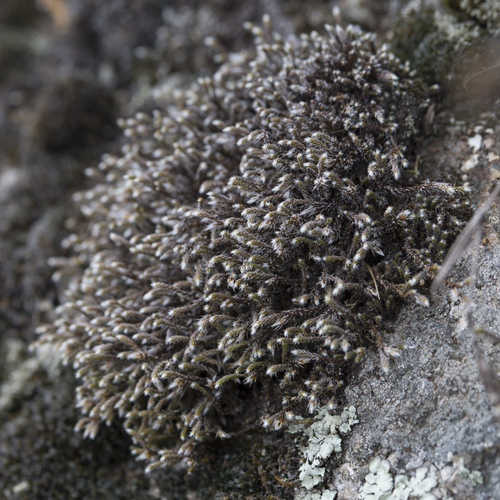
 Hedwigia emodica var. echinatae6
- Outcome
- describede6
- Setting
- Asian Russiae6
Organisms pictured · Representative pictures of the matched species, not figures from the paper.
Verbatim
e6“H. emodica var. echinata var. nova, is described from Asian Russia”
Claim · model-written summary
The new Hedwigia taxa are not separated from each other by the nuclear ITS1-2 DNA marker, unlike other Hedwigia taxa.
 Hedwigia
Organisms pictured · Representative pictures of the matched species, not figures from the paper.

Verbatim
e0“A new species from Asian Russia, Hedwigia kuzenevae sp. nova, is described based on integrative molecular and morphological study”
e7“though they are not separated from each other by nuclear ITS1-2 DNA marker”
Claim · model-written summary
Hedwigia emodica var. emodica has the widest distribution area, throughout Russia.
- Taxon
- Hedwigia emodica var. emodicaHedwigia emodicae1
- Outcome
- distribution areae1
- Qualifier
- wideste1
- Setting
- throughout Russiae1
Organisms pictured · Representative pictures of the matched species, not figures from the paper.
Verbatim
e1“Hedwigia emodica var. emodica has a widest distribution area throughout Russia”
Claim · model-written summary
Hedwigia mollis is mainly a European species.
- Taxon
- H. mollisHedwigia mollise1
- Outcome
- mainly Eiuropean speciese1
Verbatim
e1“H. mollis is mainly Eiuropean species”
Claim · model-written summary
Hedwigia emodica var. echinata is restricted in distribution to the south of the Russian Far East and Transbaikalia.
- Taxon
- H. emodica var. echinataHedwigia emodica var. echinatae1
- Outcome
- distributione1
- Setting
- south of Russian Far East and Transbaikaliae1
Organisms pictured · Representative pictures of the matched species, not figures from the paper.
Verbatim
e1“distribution of H. emodica var. echinata is restricted to the south of Russian Far East and Transbaikalia”
Claim · model-written summary
Hedwigia emodica var. echinata differs from the type variety in falcate-secund leaves.
- Taxon
- H. emodica var. echinata var. novaHedwigia emodica var. echinatae0
- Outcome
- falcate-secund leavese1
- Comparator
- type varietye1
Organisms pictured · Representative pictures of the matched species, not figures from the paper.
Verbatim
e0“H. emodica var. echinata var. nova, is described from Asian Russia”
e1“It differs from the type variety in falcate-secund leaves and slightly shorter hair-points with sharply dentate margins”
Claim · model-written summary
Hedwigia mollis differs from both varieties of H. emodica by shorter hair-points with slightly papillose distal portion.
- Taxon
- Hedwigia mollisHedwigia mollise0
- Outcome
- hair-pointse1
- Comparator
- both varietes of H. emodicae1
Verbatim
e0“Hedwigia mollis is also closely related to H. emodica”
e1“It shares some morphological features with both varietes of H. emodica, but differs from both of them by shorter hair-points with sligtly papillose distal portion”
Claim · model-written summary
The morphological differences make the Hedwigia taxa studied quite distinct.
- Outcome
- quite distincte1
Organisms pictured · Representative pictures of the matched species, not figures from the paper.
Verbatim
e0“A new species from Asian Russia, Hedwigia kuzenevae sp. nova, is described based on integrative molecular and morphological study”
e1“These morphological differences make these taxa quite distinct”