Abstract
Endophytic fungi are an integral part and even seen as host organs of plant, influencing physiology, ecology and development of host plants. However, little is known about micro-ecosystems and functional interactions of endophytic fungi in root-parasitic interactions of Cynomorium songaricum and its host Nitraria tangutorum. Here, distribution and dynamics of endophytic fungi were objectively investigated in their associations with C. songaricum and N. tangutorum based on mycobiome studies using high-throughput sequencing. Results suggest that endophytic fungi may be exchanged between C. songaricum and its host N. tangutorum probably through haustorium, connection of xylem and phloem in the vascular system. The similarity of endophytic fungal composition between C. songaricum and parasitized N. tangutorum was 3.88% which was significantly higher than the fungal similarity of 0.10% observed between C. songaricum and non-parasitized N. tangutorum. The similarities of fungal community in parasitized N. tangutorum was much closer to C. songaricum than to the non-parasitized N. tangutorum. The composition of endophytic fungi in these associations increased in progressive developmental stages of C. songaricum from sprouting to above ground emergence, and decreased subsequently probably due to host recognition and response by fungi. However, the shared fungal OTUs increased among interactions of C. songaricum with parasitized and non-parasitized N. tangutorum. Studies of bioactivity on culturable endophytic fungi showed that isolates such as Fusarium spp. possess the ability to promote seed germination of C. songaricum. Our study reports for the first time the special ecological system of endophytic fungi in C. songaricum and its host N. tangutorum. Overall, we hypothesize that a deeper understanding of the sharing, movement and role of endophytic fungi between root-parasitic plant and its host may lead to finding alternative approaches to help increase the output of ethno-pharmacologically important medicinal plants.
Abstract from the paper’s OpenAlex record; open copy licensed cc-by. Read at the source ↗
The text the model read, with the source record’s inline markup (italics, sub- and superscripts) rendered and its character entities decoded; quote offsets refer to the raw text.
Claims 7
Claim · model-written summary
Endophytic fungi may move between Cynomorium songaricum and its host Nitraria tangutorum through their vascular connection.
- Taxon
- Cynomorium songaricum
 Cynomorium songaricumt0
- Interactor
- Nitraria tangutorum
 Nitraria tangutorumt0host
- Outcome
- endophytic fungi may be exchangede0
- Qualifier
- probably through haustorium, connection of xylem and phloem in the vascular systeme0
Organisms pictured · Representative pictures of the matched species, not figures from the paper.

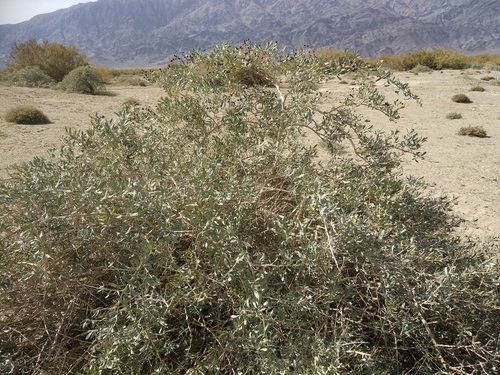
Verbatim
e0“endophytic fungi may be exchanged between C. songaricum and its host N. tangutorum probably through haustorium, connection of xylem and phloem in the vascular system”
t0“Cynomorium songaricum and Its Host Nitraria tangutorum”
Claim · model-written summary
Fungal composition similarity was higher between C. songaricum and parasitized N. tangutorum than between C. songaricum and non-parasitized hosts.
- Taxon
- Cynomorium songaricumCynomorium songaricumt0
- Interactor
- Nitraria tangutorumNitraria tangutorumt0host
- Outcome
- similarity of endophytic fungal compositione0
- Direction
- highere0
- Value
- 3.88%e0
- Qualifier
- 0.10%e0
- Comparator
- non-parasitized N. tangutorume0
Organisms pictured · Representative pictures of the matched species, not figures from the paper.
Verbatim
e0“The similarity of endophytic fungal composition between C. songaricum and parasitized N. tangutorum was 3.88% which was significantly higher than the fungal similarity of 0.10% observed between C. songaricum and non-parasitized N. tangutorum.”
t0“Cynomorium songaricum and Its Host Nitraria tangutorum”
Claim · model-written summary
The fungal community of parasitized N. tangutorum more closely resembled C. songaricum than non-parasitized N. tangutorum.
- Taxon
- Nitraria tangutorumNitraria tangutorumt0
- Interactor
- C. songaricumCynomorium songaricume0parasite
- Outcome
- similarities of fungal communitye0
- Direction
- much closere0
- Comparator
- non-parasitized N. tangutorume0
Organisms pictured · Representative pictures of the matched species, not figures from the paper.
Verbatim
e0“The similarities of fungal community in parasitized N. tangutorum was much closer to C. songaricum than to the non-parasitized N. tangutorum.”
t0“Nitraria tangutorum”
Claim · model-written summary
Endophytic fungal composition increased as C. songaricum developed from sprouting to above ground emergence.
- Taxon
- Cynomorium songaricumCynomorium songaricumt0
- Organ / stage
- progressive developmental stagese0
- Outcome
- composition of endophytic fungie0
- Direction
- increasede0
- Qualifier
- from sprouting to above ground emergencee0
Organisms pictured · Representative pictures of the matched species, not figures from the paper.
Verbatim
e0“The composition of endophytic fungi in these associations increased in progressive developmental stages of C. songaricum from sprouting to above ground emergence”
t0“Cynomorium songaricum”
Claim · model-written summary
Endophytic fungal composition subsequently decreased, possibly because fungi recognized and responded to the host.
- Taxon
- Cynomorium songaricumCynomorium songaricumt0
- Outcome
- decreased subsequentlye0
- Direction
- decreasede0
- Qualifier
- probably due to host recognition and response by fungie0
Organisms pictured · Representative pictures of the matched species, not figures from the paper.
Verbatim
e0“decreased subsequently probably due to host recognition and response by fungi”
t0“Cynomorium songaricum”
Claim · model-written summary
Shared fungal OTUs increased across interactions involving C. songaricum and parasitized and non-parasitized N. tangutorum.
- Taxon
- Cynomorium songaricumCynomorium songaricumt0
- Interactor
- Nitraria tangutorumNitraria tangutorumt0host
- Outcome
- shared fungal OTUse0
- Direction
- increasede0
Organisms pictured · Representative pictures of the matched species, not figures from the paper.
Verbatim
e0“the shared fungal OTUs increased among interactions of C. songaricum with parasitized and non-parasitized N. tangutorum”
t0“Cynomorium songaricum and Its Host Nitraria tangutorum”
Claim · model-written summary
Fusarium isolates promoted C. songaricum seed germination.
- Taxon
- Cynomorium songaricumCynomorium songaricumt0
- Treatment
- isolates such as Fusarium spp.e0
- Outcome
- seed germinatione0
- Direction
- promotee0
 Fusarium
Not reportedComparator
Organisms pictured · Representative pictures of the matched species, not figures from the paper.

Verbatim
e0“isolates such as Fusarium spp. possess the ability to promote seed germination of C. songaricum”
t0“Cynomorium songaricum”