Abstract
This study aimed to analyze relations between the distribution of tree species and variations in soil texture, fertility and organic matter levels in a rupestrian cerrado area located in Diamantina-MG. Individual trees with circumference at soil level (PC) ≥ 3 cm were sampled in 10 plots of 20x50m. Samples of surface soil (0.00-0.20 m of depth) were collected from each plot and analyzed for their chemical and physical properties. Through canonical correspondence analysis, Eremanthus incanus, Kielmeyera lathrophyton, Terminalia sp and Vochysia discolor show a stronger relation to higher potassium and remaining phosphorus levels; the species Xylopia sericea, Protium spruceanum and Protium heptaphyllum show a stronger relation to higher levels of organic matter and total cation exchange capacity; the species Roupala montana, Qualea grandiflora, and Erythroxylum suberosum grew uniformly in all plots. There is relation between species distribution and chemical and physical soil variables in the area.
Abstract from the paper’s OpenAlex record; open copy licensed cc-by. Read at the source ↗
The text the model read, with the source record’s inline markup (italics, sub- and superscripts) rendered and its character entities decoded; quote offsets refer to the raw text.
Claims 11
Claim · model-written summary
Eremanthus incanus shows a stronger relation to higher potassium and remaining phosphorus levels in its distribution.
- Taxon
- Eremanthus incanus
 Eremanthus incanuse0
- Compound
- potassium and remaining phosphorus levelse0
- Outcome
- distributione4
- Direction
- higherinferrede0
Organisms pictured · Representative pictures of the matched species, not figures from the paper.

Verbatim
e0“Through canonical correspondence analysis, Eremanthus incanus, Kielmeyera lathrophyton, Terminalia sp and Vochysia discolor show a stronger relation to higher potassium and remaining phosphorus levels”
e4“analyze relations between the distribution of tree species and variations in soil texture, fertility and organic matter levels”
Claim · model-written summary
Kielmeyera lathrophyton shows a stronger relation to higher potassium and remaining phosphorus levels in its distribution.
- Taxon
- Kielmeyera lathrophyton
 Kielmeyera lathrophytone0
- Compound
- potassium and remaining phosphorus levelse0
- Outcome
- distributione4
- Direction
- higherinferrede0
Organisms pictured · Representative pictures of the matched species, not figures from the paper.

Verbatim
e0“Through canonical correspondence analysis, Eremanthus incanus, Kielmeyera lathrophyton, Terminalia sp and Vochysia discolor show a stronger relation to higher potassium and remaining phosphorus levels”
e4“analyze relations between the distribution of tree species and variations in soil texture, fertility and organic matter levels”
Claim · model-written summary
Terminalia sp shows a stronger relation to higher potassium and remaining phosphorus levels in its distribution.
- Taxon
- Terminalia sp
 Terminaliae0
- Compound
- potassium and remaining phosphorus levelse0
- Outcome
- distributione4
- Direction
- higherinferrede0
Organisms pictured · Representative pictures of the matched species, not figures from the paper.

Verbatim
e0“Through canonical correspondence analysis, Eremanthus incanus, Kielmeyera lathrophyton, Terminalia sp and Vochysia discolor show a stronger relation to higher potassium and remaining phosphorus levels”
e4“analyze relations between the distribution of tree species and variations in soil texture, fertility and organic matter levels”
Claim · model-written summary
Vochysia discolor shows a stronger relation to higher potassium and remaining phosphorus levels in its distribution.
- Taxon
- Vochysia discolor
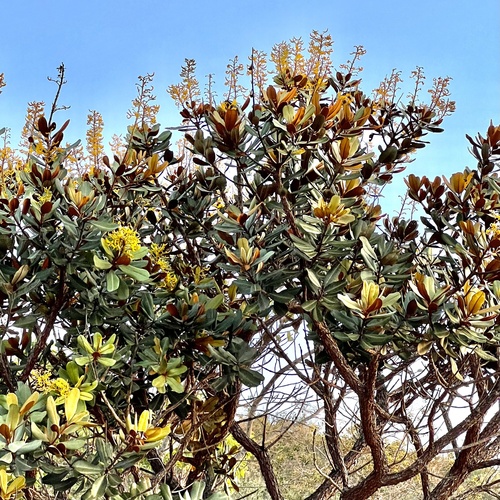
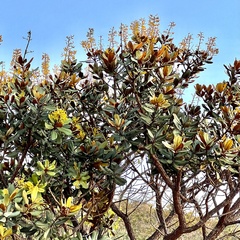 Vochysia discolore0
- Compound
- potassium and remaining phosphorus levelse0
- Outcome
- distributione4
- Direction
- higherinferrede0
Organisms pictured · Representative pictures of the matched species, not figures from the paper.
Verbatim
e0“Through canonical correspondence analysis, Eremanthus incanus, Kielmeyera lathrophyton, Terminalia sp and Vochysia discolor show a stronger relation to higher potassium and remaining phosphorus levels”
e4“analyze relations between the distribution of tree species and variations in soil texture, fertility and organic matter levels”
Claim · model-written summary
Xylopia sericea shows a stronger relation to higher organic matter and total cation exchange capacity in its distribution.
- Taxon
- Xylopia sericea
 Xylopia sericeae1
- Compound
- organic matter and total cation exchange capacitye1
- Outcome
- distributione4
- Direction
- higherinferrede1
Organisms pictured · Representative pictures of the matched species, not figures from the paper.

Verbatim
e1“the species Xylopia sericea, Protium spruceanum and Protium heptaphyllum show a stronger relation to higher levels of organic matter and total cation exchange capacity”
e4“analyze relations between the distribution of tree species and variations in soil texture, fertility and organic matter levels”
Claim · model-written summary
Protium spruceanum shows a stronger relation to higher organic matter and total cation exchange capacity in its distribution.
- Taxon
- Protium spruceanum
 Protium spruceanume1
- Compound
- organic matter and total cation exchange capacitye1
- Outcome
- distributione4
- Direction
- higherinferrede1
Organisms pictured · Representative pictures of the matched species, not figures from the paper.

Verbatim
e1“the species Xylopia sericea, Protium spruceanum and Protium heptaphyllum show a stronger relation to higher levels of organic matter and total cation exchange capacity”
e4“analyze relations between the distribution of tree species and variations in soil texture, fertility and organic matter levels”
Claim · model-written summary
Protium heptaphyllum shows a stronger relation to higher organic matter and total cation exchange capacity in its distribution.
- Taxon
- Protium heptaphyllum
 Protium heptaphyllume1
- Compound
- organic matter and total cation exchange capacitye1
- Outcome
- distributione4
- Direction
- higherinferrede1
Organisms pictured · Representative pictures of the matched species, not figures from the paper.

Verbatim
e1“the species Xylopia sericea, Protium spruceanum and Protium heptaphyllum show a stronger relation to higher levels of organic matter and total cation exchange capacity”
e4“analyze relations between the distribution of tree species and variations in soil texture, fertility and organic matter levels”
Claim · model-written summary
Roupala montana grew uniformly across all plots.
- Taxon
- Roupala montana
 Roupala montanae2
- Outcome
- grew uniformly in all plotse2
Organisms pictured · Representative pictures of the matched species, not figures from the paper.

Verbatim
e2“the species Roupala montana, Qualea grandiflora, and Erythroxylum suberosum grew uniformly in all plots”
Claim · model-written summary
Qualea grandiflora grew uniformly across all plots.
- Taxon
- Qualea grandiflora
 Qualea grandiflorae2
- Outcome
- grew uniformly in all plotse2
Organisms pictured · Representative pictures of the matched species, not figures from the paper.

Verbatim
e2“the species Roupala montana, Qualea grandiflora, and Erythroxylum suberosum grew uniformly in all plots”
Claim · model-written summary
Erythroxylum suberosum grew uniformly across all plots.
- Taxon
- Erythroxylum suberosum
 Erythroxylum suberosume2
- Outcome
- grew uniformly in all plotse2
Organisms pictured · Representative pictures of the matched species, not figures from the paper.

Verbatim
e2“the species Roupala montana, Qualea grandiflora, and Erythroxylum suberosum grew uniformly in all plots”
Claim · model-written summary
Tree species distribution is related to chemical and physical soil variables in the area.
Not reportedDirection
Verbatim
t0“Soil Influences on Tree Species Distribution”
e3“There is relation between species distribution and chemical and physical soil variables in the area”