Abstract
Most of carbon in grasslands comes from underground biomass, particularly in arid grassland ecosystems. However, estimation of root biomass in these ecosystems has been poorly studied. In this study was analyzed the correlation between above ground plant variables and root biomass to develop statistical models for reliable root biomass estimations. Twenty-six plant species were collected within grazing-excluded grasslands. Linear, exponential and logarithmic regression models were performed for each species and for the whole data set to determine the variables that best predicted root biomass. Only Frankenia gypsophila and Dalea gypsophila showed root/shoot ratio (RSR) higher than one. Enneapogon desvauxii and Atriplex acantocarpha had a RSR close to one. Eight species showed statistical significance in at least one of the correlation analyses but only Tiquilia canescens, Bouteloua gracilis, Machaerantera pinnatifida, Lesquerella fendleri, and Atriplex acanthocarpa had both statistical significance and acceptable coefficient of determination (r2 ≥0.50). Using the Marquardt exponential method, 14 out of 15 studied species showed a high determination coefficient and statistical significance. This method was adequate (r2=0.853) to estimate root biomass for the whole set of plants from plant height and crown diameter.
Abstract from the paper’s OpenAlex record; open copy licensed cc-by-nc. Read at the source ↗
The text the model read, with the source record’s inline markup (italics, sub- and superscripts) rendered and its character entities decoded; quote offsets refer to the raw text.
Claims 8
Claim · model-written summary
Frankenia gypsophila had a root/shoot ratio above one.
- Taxon
- Frankenia gypsophila
 Frankenia gypsophilae0
- Outcome
- root/shoot ratio (RSR)e0
- Direction
- highere0
- Value
- onee0
Organisms pictured · Representative pictures of the matched species, not figures from the paper.
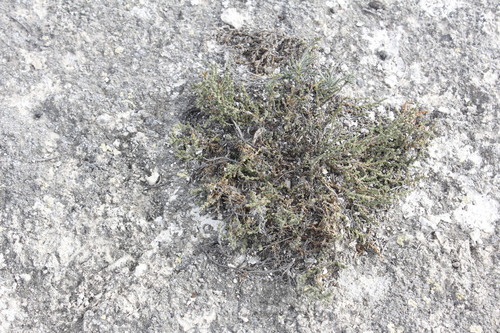
Verbatim
e0“Only Frankenia gypsophila and Dalea gypsophila showed root/shoot ratio (RSR) higher than one”
Claim · model-written summary
Dalea gypsophila had a root/shoot ratio above one.
- Taxon
- Dalea gypsophilaDalea gypsophilae0
- Outcome
- root/shoot ratio (RSR)e0
- Direction
- highere0
- Value
- onee0
Verbatim
e0“Only Frankenia gypsophila and Dalea gypsophila showed root/shoot ratio (RSR) higher than one”
Claim · model-written summary
Enneapogon desvauxii had a root/shoot ratio near one.
- Taxon
- Enneapogon desvauxii
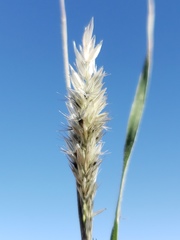 Enneapogon desvauxiie0
- Outcome
- RSRe0
- Direction
- close toe0
- Value
- onee0
Organisms pictured · Representative pictures of the matched species, not figures from the paper.
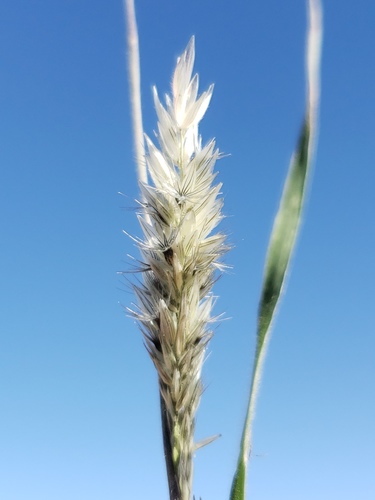
Verbatim
e0“Enneapogon desvauxii and Atriplex acantocarpha had a RSR close to one”
Claim · model-written summary
Atriplex acantocarpha had a root/shoot ratio near one.
Verbatim
e0“Enneapogon desvauxii and Atriplex acantocarpha had a RSR close to one”
Claim · model-written summary
Eight species showed a significant correlation in at least one analysis.
Verbatim
e0“Eight species showed statistical significance in at least one of the correlation analyses”
Claim · model-written summary
Five named species had significant correlations and acceptable determination coefficients.
- Taxon
- Tiquilia canescens
 Tiquilia canescense0
- Outcome
- coefficient of determinatione0
- Value
- r2 ≥0.50e0
Organisms pictured · Representative pictures of the matched species, not figures from the paper.

Verbatim
e0“only Tiquilia canescens, Bouteloua gracilis, Machaerantera pinnatifida, Lesquerella fendleri, and Atriplex acanthocarpa had both statistical significance and acceptable coefficient of determination (r2 ≥0.50)”
Claim · model-written summary
Marquardt exponential fits had high determination and statistical significance for 14 of 15 species.
Verbatim
e0“Using the Marquardt exponential method, 14 out of 15 studied species showed a high determination coefficient and statistical significance”
Claim · model-written summary
The Marquardt method estimated root biomass from height and crown diameter with r2 of 0.853.
- Taxon
- plantsViridiplantaee0
- Outcome
- root biomasse0
- Value
- r2=0.853e0
Verbatim
e0“This method was adequate (r2=0.853) to estimate root biomass for the whole set of plants from plant height and crown diameter”