Abstract
BACKGROUND: Cell contain diverse array of proteins with different molecular weight and isoelectric point (pI). The molecular weight and pI of protein play important role in determining the molecular biochemical function. Therefore, it was important to understand the detail regarding the molecular weight and pI of the plant proteins. RESULTS: A proteome-wide analysis of plant proteomes from 145 species revealed a pI range of 1.99 (epsin) to 13.96 (hypothetical protein). The spectrum of molecular mass of the plant proteins varied from 0.54 to 2236.8 kDa. A putative Type-I polyketide synthase (22244 amino acids) in Volvox carteri was found to be the largest protein in the plant kingdom. However, Type-I polyketide synthase was not found in higher plant species. Titin (806.46 kDa) and misin/midasin (730.02 kDa) were the largest proteins identified in higher plant species. The pI and molecular weight of the plant proteins showed a trimodal distribution. An acidic pI (56.44% of proteins) was found to be predominant over a basic pI (43.34% of proteins) and the abundance of acidic pI proteins was higher in unicellular algae species relative to multicellular higher plants. In contrast, the seaweed, Porphyra umbilicalis, possesses a higher proportion of basic pI proteins (70.09%). Plant proteomes were also found to contain selenocysteine (Sec), amino acid that was found only in lower eukaryotic aquatic plant lineage. Amino acid composition analysis showed Leu was high and Trp was low abundant amino acids in the plant proteome. Additionally, the plant proteomes also possess ambiguous amino acids Xaa (unknown), Asx (asparagine or aspartic acid), Glx (glutamine or glutamic acid), and Xle (leucine or isoleucine) as well. CONCLUSION: The diverse molecular weight and isoelectric point range of plant proteome will be helpful to understand their biochemical and functional aspects. The presence of selenocysteine proteins in lower eukaryotic organism is of interest and their expression in higher plant system can help us to understand their functional role.
Abstract from the paper’s OpenAlex record; open copy licensed cc-by. Read at the source ↗
The text the model read, with the source record’s inline markup (italics, sub- and superscripts) rendered and its character entities decoded; quote offsets refer to the raw text.
Claims 12
Claim · model-written summary
Plant proteomes spanned pI 1.99 to 13.96.
Verbatim
e0“A proteome-wide analysis of plant proteomes from 145 species revealed a pI range of 1.99 (epsin) to 13.96 (hypothetical protein)”
Claim · model-written summary
Plant protein molecular mass ranged from 0.54 to 2236.8 kDa.
Verbatim
e0“The spectrum of molecular mass of the plant proteins varied from 0.54 to 2236.8 kDa”
Claim · model-written summary
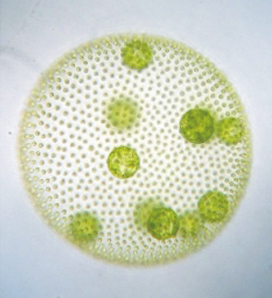
A Type-I polyketide synthase was the largest protein identified in Volvox carteri.
- Taxon
- Volvox carteri
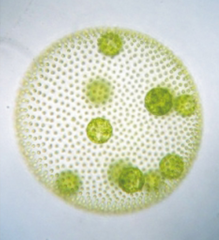 Volvox carterie0
- Gene
- Type-I polyketide synthasee0
- Outcome
- largest proteine0
- Value
- 22244 amino acidse0
Organisms pictured · Representative pictures of the matched species, not figures from the paper.
Verbatim
e0“A putative Type-I polyketide synthase (22244 amino acids) in Volvox carteri was found to be the largest protein in the plant kingdom”
Claim · model-written summary
Type-I polyketide synthase was absent from higher plant species.
Verbatim
e0“Type-I polyketide synthase was not found in higher plant species”
Claim · model-written summary
Titin and misin/midasin were the largest proteins identified in higher plants.
Verbatim
e0“Titin (806.46 kDa) and misin/midasin (730.02 kDa) were the largest proteins identified in higher plant species”
Claim · model-written summary
Plant protein pI and molecular weight had a trimodal distribution.
Verbatim
e0“The pI and molecular weight of the plant proteins showed a trimodal distribution”
Claim · model-written summary
Acidic pI proteins predominated over basic pI proteins.
Verbatim
e0“An acidic pI (56.44% of proteins) was found to be predominant over a basic pI (43.34% of proteins)”
t0“plant proteomes”
Claim · model-written summary
Acidic pI proteins were more abundant in unicellular algae than higher plants.
Verbatim
e0“the abundance of acidic pI proteins was higher in unicellular algae species relative to multicellular higher plants”
Claim · model-written summary
Basic pI proteins accounted for 70.09% in Porphyra umbilicalis.
- Taxon
- Porphyra umbilicalis
 Porphyra umbilicalise0
- Outcome
- proportion of basic pI proteinse0
- Direction
- highere0
- Value
- 70.09%e0
Organisms pictured · Representative pictures of the matched species, not figures from the paper.

Verbatim
e0“Porphyra umbilicalis, possesses a higher proportion of basic pI proteins (70.09%)”
Claim · model-written summary
Selenocysteine was found only in lower eukaryotic aquatic plant lineage.
Verbatim
e0“Plant proteomes were also found to contain selenocysteine (Sec), amino acid that was found only in lower eukaryotic aquatic plant lineage”
Claim · model-written summary
Leu was abundant and Trp was scarce in plant proteomes.
Verbatim
e0“Leu was high and Trp was low abundant amino acids in the plant proteome”
Claim · model-written summary
Plant proteomes contained ambiguous amino acids Xaa, Asx, Glx and Xle.
Verbatim
e0“the plant proteomes also possess ambiguous amino acids Xaa (unknown), Asx (asparagine or aspartic acid), Glx (glutamine or glutamic acid), and Xle (leucine or isoleucine)”