Abstract
The present study was conducted to survey and evaluate the population densities of the major sucking insect pests infesting okra plants and their common associated predators and its relation with the prevailing temperature and relative humidity at Diarb-Nigm district, Sharkia Governorate, Egypt during the two summer growing seasons of 2015 and 2016. Bemisia tabaci (Gennadius), Oxycarenus hyalinipennis Costa, Aphis gossypii Glover, Empoassca lybica (Bergevin) and Thrips tabaci Linde were the main sucking insect pests on okra plants. The most dominant predaceous insect species were Metasyrphus corollae (Fabricius), Chrysoperla carnea (Stephens), Coccinella undecimpunctata Linnaeus and Coccinella septempunctata Linnaeus. B. tabaci showed four peaks in the first and the fourth weeks of July and in the fourth week of August and September in the first season. In the second season, it peaked in the first week of August and September. Two peaks of activity for A. gossypii occurred in the fourth week of July and August during the first season and in the second one it peaked in the fourth week of July and third week of August. T. tabaci peaked in the fourth week of August and the second week of September during the first season. In the second season, it peaked in the fifth week of August. E. lybica peaked in the third week of July, the fourth week of August and the second week of September during 2015 growing season, while in the season of 2016 it peaked in the second week of August and the first week of September. O. hyalinipennis peaked once in the third week of October in both seasons of the study. M. corollae recorded one peak in both seasons, in the first season it was observed in the fifth week of August, while in the second one it was in the second week of August. C. carnea recorded its maximum number in the third and the fourth weeks of July during the first and second seasons of the study, respectively. C. undecimpunctata showed three peaks of activity in the fourth week of June, the second week of July and the second week of August in the first season, while in the second one it peaked in the fourth week of July. C. septempunctata recorded two peaks in the second week of July and August during the first season of the study. In the second season, it peaked in the second week of July. Temperature and relative humidity influenced the populations of B. tabaci, O. hyalinipennis, A. gossypii, E. lybica, T. tabaci, M. corollae, C. carnea, C. undecimpunctata and C. septempunctata by 18.76, 3.19, 18.21, 10.79, 6.23, 15.20, 2.45, 11.75 and 1.45% in the first season of the study and by 41.48, 54.31, 41.47, 53.70, 54.31. 24.86, 7.61, 11.22 and 12.95% in the second one, respectively. Also, the predator-prey ratios were estimated.
Abstract from the paper’s OpenAlex record, shown for indexing and research. Copyright remains with the authors or the publisher. Read at the source ↗
The text the model read, with the source record’s inline markup (italics, sub- and superscripts) rendered and its character entities decoded; quote offsets refer to the raw text.
Claims 12
Claim · model-written summary
Five species were identified as the main sucking pests on okra.
- Taxon
- okra plants
 Abelmoschus esculentuse0
- Interactor
- Bemisia tabaci
 Bemisia tabacie0pest
- Outcome
- main sucking insect pestse0
- Qualifier
- Oxycarenus hyalinipennis Costa, Aphis gossypii Glover, Empoassca lybica (Bergevin) and Thrips tabaci Lindee0
Organisms pictured · Representative pictures of the matched species, not figures from the paper.


Verbatim
e0“Bemisia tabaci (Gennadius), Oxycarenus hyalinipennis Costa, Aphis gossypii Glover, Empoassca lybica (Bergevin) and Thrips tabaci Linde were the main sucking insect pests on okra plants”
Claim · model-written summary
Four predator species dominated the okra insect community.
- Taxon
- OKRA PLANTSAbelmoschus esculentust0
- Interactor
- Metasyrphus corollae
 Eupeodes corollaee0biocontrol_agent
- Outcome
- most dominant predaceous insect speciese0
- Qualifier
- Chrysoperla carnea (Stephens), Coccinella undecimpunctata Linnaeus and Coccinella septempunctata Linnaeuse0
Organisms pictured · Representative pictures of the matched species, not figures from the paper.

Verbatim
t0“OKRA PLANTS”
e0“The most dominant predaceous insect species were Metasyrphus corollae (Fabricius), Chrysoperla carnea (Stephens), Coccinella undecimpunctata Linnaeus and Coccinella septempunctata Linnaeus”
Claim · model-written summary
B. tabaci had four peaks in the first season and peaked in early August and September in the second.
- Taxon
- B. tabaciBemisia tabacie0
- Interactor
- OKRA PLANTSAbelmoschus esculentust0host
- Outcome
- peakse0
- Value
- four peakse0
- Setting
- first seasone0
Organisms pictured · Representative pictures of the matched species, not figures from the paper.
Verbatim
t0“OKRA PLANTS”
e0“B. tabaci showed four peaks in the first and the fourth weeks of July and in the fourth week of August and September in the first season. In the second season, it peaked in the first week of August and September”
Claim · model-written summary
A. gossypii had two activity peaks in each season, at different weeks.
- Taxon
- A. gossypii
 Aphis gossypiie0
- Interactor
- OKRA PLANTSAbelmoschus esculentust0host
- Outcome
- peaks of activitye0
- Value
- Two peakse0
Organisms pictured · Representative pictures of the matched species, not figures from the paper.

Verbatim
t0“OKRA PLANTS”
e0“Two peaks of activity for A. gossypii occurred in the fourth week of July and August during the first season and in the second one it peaked in the fourth week of July and third week of August”
Claim · model-written summary
T. tabaci peaked twice in the first season and once in the second.
- Taxon
- T. tabaci
 Thrips tabacie0
- Interactor
- OKRA PLANTSAbelmoschus esculentust0host
- Outcome
- peakede0
Organisms pictured · Representative pictures of the matched species, not figures from the paper.

Verbatim
t0“OKRA PLANTS”
e0“T. tabaci peaked in the fourth week of August and the second week of September during the first season. In the second season, it peaked in the fifth week of August”
Claim · model-written summary
E. lybica had three peaks in 2015 and two in 2016.
- Taxon
- E. lybicae0
- Interactor
- OKRA PLANTSAbelmoschus esculentust0host
- Outcome
- peakede0
Organisms pictured · Representative pictures of the matched species, not figures from the paper.
Verbatim
t0“OKRA PLANTS”
e0“E. lybica peaked in the third week of July, the fourth week of August and the second week of September during 2015 growing season, while in the season of 2016 it peaked in the second week of August and the first week of September”
Claim · model-written summary
O. hyalinipennis peaked once in mid October in both seasons.
- Taxon
- O. hyalinipennis
 Oxycarenus hyalinipennise0
- Interactor
- OKRA PLANTSAbelmoschus esculentust0host
- Outcome
- peakede0
- Value
- oncee0
Organisms pictured · Representative pictures of the matched species, not figures from the paper.

Verbatim
t0“OKRA PLANTS”
e0“O. hyalinipennis peaked once in the third week of October in both seasons of the study”
Claim · model-written summary
M. corollae had one peak in each season.
- Taxon
- M. corollaeEupeodes corollaee0
- Interactor
- OKRA PLANTSAbelmoschus esculentust0host
- Outcome
- peake0
- Value
- one peake0
Organisms pictured · Representative pictures of the matched species, not figures from the paper.
Verbatim
t0“OKRA PLANTS”
e0“M. corollae recorded one peak in both seasons, in the first season it was observed in the fifth week of August, while in the second one it was in the second week of August”
Claim · model-written summary
C. carnea numbers peaked in late July in both seasons.
- Taxon
- C. carnea
 Chrysoperla carneae0
- Interactor
- OKRA PLANTSAbelmoschus esculentust0host
- Outcome
- maximum numbere0
Organisms pictured · Representative pictures of the matched species, not figures from the paper.

Verbatim
t0“OKRA PLANTS”
e0“C. carnea recorded its maximum number in the third and the fourth weeks of July during the first and second seasons of the study, respectively”
Claim · model-written summary
C. undecimpunctata had three peaks in the first season and one in the second.
- Taxon
- C. undecimpunctata
Coccinella undecimpunctatae0
- Interactor
- OKRA PLANTSAbelmoschus esculentust0host
- Outcome
- peaks of activitye0
- Value
- three peakse0
Organisms pictured · Representative pictures of the matched species, not figures from the paper.
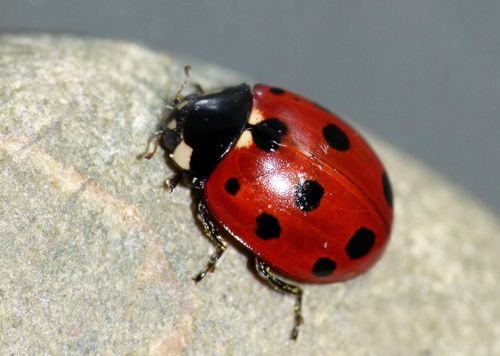
Verbatim
t0“OKRA PLANTS”
e0“C. undecimpunctata showed three peaks of activity in the fourth week of June, the second week of July and the second week of August in the first season, while in the second one it peaked in the fourth week of July”
Claim · model-written summary
C. septempunctata had two peaks in the first season and one in the second.
- Taxon
- C. septempunctata
 Coccinella septempunctatae0
- Interactor
- OKRA PLANTSAbelmoschus esculentust0host
- Outcome
- peakse0
- Value
- two peakse0
Organisms pictured · Representative pictures of the matched species, not figures from the paper.

Verbatim
t0“OKRA PLANTS”
e0“C. septempunctata recorded two peaks in the second week of July and August during the first season of the study. In the second season, it peaked in the second week of July”
Claim · model-written summary
Temperature and humidity influenced pest and predator populations, with variable percentages across both seasons.
- Taxon
- B. tabaciBemisia tabacie0
- Treatment
- Temperature and relative humiditye0
- Outcome
- populationse0
- Qualifier
- first season of the studye0
Not reportedDirection
Organisms pictured · Representative pictures of the matched species, not figures from the paper.
Verbatim
t0“OKRA PLANTS”
e0“Temperature and relative humidity influenced the populations of B. tabaci, O. hyalinipennis, A. gossypii, E. lybica, T. tabaci, M. corollae, C. carnea, C. undecimpunctata and C. septempunctata by 18.76, 3.19, 18.21, 10.79, 6.23, 15.20, 2.45, 11.75 and 1.45% in the first season of the study and by 41.48, 54.31, 41.47, 53.70, 54.31. 24.86, 7.61, 11.22 and 12.95% in the second one, respectively”