Abstract
Microbiome management is a promising way to suppress verticillium wilt, a severe disease in Brassica caused by Verticillium longisporum. In order to improve current biocontrol strategies, we compared bacterial Verticillium antagonists in different assays using a hierarchical selection and evaluation scheme, and we integrated outcomes of our previous studies. The result was strongly dependent on the assessment method chosen (in vitro, in vivo, in situ), on the growth conditions of the plants and their genotype. The most promising biocontrol candidate identified was a Brassica endophyte Serratia plymuthica F20. Positive results were confirmed in field trials and by microscopically visualizing the three-way interaction. Applying antagonists in seed treatment contributes to an exceptionally low ecological footprint, supporting efficient economic and ecological solutions to controlling verticillium wilt. Indigenous microbiome, especially soil and seed microbiome, has been identified as key to understanding disease outbreaks and suppression. We suggest that verticillium wilt is a microbiome-driven disease caused by a reduction in microbial diversity within seeds and in the soil surrounding them. We strongly recommend integrating microbiome data in the development of new biocontrol and breeding strategies and combining both strategies with the aim of designing healthy microbiomes, thus making plants more resilient toward soil-borne pathogens.
Abstract from the paper’s OpenAlex record; open copy licensed cc-by. Read at the source ↗
The text the model read, with the source record’s inline markup (italics, sub- and superscripts) rendered and its character entities decoded; quote offsets refer to the raw text.
Claims 7
Claim · model-written summary
Biocontrol results depended strongly on assay method, plant growth conditions and genotype.
- Material
- genotypee0
- Interactor
- Verticillium longisporumVerticillium longisporume1pathogen
- Outcome
- The resulte0
- Qualifier
- assessment method chosen (in vitro, in vivo, in situ), on the growth conditions of the plantse0
 Brassica
Not reportedDirection
Organisms pictured · Representative pictures of the matched species, not figures from the paper.

Verbatim
e0“The result was strongly dependent on the assessment method chosen (in vitro, in vivo, in situ), on the growth conditions of the plants and their genotype.”
e1“a severe disease in Brassica caused by Verticillium longisporum”
Claim · model-written summary
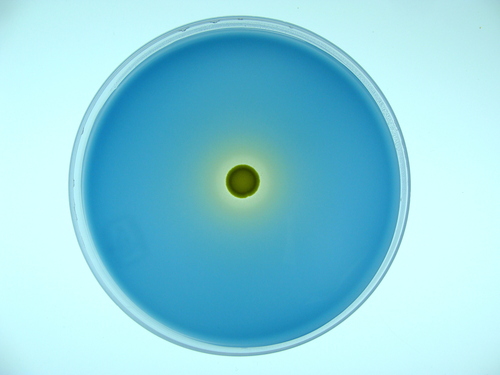
Serratia plymuthica F20 was the most promising Brassica biocontrol candidate.
- Interactor
- Serratia plymuthica F20
 Serratia plymuthicae0biocontrol_agent
- Outcome
- most promising biocontrol candidatee0
Organisms pictured · Representative pictures of the matched species, not figures from the paper.
Verbatim
e0“The most promising biocontrol candidate identified was a Brassica endophyte Serratia plymuthica F20.”
e1“Brassica caused by Verticillium longisporum”
Claim · model-written summary
Positive antagonist results were confirmed in field trials and by microscopy.
- Interactor
- Verticillium longisporumVerticillium longisporume1pathogen
- Outcome
- Positive resultse0
- Setting
- field trialse0
Organisms pictured · Representative pictures of the matched species, not figures from the paper.
Verbatim
e0“Positive results were confirmed in field trials and by microscopically visualizing the three-way interaction.”
e1“a severe disease in Brassica caused by Verticillium longisporum”
Claim · model-written summary
Seed treatment with antagonists had an exceptionally low ecological footprint.
Organisms pictured · Representative pictures of the matched species, not figures from the paper.
Verbatim
e0“Applying antagonists in seed treatment contributes to an exceptionally low ecological footprint”
e1“a severe disease in Brassica caused by Verticillium longisporum”
Claim · model-written summary
Indigenous soil and seed microbiomes were identified as key to disease outbreaks and suppression.
- Interactor
- Verticillium longisporumVerticillium longisporume1pathogen
- Outcome
- disease outbreaks and suppressione0
- Qualifier
- Indigenous microbiome, especially soil and seed microbiomee0
Organisms pictured · Representative pictures of the matched species, not figures from the paper.
Verbatim
e0“Indigenous microbiome, especially soil and seed microbiome, has been identified as key to understanding disease outbreaks and suppression.”
e1“a severe disease in Brassica caused by Verticillium longisporum”
Claim · model-written summary
The authors suggest reduced seed and surrounding soil microbial diversity drives verticillium wilt.
- Interactor
- Verticillium longisporumVerticillium longisporume1pathogen
- Outcome
- verticillium wilte0
- Qualifier
- reduction in microbial diversity within seeds and in the soil surrounding theme0
Organisms pictured · Representative pictures of the matched species, not figures from the paper.
Verbatim
e0“We suggest that verticillium wilt is a microbiome-driven disease caused by a reduction in microbial diversity within seeds and in the soil surrounding them.”
e1“a severe disease in Brassica caused by Verticillium longisporum”
Claim · model-written summary
The authors recommend integrating microbiome data and combining biocontrol and breeding strategies.
- Interactor
- Verticillium longisporumVerticillium longisporume1pathogen
- Outcome
- integrating microbiome data in the development of new biocontrol and breeding strategies and combining both strategiese0
Organisms pictured · Representative pictures of the matched species, not figures from the paper.
Verbatim
e0“We strongly recommend integrating microbiome data in the development of new biocontrol and breeding strategies and combining both strategies with the aim of designing healthy microbiomes, thus making plants more resilient toward soil-borne pathogens.”
e1“a severe disease in Brassica caused by Verticillium longisporum”