Abstract
Abstract Antennaria rosea , a polyploid agamic complex, originated from hybridization, polyploidization, and introgression of as many as eight diploid/tetraploid sexual Antennaria species in the Rocky Mountains of North America. The species shows tremendous variation within and among populations including phyllary coloration, number and arrangement of heads per flowering stalk, and leaf size/shape leading to the enumeration of many microspecies and a taxonomic challenge. A comprehensive evolutionary study of these populations would clarify the origins and evolution of A. rosea as a polyploid agamic complex. Using genetic markers developed for Antennaria species, genetic diversity, population structure, and ancestry estimation of 18 A. rosea populations distributed in the Rocky Mountains of the U.S.A. were studied. Comparatively, A. rosea populations distributed in the Northern Rocky Mountain region had higher levels of genetic diversity than the populations in the southern Rocky Mountain region. Antennaria rosea populations were divided into three genetically distinct clusters, and populations within each genetic cluster showed high correlations regarding geographic distribution and ancestry. Two of the putative parents, A. microphylla and A. umbrinella , were the major sources of parentage for A. rosea populations, and notably, these species were widely distributed and sympatric with most of the A. rosea populations from this study. A novel finding of this study was that each of the A. rosea populations had its origins from different sexual progenitors and, although A. microphylla and A. umbrinella were the major contributors to the parentage of most of the A . rosea clones sampled, the other six sexual species also contributed to a lesser degree to their origins. Our study also indicated that sympatry of parents contributes substantially to the origination of polyploid populations of A. rosea .
Abstract from the paper’s OpenAlex record, shown for indexing and research. Copyright remains with the authors or the publisher. Read at the source ↗
The text the model read, with the source record’s inline markup (italics, sub- and superscripts) rendered and its character entities decoded; quote offsets refer to the raw text.
Claims 8
Claim · model-written summary
Northern Rocky Mountain populations had higher genetic diversity than southern populations.
- Taxon
- A. rosea
 Antennaria roseae0
- Outcome
- levels of genetic diversitye0
- Direction
- highere0
- Comparator
- populations in the southern Rocky Mountain regione0
- Setting
- Northern Rocky Mountain regione0
Organisms pictured · Representative pictures of the matched species, not figures from the paper.

Verbatim
e0“A. rosea populations distributed in the Northern Rocky Mountain region had higher levels of genetic diversity than the populations in the southern Rocky Mountain region”
Claim · model-written summary
A. rosea populations formed three genetically distinct clusters.
- Taxon
- Antennaria roseaAntennaria roseae0
- Outcome
- genetically distinct clusterse0
- Value
- threee0
Organisms pictured · Representative pictures of the matched species, not figures from the paper.
Verbatim
e0“Antennaria rosea populations were divided into three genetically distinct clusters”
Claim · model-written summary
Genetic clusters correlated with geographic distribution and ancestry.
- Taxon
- Antennaria roseaAntennaria roseae1
- Outcome
- high correlations regarding geographic distribution and ancestrye0
- Setting
- geographic distributione0
Not reportedDirection
Organisms pictured · Representative pictures of the matched species, not figures from the paper.
Verbatim
e0“populations within each genetic cluster showed high correlations regarding geographic distribution and ancestry”
e1“Antennaria rosea populations were divided into three genetically distinct clusters”
Claim · model-written summary
A. microphylla and A. umbrinella were the major parentage sources for A. rosea populations.
- Taxon
- A. roseaAntennaria roseae0
- Interactor
- A. microphylla
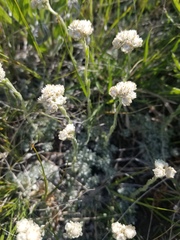 Antennaria microphyllae0other
- Second interactor
- A. umbrinella
 Antennaria umbrinellae0other
- Outcome
- major sources of parentagee0
Organisms pictured · Representative pictures of the matched species, not figures from the paper.
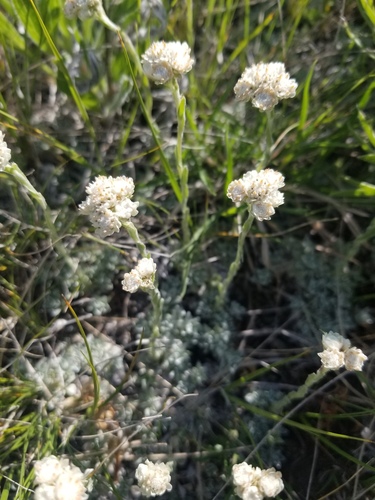

Verbatim
e0“Two of the putative parents, A. microphylla and A. umbrinella , were the major sources of parentage for A. rosea populations”
Claim · model-written summary
The major parent species were widely distributed and sympatric with most sampled A. rosea populations.
- Taxon
- A. roseaAntennaria roseae0
- Interactor
- A. microphyllaAntennaria microphyllae1other
- Second interactor
- A. umbrinellaAntennaria umbrinellae1other
- Outcome
- widely distributed and sympatrice0
Organisms pictured · Representative pictures of the matched species, not figures from the paper.
Verbatim
e0“these species were widely distributed and sympatric with most of the A. rosea populations from this study”
e1“A. microphylla and A. umbrinella , were the major sources of parentage for A. rosea populations”
Claim · model-written summary
Each A. rosea population originated from different sexual progenitors.
- Taxon
- A. roseaAntennaria roseae0
- Outcome
- origins from different sexual progenitorse0
Organisms pictured · Representative pictures of the matched species, not figures from the paper.
Verbatim
e0“each of the A. rosea populations had its origins from different sexual progenitors”
Claim · model-written summary
Six other sexual species contributed less to the origins of sampled A. rosea clones.
- Taxon
- A . roseaAntennaria roseae1
- Outcome
- contributed to a lesser degree to their originse0
- Value
- six sexual speciese0
Organisms pictured · Representative pictures of the matched species, not figures from the paper.
Verbatim
e0“the other six sexual species also contributed to a lesser degree to their origins”
e1“A . rosea clones sampled”
Claim · model-written summary
Parental sympatry contributed substantially to the origin of polyploid A. rosea populations.
- Taxon
- A. roseaAntennaria roseae0
- Outcome
- origination of polyploid populationse0
- Qualifier
- sympatry of parentse0
Not reportedDirection
Organisms pictured · Representative pictures of the matched species, not figures from the paper.
Verbatim
e0“sympatry of parents contributes substantially to the origination of polyploid populations of A. rosea”